
What Is Design for Manufacturability (DFM) and Why It Matters
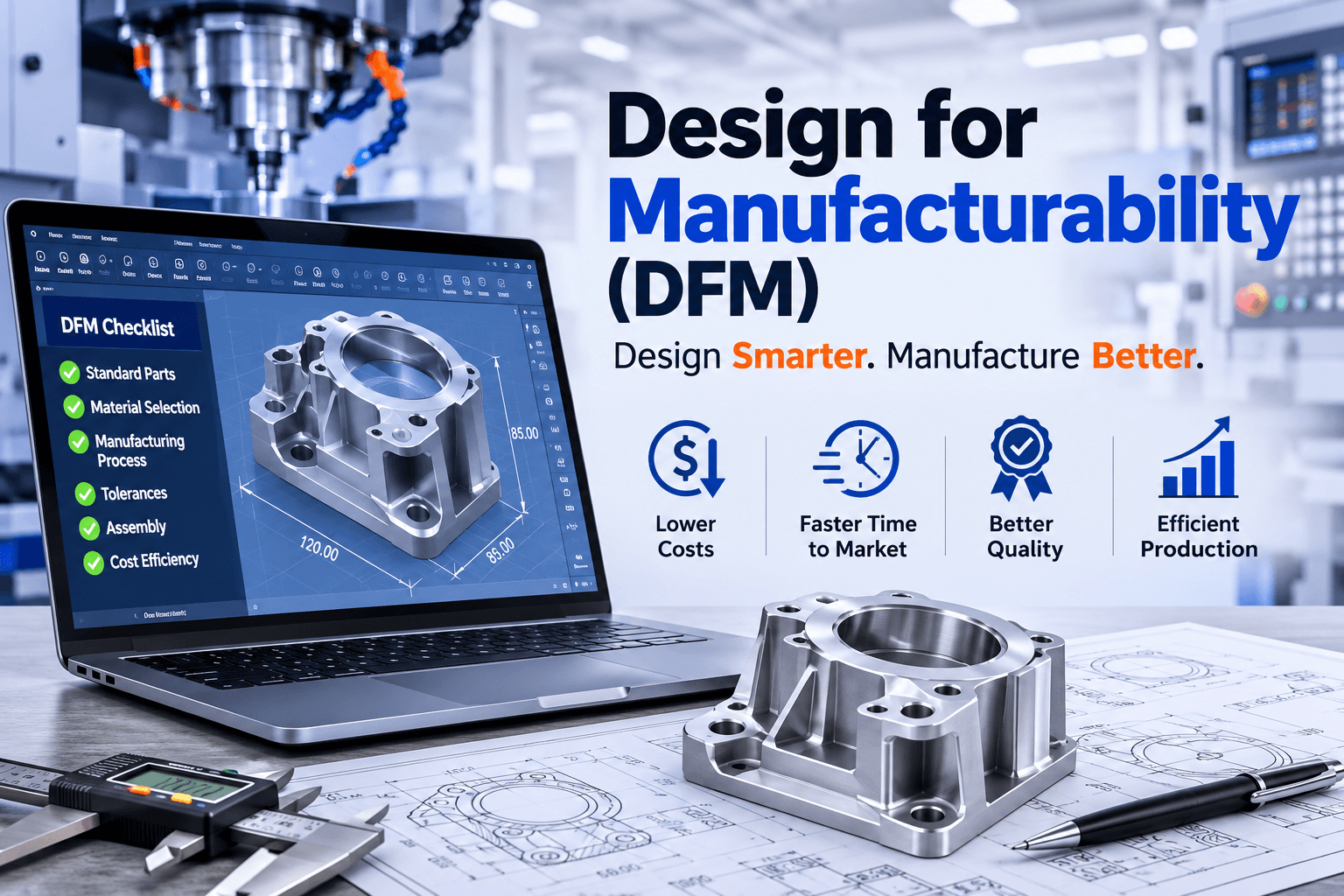
Design for Manufacturability (DFM) is the practice of designing a product so it can be manufactured efficiently, consistently, and cost-effectively without compromising quality or performance. Instead of treating manufacturing as a separate step after design is complete, DFM brings manufacturing considerations into the design process from the beginning.
The goal is simple: create products that are easier to build, require fewer resources, produce less waste, and reach the market faster.
Why Design for Manufacturability Matters
Many product development teams focus on functionality and aesthetics first, only to discover manufacturing challenges later. These issues often lead to redesigns, production delays, higher costs, and quality problems.
DFM helps prevent these problems by ensuring the product is practical to manufacture before production begins.
Key benefits include:
- Lower production costs
- Faster time to market
- Improved product quality and consistency
- Reduced manufacturing defects
- Shorter assembly times
- Better collaboration between design and manufacturing teams
- Easier scalability for mass production
How DFM Works
DFM involves evaluating every aspect of a product design from a manufacturing perspective. Engineers consider questions such as:
- Can this part be made using standard manufacturing processes?
- Are there unnecessary features that increase machining time?
- Can the number of components be reduced?
- Are standard materials and fasteners being used?
- Will the design be easy to assemble and inspect?
By answering these questions early, companies can eliminate costly design issues before production begins.
Core Principles of Design for Manufacturability
Simplify the Design
Products with fewer parts are generally easier and less expensive to manufacture. Reducing component count also minimizes assembly errors and improves reliability.
For example, replacing multiple fasteners with snap-fit features can reduce assembly time and labor costs.
Use Standard Components
Whenever possible, use readily available materials, screws, connectors, and other standard parts instead of custom components. Standardization reduces procurement costs and shortens lead times.
Choose Manufacturing-Friendly Materials
Material selection affects machining, molding, welding, finishing, and overall production costs. Designers should balance performance requirements with manufacturability.
Design for Easy Assembly
Products should be easy to assemble with minimal tools and handling. Features such as self-locating parts, consistent fastener sizes, and symmetrical components help reduce assembly complexity.
Minimize Tight Tolerances
Very tight tolerances increase machining time and inspection costs. Designers should specify only the precision necessary for the product to function properly.
Optimize Part Geometry
Simple shapes are usually easier and cheaper to manufacture than highly complex geometries. Avoid unnecessary undercuts, sharp internal corners, and deep cavities unless they serve a functional purpose.
Common Manufacturing Processes That Benefit from DFM
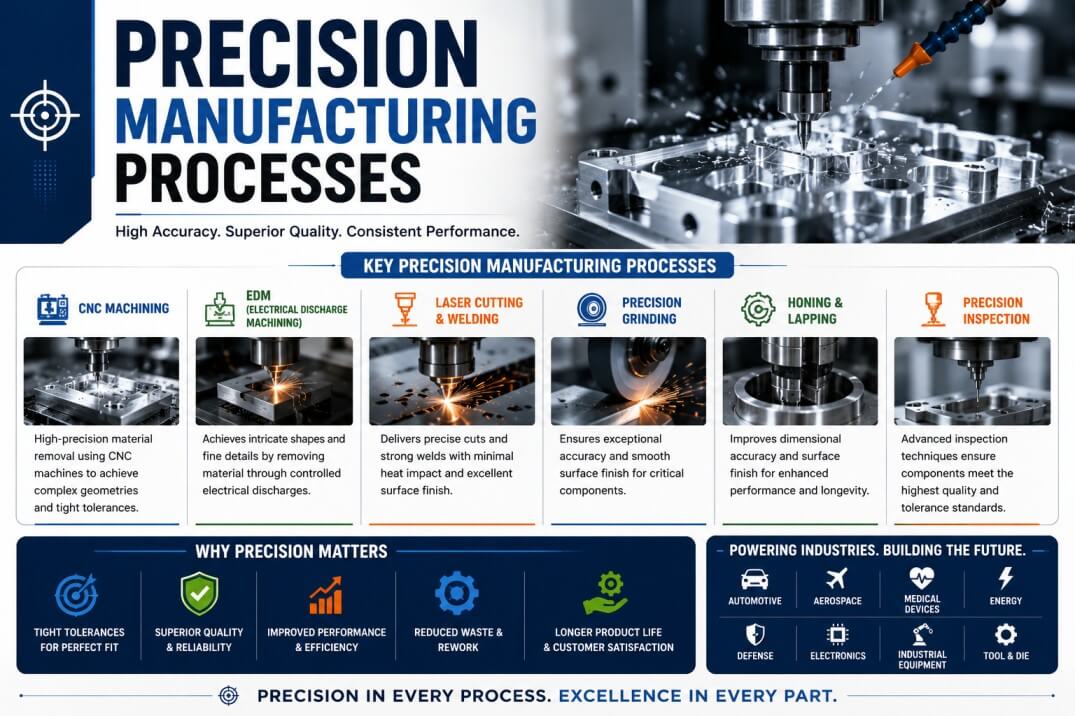
DFM principles apply across many manufacturing methods, including:
- CNC machining
- Injection molding
- Sheet metal fabrication
- Die casting
- 3D printing
- PCB manufacturing
- Metal stamping
- Additive manufacturing
Each process has its own design guidelines, making it important to consider manufacturing requirements early in product development.
Benefits of Implementing DFM
Reduced Manufacturing Costs
Simplified designs require fewer operations, less material, and shorter production times, resulting in lower overall manufacturing costs.
Faster Product Development
Identifying manufacturing issues during the design stage reduces redesign cycles and accelerates product launches.
Higher Product Quality
Designs optimized for manufacturing are generally more consistent, leading to fewer defects and better product reliability.
Improved Production Efficiency
Manufacturing teams spend less time troubleshooting difficult designs, allowing production lines to operate more efficiently.
Easier Scaling
Products designed with manufacturability in mind transition more smoothly from prototypes to full-scale production.
Common DFM Mistakes
Organizations often encounter avoidable challenges such as:
- Overly complex part designs
- Excessive use of custom components
- Specifying unnecessarily tight tolerances
- Ignoring manufacturing process limitations
- Failing to involve manufacturing engineers during design
- Delaying design reviews until after prototypes are built
Avoiding these mistakes can significantly reduce production costs and delays.
Best Practices for Successful DFM
To get the most value from DFM:
- Involve manufacturing engineers early in product development.
- Select manufacturing processes before finalizing designs.
- Standardize parts and materials whenever possible.
- Perform design reviews throughout development.
- Prototype and validate designs before mass production.
- Use simulation and manufacturability analysis tools to identify potential issues.
Design for Manufacturability vs. Design for Assembly
Although closely related, these concepts focus on different objectives.
| Design for Manufacturability (DFM) | Design for Assembly (DFA) |
|---|---|
| Focuses on making parts easier to manufacture | Focuses on making products easier to assemble |
| Optimizes manufacturing processes | Optimizes assembly operations |
| Reduces production complexity | Reduces assembly time and labor |
| Improves manufacturing efficiency | Improves assembly efficiency |
Many organizations combine both approaches under Design for Manufacturing and Assembly (DFMA).
Industries That Use DFM
DFM is widely used in industries where production efficiency and quality are critical, including:
- Automotive
- Aerospace
- Medical devices
- Consumer electronics
- Industrial equipment
- Robotics
- Renewable energy
- Semiconductor manufacturing
Conclusion
Design for Manufacturability is more than a cost-reduction strategy. It is a product development approach that helps organizations create products that are easier to manufacture, more reliable, and faster to bring to market.
By considering manufacturing requirements early in the design process, companies can reduce production costs, improve quality, minimize delays, and build products that scale efficiently. As products become more complex and competition increases, DFM has become an essential practice for manufacturers seeking to improve both operational efficiency and customer satisfaction.