How Consumer Electronics Brands Reduce Supply Chain Risk Through Manufacturing Networks
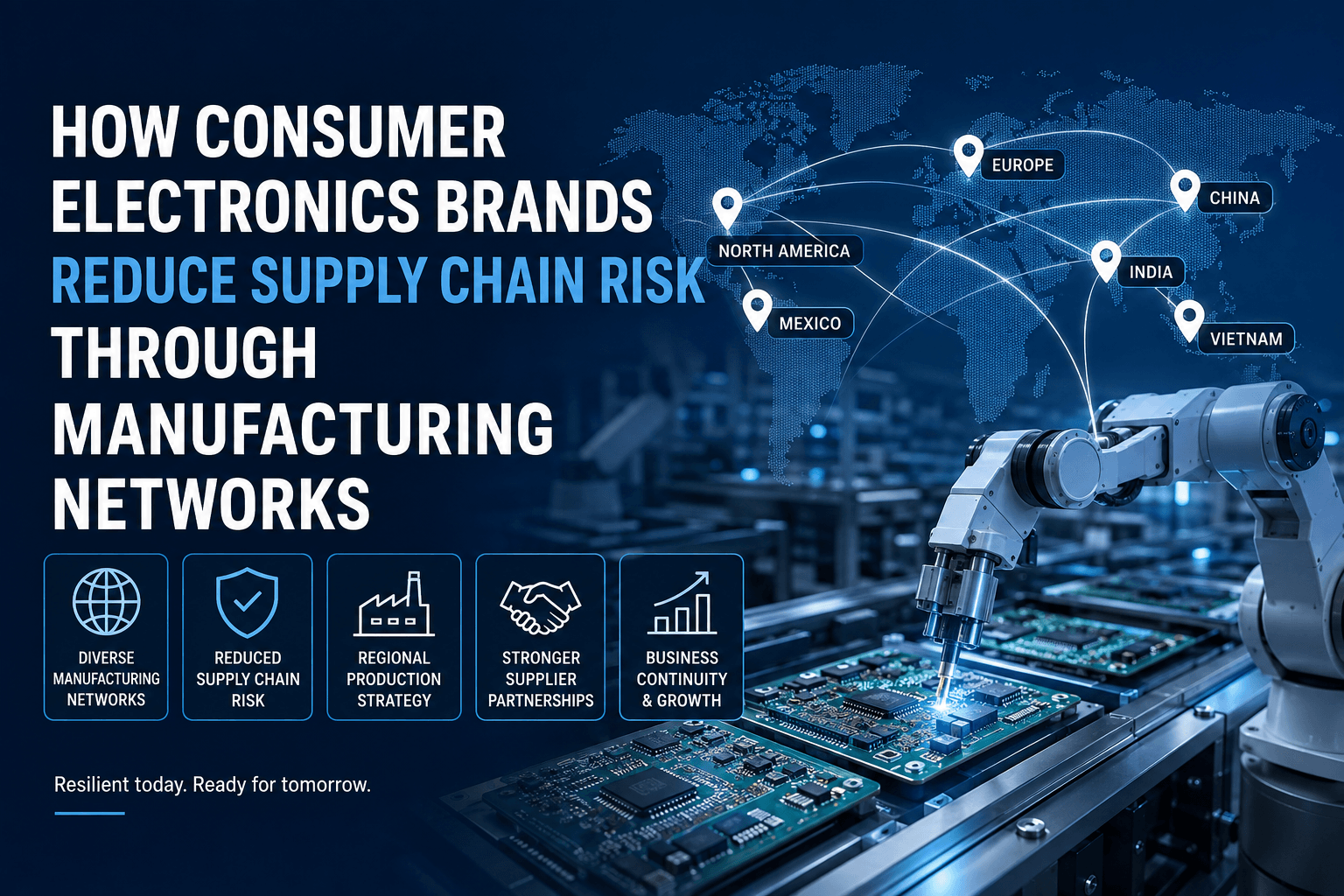
Consumer electronics companies can no longer rely on a single factory or country to keep products moving. Disruptions caused by geopolitical tensions, natural disasters, shipping delays, labor shortages, and changing trade policies have made supply chain resilience a business priority.
Instead of concentrating production in one location, many leading brands now build manufacturing networks that span multiple countries, suppliers, and production facilities. This approach helps companies respond faster to disruptions while maintaining product quality, controlling costs, and meeting customer demand.
In this article, we’ll look at how manufacturing networks reduce supply chain risk and why they have become a competitive advantage for consumer electronics brands.
Why Supply Chain Risk Has Increased
Consumer electronics supply chains are among the most complex in manufacturing. A single product may contain hundreds or even thousands of components sourced from suppliers across multiple continents.
When one supplier experiences delays, the impact can spread throughout the entire production process. Common risks include:
- Factory shutdowns
- Component shortages
- Shipping disruptions
- Tariffs and trade restrictions
- Political instability
- Currency fluctuations
- Quality issues from individual suppliers
Because product launch schedules are often fixed, even a short disruption can result in delayed shipments, lost sales, and higher operating costs.
What Is a Manufacturing Network?
A manufacturing network is a connected group of manufacturing facilities, suppliers, logistics providers, and assembly partners that work together to produce products across multiple locations.
Rather than depending on a single production site, brands distribute manufacturing across different regions. Production can shift between facilities when demand changes or disruptions occur.
A well-designed manufacturing network includes:
- Multiple qualified manufacturing partners
- Regional production facilities
- Backup component suppliers
- Shared quality standards
- Connected planning and inventory systems
- Flexible logistics routes
The goal is not simply to add more factories. It is to create flexibility that allows production to continue when unexpected events occur.
Diversifying Manufacturing Across Regions
Many consumer electronics brands now manufacture products in several countries instead of relying on one production hub.
For example, production may be distributed across:
- China for mature manufacturing ecosystems
- Vietnam for consumer electronics assembly
- India for regional production and growing domestic demand
- Mexico for North American markets
- Eastern Europe for European customers
Regional diversification reduces dependence on any single country while shortening shipping times for key markets.
If one region experiences disruptions, production can often increase elsewhere with less impact on customers.
Using Multiple Suppliers for Critical Components
Component shortages can stop production even when assembly lines remain operational.
To reduce this risk, manufacturers qualify multiple suppliers for important parts such as:
- Printed circuit boards
- Connectors
- Power supplies
- Plastic enclosures
- Displays
- Batteries
- Electronic components
Dual sourcing allows purchasing teams to shift orders when one supplier experiences capacity constraints or delivery issues.
Although qualifying additional suppliers requires more effort, it significantly improves long-term resilience.
Standardizing Production Across Facilities
Manufacturing flexibility depends on consistency.
Leading electronics companies develop standardized production processes so products can be manufactured in multiple facilities with minimal changes.
This includes standardizing:
- Equipment specifications
- Manufacturing instructions
- Quality inspection procedures
- Testing methods
- Software configurations
- Documentation
When factories follow the same production standards, brands can transfer manufacturing more quickly without sacrificing product quality.
Improving Supply Chain Visibility
Modern manufacturing networks rely on real-time data.
Instead of waiting for weekly reports, manufacturers monitor production, inventory, supplier performance, and logistics continuously.
Better visibility helps companies:
- Detect delays earlier
- Identify supplier risks
- Monitor inventory levels
- Predict material shortages
- Improve production planning
Digital supply chain platforms also enable faster communication between suppliers, manufacturers, and logistics providers, reducing response times during disruptions.
Building Regional Manufacturing Strategies
Many electronics companies now manufacture closer to their customers.
Regional production offers several advantages:
- Shorter shipping times
- Lower transportation costs
- Reduced import duties in some markets
- Faster response to changing demand
- Better support for local regulations
This strategy also lowers exposure to global shipping disruptions by reducing the distance products travel before reaching customers.
Strengthening Supplier Relationships
Supply chain resilience depends on strong partnerships.
Rather than selecting suppliers based only on cost, manufacturers increasingly evaluate:
- Financial stability
- Production capacity
- Quality performance
- Sustainability practices
- Technology capabilities
- Business continuity planning
Long-term supplier relationships encourage better collaboration, greater transparency, and faster problem solving during disruptions.
Investing in Flexible Manufacturing
Flexible manufacturing allows production lines to switch between products with minimal downtime.
This capability helps companies respond to:
- Seasonal demand changes
- New product launches
- Component shortages
- Unexpected market shifts
Automation, modular production systems, and digital manufacturing tools make it easier to adjust production without major delays.
Balancing Cost and Resilience
Building a resilient manufacturing network requires investment. Multiple suppliers, additional facilities, and higher inventory levels can increase operating costs.
However, many companies recognize that the cost of disruption is often much higher.
Missed product launches, lost revenue, emergency shipping, and damaged customer relationships can outweigh the savings from operating a highly concentrated supply chain.
The goal is not to eliminate every risk. It is to build enough flexibility to maintain operations when disruptions occur.
The Future of Electronics Manufacturing Networks
Manufacturing networks will continue evolving as technology and global markets change.
Several trends are shaping the future:
- Increased regional manufacturing
- Greater use of AI for demand forecasting
- Digital twins for production planning
- Automated supplier risk monitoring
- More sustainable sourcing strategies
- Expanded manufacturing partnerships
Companies that invest in resilient manufacturing ecosystems will be better positioned to adapt to future disruptions while meeting customer expectations.
Conclusion
Supply chain resilience has become a strategic advantage for consumer electronics brands. Manufacturing networks provide the flexibility needed to respond to disruptions without bringing production to a halt.
By diversifying manufacturing locations, qualifying multiple suppliers, standardizing production, improving visibility, and strengthening supplier relationships, companies can reduce operational risk while maintaining product quality and delivery performance.
As global supply chains become more complex, resilient manufacturing networks will remain essential for supporting growth, protecting customer commitments, and maintaining competitiveness in the consumer electronics industry.
Key Takeaways
- Manufacturing networks reduce dependence on a single factory or region.
- Regional production improves flexibility and shortens delivery times.
- Multiple qualified suppliers reduce component-related risks.
- Standardized manufacturing enables faster production transfers.
- Digital visibility helps companies detect and respond to disruptions earlier.
- Resilient supply chains support long-term growth and stronger customer satisfaction.
FAQs
Q. Why are manufacturing networks important for consumer electronics?
They help brands continue production during disruptions by spreading manufacturing across multiple facilities, suppliers, and regions.
Q. How does regional manufacturing reduce supply chain risk?
Producing closer to end markets reduces transportation delays, lowers logistics costs, and minimizes exposure to global shipping disruptions.
Q. What is dual sourcing?
Dual sourcing means qualifying two or more suppliers for critical components so production can continue if one supplier cannot deliver.
Q. Does a manufacturing network increase costs?
It can require higher upfront investment, but it often reduces the financial impact of supply chain disruptions, emergency logistics, and production downtime.