

Fabricated Metal Products for Infrastructure Projects: What Contractors Should Specify
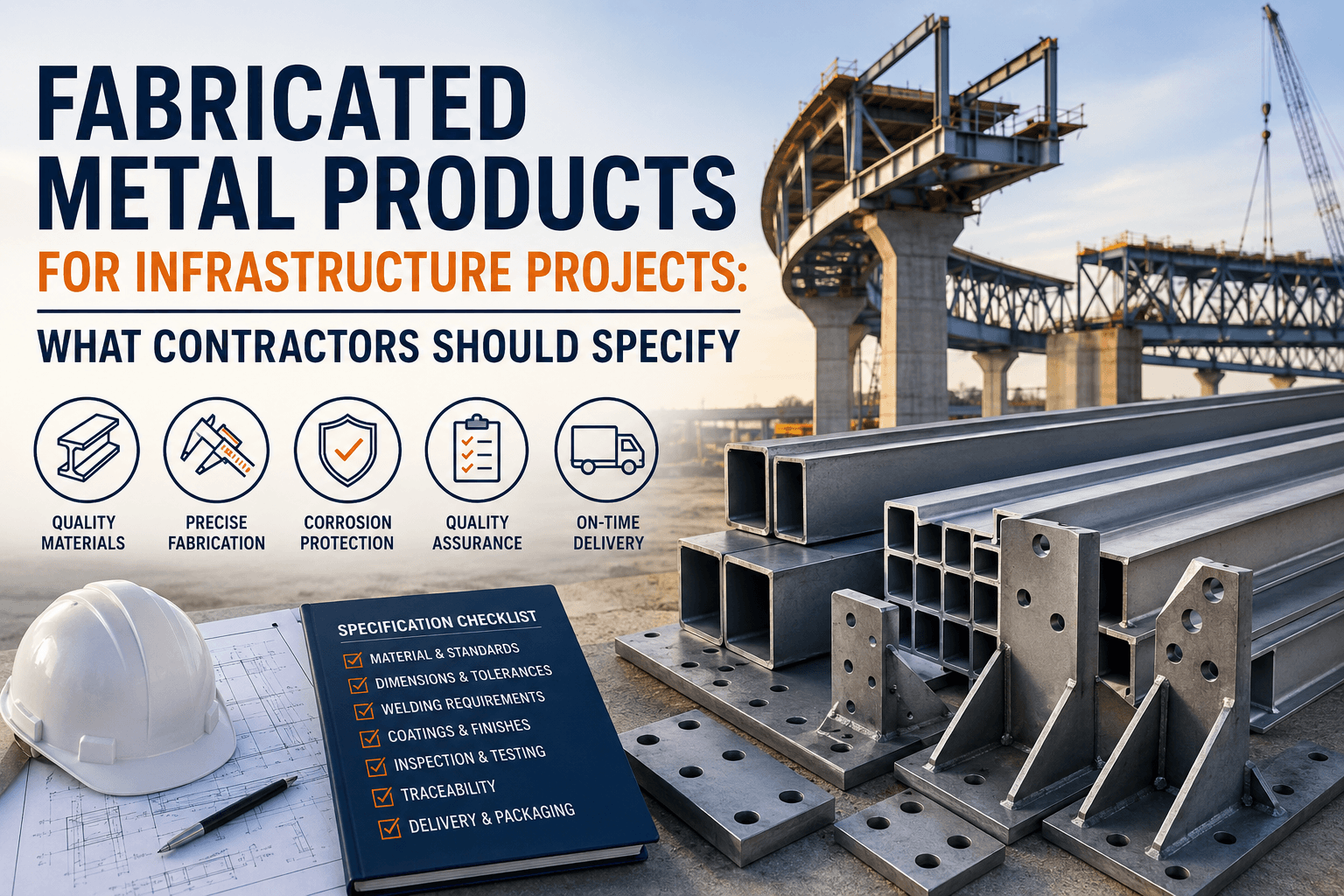
Infrastructure projects leave little room for uncertainty. Whether the job involves bridges, transportation systems, water treatment facilities, utilities, industrial structures, or public buildings, fabricated metal components have to perform reliably under demanding conditions.
The challenge for contractors is that a fabricated metal product is more than a piece of steel cut to a drawing. Material grade, dimensions, tolerances, welding, surface treatment, corrosion protection, inspection, documentation, and delivery requirements can all affect project performance.
A well-written specification helps control those variables before fabrication begins.
Here is what contractors should consider when specifying fabricated metal products for infrastructure projects.
Why Fabricated Metal Specifications Matter
Fabricated metal products often become part of the permanent structure. A problem that looks minor during fabrication can create significant issues during installation.
For example, incorrect hole locations can delay field assembly. Poor weld quality can require repairs or additional inspection. An unsuitable coating can lead to premature corrosion. Inconsistent dimensions can create fit-up problems when components arrive at the jobsite.
Clear specifications reduce these risks by defining what the fabricator is expected to produce and how the finished product will be verified.
A good specification should answer questions such as:
- What material should be used?
- What dimensions and tolerances are acceptable?
- Which fabrication standards apply?
- What welding requirements must be followed?
- What surface preparation and coating are required?
- What inspections or tests are necessary?
- What documentation should accompany the shipment?
- How should components be packaged and delivered?
The more critical the application, the more important these details become.
1. Specify the Correct Metal Grade and Material
Material selection should start with the engineering requirements of the project rather than simply choosing the most readily available metal.
Structural steel is common in infrastructure applications because of its strength, availability, and versatility. Stainless steel, aluminum, and other alloys may be more appropriate where corrosion resistance, weight, chemical exposure, or specific operating conditions are important.
Contractors should specify the required:
- Material type and grade
- Thickness or section size
- Mechanical properties
- Applicable material standard
- Required certifications or mill test reports
- Heat or lot traceability, when necessary
Material substitutions should not be treated casually. If an equivalent or alternative material is acceptable, the specification should explain the approval process.
This is particularly important for components that contribute directly to structural capacity or safety.
2. Define Dimensions and Tolerances Clearly
“Fabricate to drawing” is not always enough.
Infrastructure components frequently have to connect with other fabricated or prefabricated parts. Small dimensional differences can become significant when several components are assembled together.
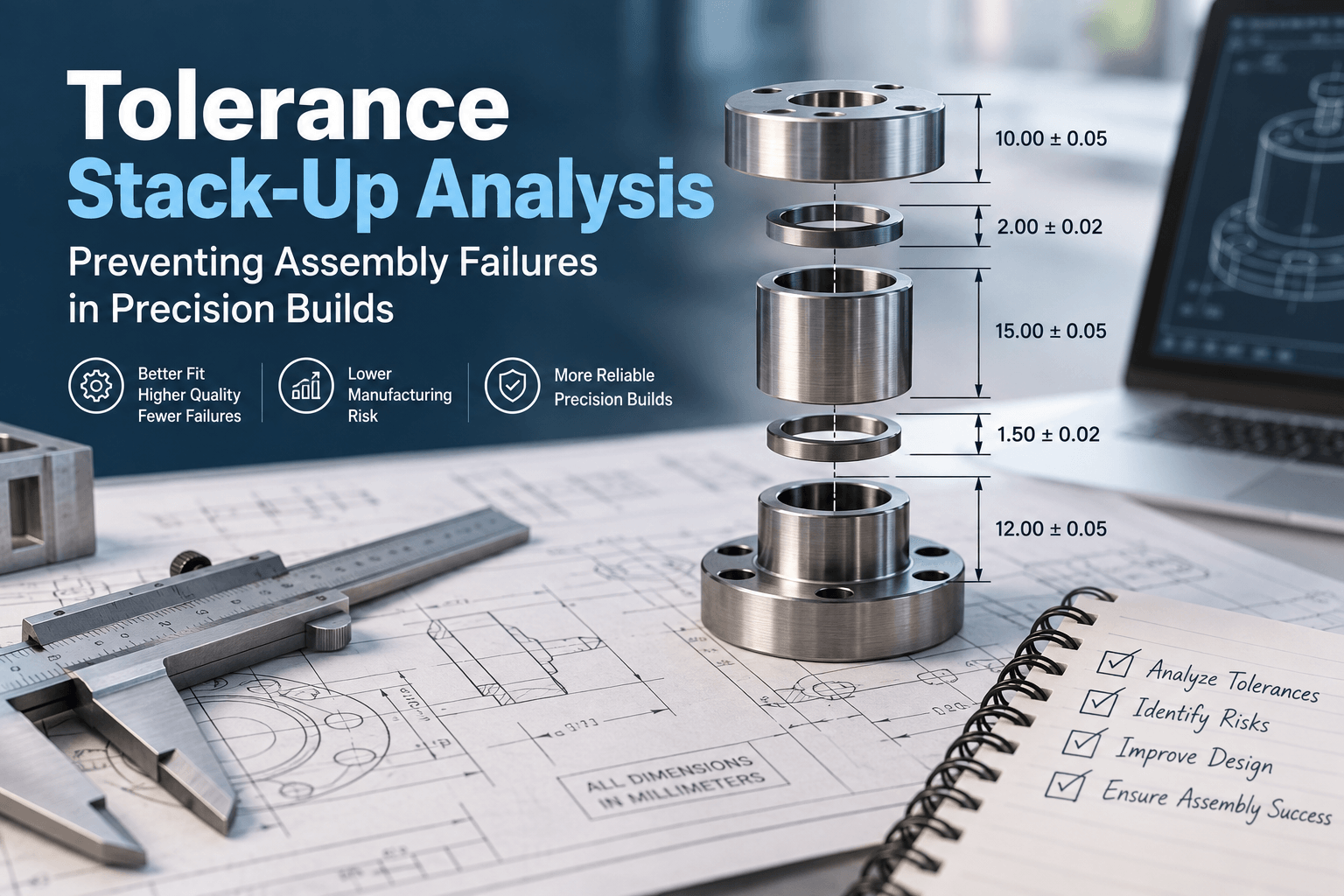
Specifications should identify critical dimensions and acceptable tolerances for features such as:
- Overall length, width, and height
- Plate thickness
- Hole diameter
- Hole spacing and location
- Angles and bends
- Flatness
- Squareness
- Welded assemblies
- Connection points
Not every dimension needs the same tolerance. Identifying critical interfaces allows the fabricator to focus inspection and quality control where dimensional accuracy matters most.
3. Specify Welding Requirements
Welding can have a major impact on the strength, durability, and appearance of fabricated metal products.
Contractors should define the applicable welding requirements and identify any special requirements for structural or safety-critical components.
Depending on the project, the specification may need to address:
- Approved welding procedures
- Welder qualifications
- Weld sizes and types
- Preheat and interpass temperature requirements
- Welding consumables
- Visual inspection
- Nondestructive testing
- Weld repair procedures
- Acceptance criteria
For critical welds, the project specification should also identify the required inspection method and extent of testing.
The goal is not simply to require “high-quality welding.” The specification should provide measurable requirements that the fabricator and inspection team can verify.
4. Address Surface Preparation and Corrosion Protection
Infrastructure components may be exposed to rain, humidity, road salts, industrial chemicals, wastewater, coastal conditions, or other corrosive environments.
That makes corrosion protection an important part of the fabrication specification.
Depending on the application, contractors may specify:
- Abrasive blasting
- Cleaning requirements
- Surface profile
- Primer systems
- Paint or protective coating systems
- Galvanizing
- Stainless steel finishes
- Coating thickness
- Holiday testing where applicable
- Repair procedures for damaged coating
The environment should guide the protection system.
A component used inside a dry building may have very different corrosion requirements from one installed outdoors, near a roadway, in a wastewater facility, or in a marine environment.
Contractors should also consider how the coating will affect field welding, bolting, or installation. The fabrication specification should make those interfaces clear.
5. Specify Fabrication Standards and Applicable Codes
A strong specification identifies the standards that govern fabrication, inspection, welding, materials, and coatings.
The correct standards will depend on the project’s location, design requirements, contract documents, and intended application.
Instead of relying on vague language such as “fabricate according to industry standards,” contractors should identify the applicable codes and standards directly in the project documents.
This helps establish a common reference point for the contractor, engineer, fabricator, inspector, and owner.
It also reduces disagreements about what constitutes acceptable workmanship.
6. Include Quality Control and Inspection Requirements
Quality control should be built into the specification rather than treated as a final inspection step.
Contractors should determine which characteristics need to be inspected during fabrication and which require final verification before shipment.
A project may require checks for:
- Material identification
- Dimensions
- Hole locations
- Weld quality
- Coating thickness
- Surface preparation
- Assembly fit
- Straightness and alignment
- Nondestructive testing
- Final visual inspection
For larger infrastructure projects, it can also be useful to define inspection hold points or witness points.
The specification should clarify who performs each inspection, what records must be maintained, and what happens if a component does not meet the acceptance criteria.
7. Require Traceability for Critical Components
Traceability becomes especially valuable when projects involve large quantities of similar fabricated parts.
A traceability system can connect the finished component to its material certificates, fabrication records, inspection results, and drawing revision.
Depending on project requirements, contractors may request:
- Part identification numbers
- Material heat numbers
- Mill certificates
- Welding records
- Inspection reports
- Coating reports
- Nonconformance records
- Final inspection documentation
Not every project requires the same level of documentation. However, critical structural components often benefit from stronger traceability because it makes quality verification easier throughout the project lifecycle.
8. Consider Design Revisions and Drawing Control
Infrastructure projects can involve frequent design changes.
A fabricator working from an outdated drawing can produce a component that meets the old requirements but cannot be installed on the current project.
Contractors should establish clear drawing and revision controls.
Specifications should identify:
- Approved drawing revisions
- Shop drawing requirements
- Approval responsibilities
- Revision identification
- Change notification procedures
- Document retention requirements
Before production begins, the fabricator should have a clearly identified set of approved documents.
This simple step can prevent expensive fabrication and rework problems.
9. Specify Finish and Appearance Requirements
Structural performance usually comes first, but appearance can still matter, particularly for public infrastructure and visible architectural components.
If appearance is important, contractors should specify the expected finish rather than assuming the fabricator will interpret it correctly.
Requirements may cover:
- Surface finish
- Visible weld appearance
- Edge treatment
- Grinding
- Coating color
- Gloss level
- Galvanized appearance
- Visible surface defects
- Repair of fabrication marks
Clear requirements help avoid subjective arguments during final inspection.
10. Plan for Transportation and Installation
A fabricated component can meet every dimensional and material requirement and still create problems if it cannot be transported or installed efficiently.
Before finalizing fabrication requirements, contractors should consider:
- Maximum shipping dimensions
- Component weight
- Lifting points
- Temporary bracing
- Packaging
- Protection of finished surfaces
- Field assembly requirements
- Access restrictions
- Site lifting equipment
Large components may need to be fabricated in sections and assembled at the jobsite.
That decision should be made early because it affects connection design, shipping, inspection, coating, and installation.
11. Define Delivery Requirements
Delivery is part of the specification, not simply a logistics issue.
Infrastructure projects often operate according to detailed construction schedules. A fabricated component that arrives late can hold up several downstream activities.
Contractors should communicate:
- Required delivery dates
- Delivery sequence
- Packaging requirements
- Identification and labeling
- Shipping documentation
- Storage requirements
- Site delivery restrictions
- Required advance notice
Components should be clearly identified so the installation team can quickly determine where each item belongs.
For projects with hundreds or thousands of fabricated parts, organized labeling can save considerable time during installation.
12. Choose a Fabricator Based on More Than Price
The lowest fabrication price is not necessarily the lowest project cost.
Contractors should evaluate whether a fabricator has the capacity, equipment, quality systems, experience, and production controls required for the project.
Important questions include:
- Has the fabricator handled similar infrastructure components?
- Can they meet the required tolerances?
- Do they have appropriate welding capabilities?
- Can they manage the required inspection program?
- Can they provide material and quality documentation?
- Do they have sufficient production capacity?
- Can they meet the project’s delivery schedule?
- How do they handle nonconforming work?
- Can they manage design changes efficiently?
A capable fabricator can help identify manufacturability issues before production begins, potentially reducing field problems and rework.
A Practical Specification Checklist
Before issuing a purchase order or fabrication package, contractors should review the following areas:
- Material type and grade are defined
- Applicable codes and standards are identified
- Critical dimensions and tolerances are specified
- Welding requirements are documented
- Inspection and testing requirements are clear
- Corrosion protection requirements are defined
- Finish and appearance requirements are documented
- Material and component traceability requirements are established
- Drawing revisions are controlled
- Packaging and transportation requirements are included
- Delivery sequence and schedule are clear
- Required quality documentation is identified
- Field installation requirements have been considered
- Approval procedures for substitutions and changes are defined
Common Specification Mistakes Contractors Should Avoid
Some fabrication problems begin with the project specification itself.
Being too vague
Requirements such as “high-quality steel fabrication” do not give a fabricator enough information to work from. Specific standards, tolerances, materials, and inspection requirements are much more useful.
Over-specifying noncritical details
The opposite problem can also create unnecessary cost. Not every dimension or fabrication feature requires an extremely tight tolerance.
Focus strict requirements on characteristics that affect structural performance, fit, safety, durability, or installation.
Ignoring the operating environment
A component’s environment should influence material and coating selection. Indoor and outdoor applications, for example, may require very different corrosion protection.
Leaving inspection until the end
Finding a fabrication problem after coating or shipment can make correction more difficult and expensive. Critical characteristics should be checked at appropriate stages throughout production.
Treating delivery as an afterthought
A fabricated component is only useful when it arrives in the right condition, at the right time, and with the information needed for installation.
What a Strong Fabrication Specification Achieves
A well-defined fabricated metal specification does more than tell a supplier what to manufacture.
It creates a shared understanding between the contractor, engineer, fabricator, inspector, and installation team.
The best specifications balance three priorities:
Performance: The component must meet the structural, operational, and environmental requirements of the project.
Manufacturability: The requirements should be practical to fabricate, inspect, finish, transport, and install.
Verification: The project team should be able to confirm objectively that the finished component meets the specified requirements.
When those three elements are aligned, contractors have greater control over quality, schedule, and project risk.
Final Thoughts
Fabricated metal products can play a critical role in infrastructure projects, but their performance depends on much more than the raw material used to make them.
Contractors should specify material grades, dimensions, tolerances, welding, coatings, inspection, traceability, documentation, transportation, and delivery requirements based on the actual demands of the project.
The earlier these details are defined, the easier it becomes for a qualified fabricator to produce components that arrive ready for installation and perform as intended.
For complex infrastructure work, a precise fabrication specification is not just paperwork. It is an important part of project quality control.