

Capacity Planning: Scaling Production Without Overcommitting
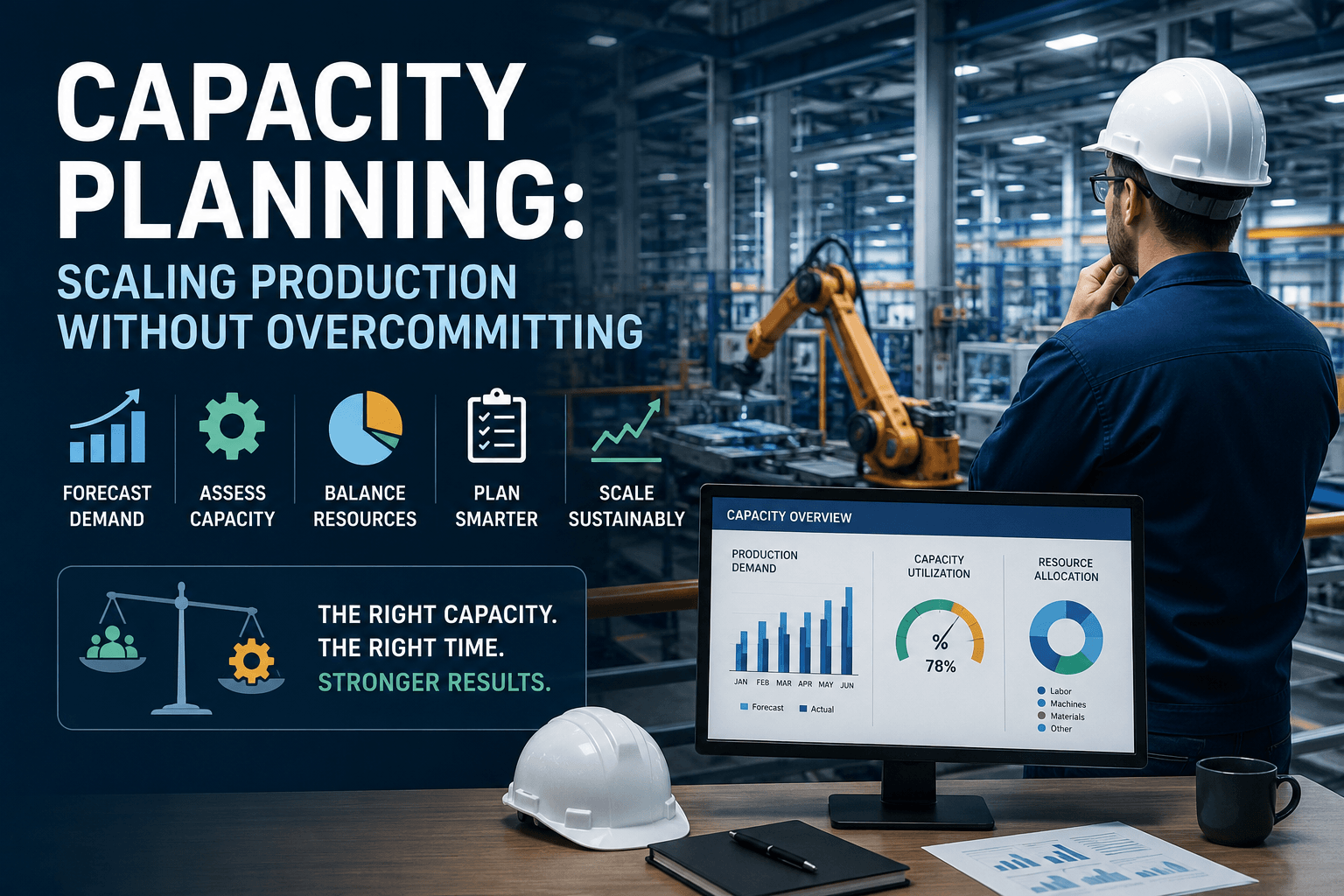
Manufacturers face constant pressure to meet growing demand without stretching people, equipment, or budgets too far. Expand too slowly, and you risk missed sales and unhappy customers. Expand too quickly, and you may end up with idle equipment, excess inventory, and unnecessary costs.
Capacity planning helps manufacturers find the right balance. It provides a structured way to understand production limits, forecast future demand, and make informed decisions about when and how to increase capacity.
This guide explains what capacity planning is, why it matters, and how manufacturing leaders can use it to support sustainable growth.
What Is Capacity Planning?
Capacity planning is the process of determining whether your manufacturing operation has enough resources to meet expected demand. Those resources include:
- Production equipment
- Labor
- Factory space
- Raw materials
- Suppliers
- Production time
The goal is not simply to maximize output. Instead, it is to ensure the business can consistently deliver customer orders without creating unnecessary costs or operational bottlenecks.
Why Capacity Planning Matters
Without effective capacity planning, even successful manufacturers can struggle to keep up with demand.
Common challenges include:
- Missed delivery deadlines
- Frequent overtime
- Equipment breakdowns caused by overuse
- Excess inventory from overproduction
- Poor customer satisfaction
- Higher operating costs
A well-planned capacity strategy helps organizations:
- Respond to changing customer demand
- Improve production efficiency
- Reduce waste
- Increase equipment utilization
- Make smarter investment decisions
- Support profitable growth
Types of Capacity Planning
Manufacturers typically use several forms of capacity planning together.
Workforce Capacity
This focuses on whether enough skilled employees are available to meet production targets. It considers shift schedules, overtime, hiring plans, training, and employee availability.
Machine Capacity
Machine capacity planning evaluates whether production equipment can handle forecasted workloads. It also accounts for maintenance schedules, downtime, and equipment reliability.
Material Capacity
Even if labor and equipment are available, production can slow if materials arrive late. Material capacity planning aligns purchasing and supplier performance with production schedules.
Factors That Influence Capacity
Several variables affect how much a manufacturing operation can realistically produce.
Demand Forecasts
Reliable sales forecasts provide the foundation for accurate capacity planning. Understanding seasonal demand, market trends, and customer commitments helps production teams prepare in advance.
Production Constraints
Every manufacturing process has constraints. These may include limited machine availability, specialized labor, supplier lead times, or quality inspection requirements.
Identifying these constraints early allows leaders to plan around them instead of reacting after delays occur.
Equipment Performance
Actual production capacity is often lower than theoretical capacity due to maintenance, changeovers, and unexpected downtime.
Tracking real equipment performance provides a more accurate picture of available capacity.
Capacity Planning Strategies
Different business situations require different planning approaches.
Lead Strategy
Capacity is expanded before demand increases.
This approach helps manufacturers respond quickly to new business opportunities but may increase operating costs if demand grows more slowly than expected.
Lag Strategy
Capacity is added only after demand has consistently increased.
This reduces financial risk but may result in production delays or missed sales during periods of rapid growth.
Match Strategy
Capacity is expanded gradually as demand develops.
Many manufacturers prefer this balanced approach because it limits risk while maintaining flexibility.
Best Practices for Effective Capacity Planning
Successful manufacturers treat capacity planning as an ongoing process rather than an annual exercise.
Some proven practices include:
- Monitor production performance regularly.
- Use accurate demand forecasts.
- Review equipment utilization.
- Identify bottlenecks before they become major problems.
- Improve communication between sales, operations, procurement, and production.
- Update capacity plans whenever market conditions change.
- Use historical production data to improve future planning.
Common Capacity Planning Mistakes
Even experienced organizations can make costly planning errors.
Some of the most common include:
- Relying on outdated demand forecasts
- Ignoring planned maintenance
- Underestimating setup and changeover times
- Planning for theoretical instead of actual production capacity
- Expanding capacity without evaluating return on investment
- Failing to coordinate across departments
Avoiding these mistakes helps reduce costly surprises and supports more consistent production performance.
How Technology Improves Capacity Planning
Modern manufacturing software gives leaders greater visibility into production operations.
Integrated planning tools can help organizations:
- Track machine utilization in real time
- Monitor production schedules
- Forecast future demand
- Identify capacity constraints
- Simulate different production scenarios
- Support data-driven investment decisions
With better visibility, manufacturing leaders can make faster decisions and adjust production plans before small issues become major disruptions.
Key Takeaways
Capacity planning is essential for manufacturers that want to grow without sacrificing efficiency or profitability. By understanding production limits, forecasting demand accurately, and continuously monitoring available resources, organizations can make informed decisions about when to increase capacity and where to invest.
Rather than reacting to production shortages or excess capacity, manufacturers with effective planning processes stay prepared for changing market conditions while maintaining operational stability.
Frequently Asked Questions
Q. What is capacity planning in manufacturing?
Capacity planning is the process of determining whether a manufacturer has enough labor, equipment, materials, and production time to meet expected customer demand efficiently.
Q. Why is capacity planning important?
It helps manufacturers avoid production bottlenecks, reduce costs, improve delivery performance, and support sustainable business growth.
Q. What are the main types of capacity planning?
The three primary types are workforce capacity planning, machine capacity planning, and material capacity planning.
Q. How often should manufacturers review capacity plans?
Most manufacturers benefit from reviewing capacity regularly, such as monthly or quarterly, while updating plans whenever demand, production schedules, or supply conditions change.