

ESG Reporting for Manufacturers: What Buyers Are Asking For
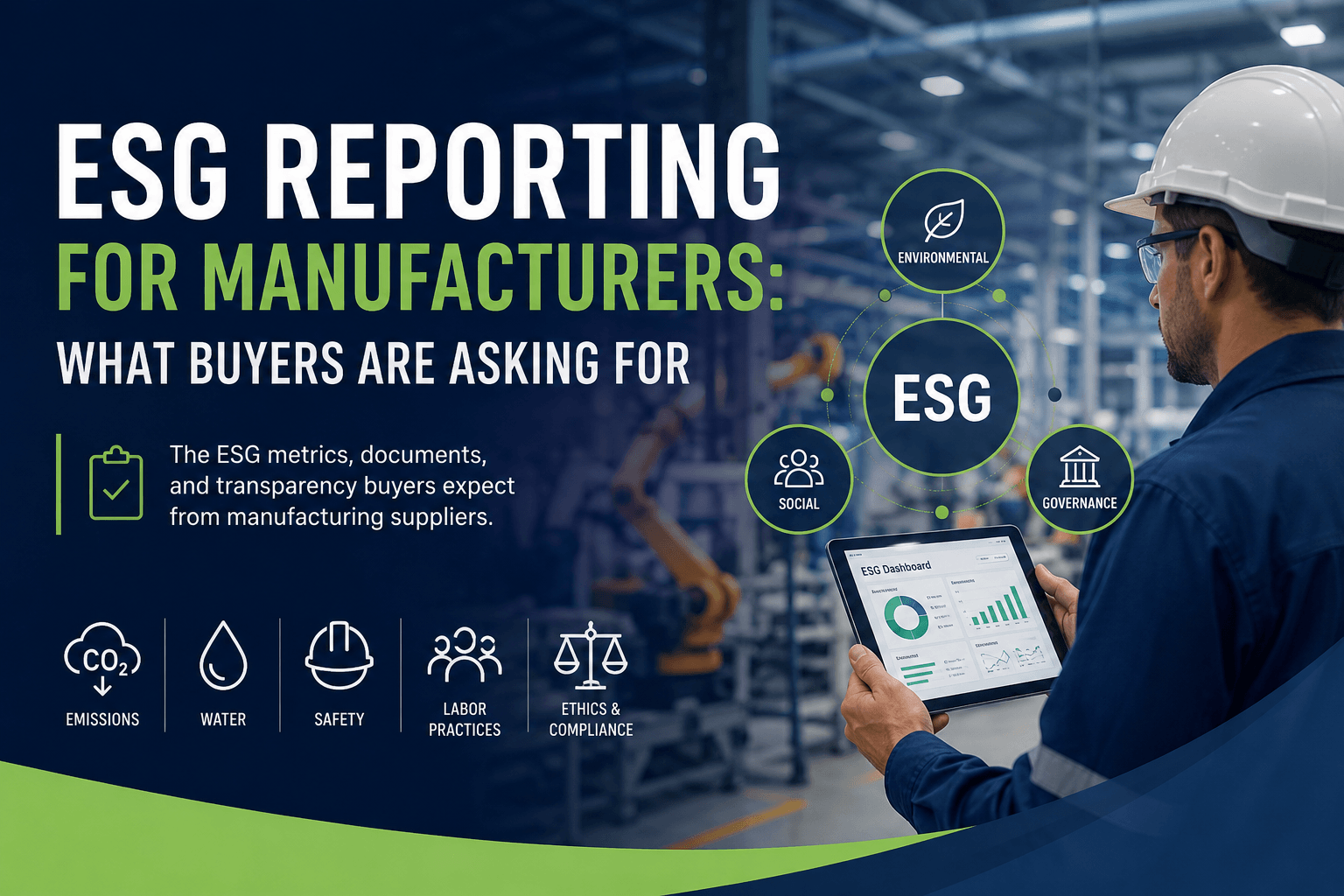
Environmental, Social, and Governance (ESG) reporting has become part of the buying process for many manufacturers. Large enterprises are no longer evaluating suppliers on price, quality, and delivery alone. They also want evidence that their suppliers manage environmental impacts, labor practices, and business ethics responsibly.
For manufacturers, this shift means ESG reporting is no longer just a compliance exercise. It is becoming a competitive advantage. Suppliers that can provide accurate ESG data often move through procurement reviews more quickly and strengthen long-term customer relationships.
This guide explains what buyers typically ask for, why these requests are increasing, and how manufacturers can prepare.
Why Buyers Are Requesting ESG Information
Companies face growing pressure from regulators, investors, customers, and shareholders to improve transparency across their supply chains. Since suppliers contribute significantly to a company’s environmental and social impact, procurement teams increasingly evaluate ESG performance before awarding contracts.
Common reasons buyers request ESG information include:
- Meeting regulatory reporting requirements.
- Reducing supply chain risk.
- Supporting corporate sustainability goals.
- Demonstrating responsible sourcing practices.
- Tracking Scope 3 greenhouse gas emissions.
- Meeting customer and investor expectations.
As a result, supplier questionnaires that once focused only on quality certifications now often include extensive ESG sections.
The Most Common ESG Questions Buyers Ask
Although every procurement process differs, manufacturers can expect questions in several key areas.
Environmental Performance
Environmental reporting typically receives the most attention.
Buyers often request information about:
- Greenhouse gas emissions.
- Energy consumption.
- Renewable energy usage.
- Water consumption.
- Waste generation and recycling.
- Hazardous material management.
- Air emissions.
- Carbon reduction targets.
Some customers may also ask whether emissions are independently verified or calculated using recognized reporting standards.
Supply Chain Transparency
Many organizations now expect suppliers to understand the environmental and social impacts beyond their own facilities.
Typical questions include:
- Where do raw materials originate?
- How are suppliers evaluated?
- Are high-risk suppliers monitored?
- Are conflict minerals identified?
- Are responsible sourcing policies in place?
Manufacturers with visibility into their supply chains are generally better positioned to answer these requests.
Labor and Human Rights
Social responsibility is now a standard part of supplier assessments.
Buyers frequently ask about:
- Employee health and safety.
- Lost Time Injury Frequency Rate (LTIFR).
- Workforce diversity.
- Equal employment practices.
- Child labor prevention.
- Forced labor policies.
- Employee training.
- Working conditions.
Many procurement teams also request copies of workplace policies or certifications.
Governance and Ethics
Governance demonstrates how a company manages risk and ethical business practices.
Common requests include:
- Code of conduct.
- Anti-corruption policy.
- Whistleblower procedures.
- Data privacy practices.
- Cybersecurity controls.
- Board oversight of ESG initiatives.
- Compliance training.
Strong governance often gives buyers greater confidence in long-term supplier reliability.
ESG Metrics That Matter Most
Not every metric carries equal weight. Buyers generally prioritize data that is measurable, consistent, and comparable over time.
Some of the most requested metrics include:
| Category | Common Metrics |
|---|---|
| Environmental | Scope 1 and Scope 2 emissions, energy use, water use, waste diverted from landfill |
| Social | Injury rates, employee turnover, diversity metrics, training hours |
| Governance | Ethics training completion, compliance incidents, supplier audits |
Rather than reporting every possible metric, manufacturers should focus on collecting reliable data that aligns with customer expectations.
Documentation Buyers Often Request
Procurement teams frequently ask suppliers to provide supporting documentation in addition to questionnaires.
Examples include:
- Sustainability reports.
- ESG policies.
- Environmental management certifications.
- Quality certifications.
- Health and safety certifications.
- Carbon inventories.
- Supplier codes of conduct.
- Modern slavery statements.
- Risk assessment documentation.
Keeping these documents organized and updated reduces delays during supplier qualification.
Common Challenges for Manufacturers
Many manufacturers struggle with ESG reporting because information is spread across multiple systems and departments.
Typical obstacles include:
- Manual spreadsheet tracking.
- Inconsistent data collection.
- Missing supplier information.
- Limited emissions calculations.
- Difficulty responding to multiple customer questionnaires.
- Frequent reporting deadlines.
Without a centralized process, preparing ESG responses can become time-consuming and prone to errors.
How Manufacturers Can Prepare
The strongest ESG reporting programs begin with accurate operational data rather than polished reports.
A practical approach includes:
- Identify the ESG metrics customers request most often.
- Assign ownership for each data source.
- Standardize data collection across facilities.
- Review supplier information regularly.
- Track progress throughout the year instead of only before audits.
- Store supporting documentation in a central location.
- Review reporting processes annually as customer requirements evolve.
This preparation helps manufacturers respond more quickly when procurement teams request ESG information.
The Role of Digital Tools
As ESG reporting becomes more complex, many manufacturers are replacing manual processes with software that centralizes environmental, operational, and supplier data.
Digital platforms can help organizations:
- Collect ESG data automatically.
- Monitor sustainability KPIs.
- Generate audit-ready reports.
- Support emissions calculations.
- Maintain document libraries.
- Track improvement initiatives.
- Respond to customer questionnaires more efficiently.
The goal is not simply producing reports. It is creating a repeatable process that improves data quality and reduces reporting effort over time.
Looking Ahead
Buyer expectations around ESG reporting are likely to continue expanding. New regulations, evolving sustainability standards, and increasing focus on supply chain transparency mean manufacturers should expect more detailed requests in the coming years.
Organizations that build reliable ESG reporting processes today will be better prepared for future procurement requirements. More importantly, they will be able to demonstrate responsible business practices with confidence, strengthening trust with customers and improving their position in competitive sourcing decisions.
Key Takeaways
- ESG reporting is becoming a standard requirement in manufacturing procurement.
- Buyers increasingly evaluate environmental, social, and governance performance alongside cost and quality.
- Reliable, well-documented ESG data speeds supplier qualification and builds customer confidence.
- Preparing standardized metrics and supporting documentation reduces reporting effort.
- Digital tools can simplify data collection and improve reporting accuracy.
Frequently Asked Questions
Q. Do small manufacturers need ESG reporting?
Increasingly, yes. Even small suppliers may receive ESG questionnaires from larger customers that must report on their supply chains.
Q. Which ESG metrics should manufacturers track first?
Start with energy use, greenhouse gas emissions, water consumption, workplace safety, employee training, and governance policies. These are among the most commonly requested by enterprise buyers.
Q. Is ESG reporting mandatory?
Requirements vary by country, industry, and customer. Even where reporting is not legally required, many manufacturers must provide ESG information to qualify as suppliers.
Q. How often should ESG data be updated?
Operational metrics are commonly tracked monthly or quarterly, while formal ESG reports are often published annually. Internal monitoring throughout the year helps ensure reporting remains accurate and audit-ready.