Surface Finishing Techniques: Anodizing, Plating, and Powder Coating Explained
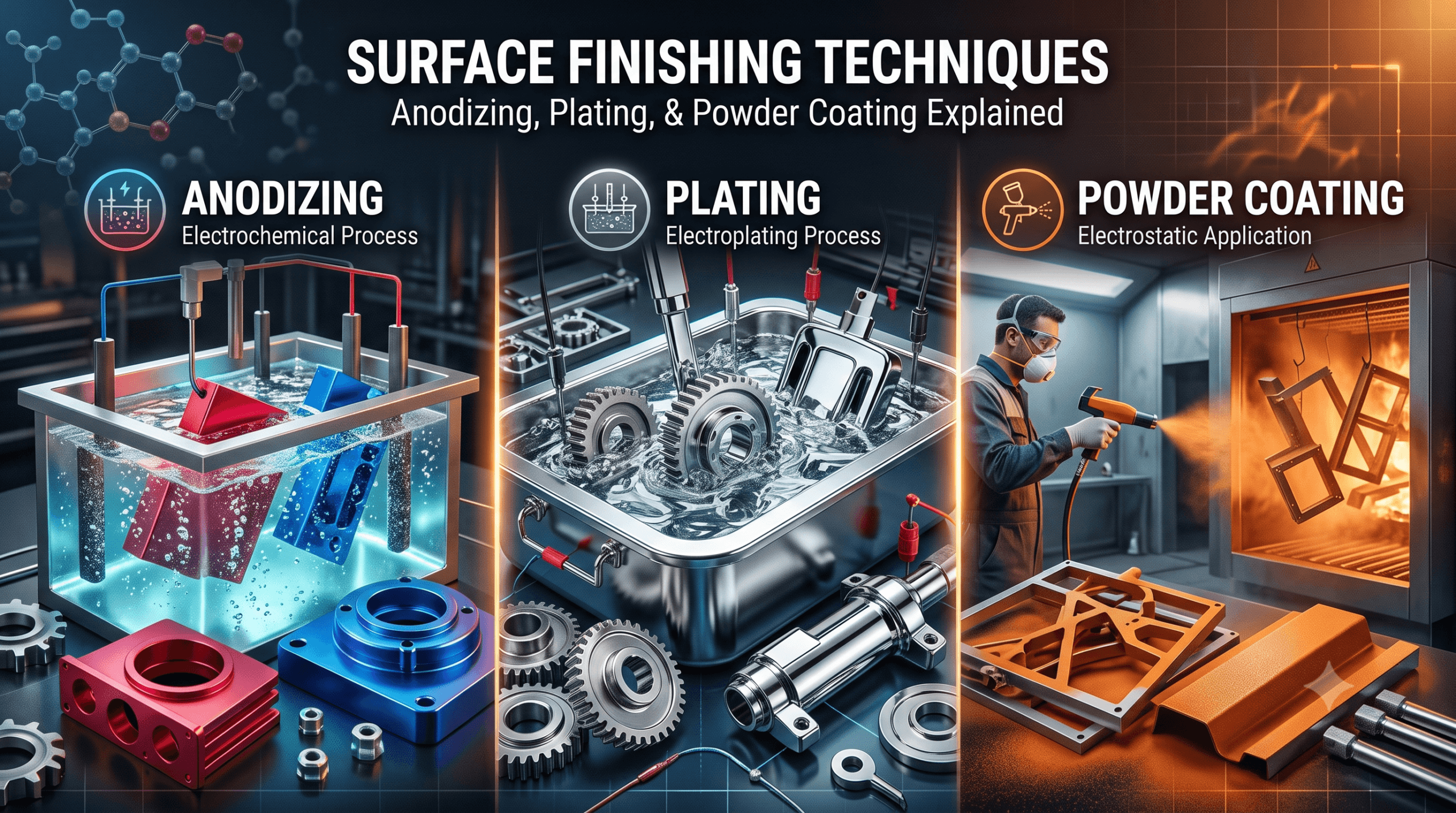
Surface finishing plays a critical role in manufacturing. Beyond improving appearance, it protects components from corrosion, wear, chemicals, and environmental damage while extending product life. Choosing the right finishing method can also reduce maintenance costs, improve performance, and help products meet industry standards.
Among the most widely used surface finishing techniques are anodizing, plating, and powder coating. Each offers unique advantages and is suited to different materials and applications.
This guide explains how these processes work, their benefits, limitations, and how to determine the best option for your project.
What Is Surface Finishing?
Surface finishing refers to any process that modifies the outer layer of a manufactured part. The goal may be to improve:
- Corrosion resistance
- Wear resistance
- Appearance
- Electrical conductivity
- Chemical resistance
- Paint adhesion
- Surface hardness
Surface finishing is commonly used in industries such as aerospace, automotive, electronics, construction, medical devices, and consumer products.
What Is Anodizing?
Anodizing is an electrochemical process that increases the natural oxide layer on aluminum. Instead of applying a coating on top of the metal, anodizing converts the metal surface itself into a durable oxide layer.
Because the coating becomes part of the aluminum, it does not peel or flake over time.
Advantages of Anodizing
- Excellent corrosion resistance
- Increased surface hardness
- Lightweight finish
- Long-lasting color options
- Improved wear resistance
- Environmentally friendly compared to many coating methods
Limitations
- Primarily suitable for aluminum and titanium
- Limited repair options if damaged
- Color consistency may vary between production batches
Common Applications
- Aerospace components
- Smartphone and laptop housings
- Automotive trim
- Architectural aluminum
- Medical equipment
- Industrial machinery
What Is Plating?
Plating is the process of depositing a thin layer of another metal onto the surface of a component. The deposited metal improves appearance, conductivity, corrosion resistance, or wear resistance.
The process may use electricity (electroplating) or chemical reactions (electroless plating).
Common plating materials include:
- Nickel
- Chrome
- Zinc
- Gold
- Silver
- Copper
Advantages of Plating
- Excellent corrosion protection
- Improved electrical conductivity
- Decorative finishes
- Better solderability
- Enhanced wear resistance
Limitations
- Multiple processing steps
- Environmental regulations for some chemicals
- Surface preparation is critical
- Coating may chip if poorly applied
Common Applications
- Automotive parts
- Electrical connectors
- Fasteners
- Medical instruments
- Industrial tools
- Consumer electronics
What Is Powder Coating?
Powder coating is a dry finishing process where electrostatically charged powder is applied to a surface and then cured in an oven. The heat melts the powder into a smooth, durable coating.
Unlike traditional liquid paint, powder coating contains little or no solvent, making it an environmentally friendly option.
Advantages of Powder Coating
- Thick, durable finish
- Excellent impact resistance
- Wide range of colors and textures
- Resistant to scratches and fading
- Low maintenance
- Minimal material waste
Limitations
- Requires heat curing
- Difficult to repair seamlessly
- Not suitable for every substrate
- Thick coating may not work for precision parts
Common Applications
- Outdoor furniture
- Automotive wheels
- Appliances
- Metal fencing
- Industrial equipment
- Construction materials
Anodizing vs Plating vs Powder Coating
| Feature | Anodizing | Plating | Powder Coating |
|---|---|---|---|
| Base Material | Mainly aluminum | Most metals | Most metals |
| Corrosion Resistance | Excellent | Excellent | Excellent |
| Wear Resistance | Very high | High | High |
| Appearance | Metallic finish | Decorative metallic finish | Wide range of colors |
| Thickness | Thin oxide layer | Thin metal layer | Thick protective coating |
| Electrical Conductivity | Reduced | Can improve conductivity | Non-conductive |
| Repairability | Difficult | Moderate | Difficult |
| Best For | Aluminum components | Functional or decorative metal finishes | Durable protective coatings |
How to Choose the Right Surface Finish
The best finishing method depends on the product’s intended use, material, operating environment, and performance requirements.
Choose anodizing if you need:
- Durable aluminum parts
- Excellent corrosion resistance
- Lightweight protection
- Long-lasting color stability
Choose plating if you need:
- High electrical conductivity
- Decorative metal finishes
- Improved solderability
- Enhanced corrosion protection on steel or other metals
Choose powder coating if you need:
- Strong impact resistance
- Outdoor durability
- Attractive color options
- Cost-effective finishing for large metal components
Factors to Consider Before Selecting a Finish
Before making a decision, evaluate:
- Base material
- Exposure to moisture or chemicals
- Required appearance
- Mechanical wear
- Production volume
- Cost constraints
- Regulatory requirements
- Environmental conditions
Considering these factors early can reduce manufacturing costs and improve product reliability.
Industry Applications
Different industries often rely on different finishing methods based on performance needs.
Automotive
- Powder-coated wheels
- Zinc-plated fasteners
- Anodized aluminum trim
Aerospace
- Hard anodized aluminum parts
- Nickel-plated components
- Corrosion-resistant structural parts
Electronics
- Gold-plated connectors
- Anodized aluminum enclosures
- EMI shielding components
Construction
- Powder-coated railings
- Anodized window frames
- Plated hardware
Medical Devices
- Stainless steel plating
- Anodized surgical instruments
- Wear-resistant equipment components
Environmental Considerations
Modern manufacturers increasingly prioritize sustainable finishing processes.
Anodizing generally produces durable finishes with relatively low environmental impact when wastewater is properly treated.
Powder coating generates minimal volatile organic compounds (VOCs) and allows unused powder to be recycled, making it one of the more environmentally friendly finishing methods.
Traditional plating can involve chemicals that require careful handling and disposal, although newer technologies continue to improve environmental performance and compliance.
Conclusion
Anodizing, plating, and powder coating each provide distinct benefits for protecting and enhancing metal components.
Anodizing is ideal for aluminum parts that require exceptional durability and corrosion resistance. Plating offers functional and decorative improvements across a wide range of metals, particularly where conductivity or specialized surface properties are important. Powder coating delivers a tough, attractive finish that performs well in demanding indoor and outdoor environments.
Understanding your material, performance requirements, operating environment, and budget will help you select the most effective surface finishing technique for your application.
Frequently Asked Questions
Which surface finishing method lasts the longest?
The lifespan depends on the environment and application. Hard anodizing and high-quality powder coating are both known for exceptional durability, while properly applied plating can also provide long-term protection.
Is anodizing better than powder coating?
Neither is universally better. Anodizing is ideal for aluminum and preserves the metal’s appearance, while powder coating provides thicker protection and offers many color options.
Can steel be anodized?
No. Standard anodizing is designed primarily for aluminum, although similar electrochemical treatments exist for other metals such as titanium.
Which finish provides the best corrosion resistance?
All three methods offer excellent corrosion protection when correctly applied. The best choice depends on the base material, operating environment, and product requirements.
Is powder coating more environmentally friendly than paint?
In many cases, yes. Powder coating produces little or no VOC emissions and typically results in less material waste than conventional liquid paint.