Defense Manufacturing and Offset Requirements Explained
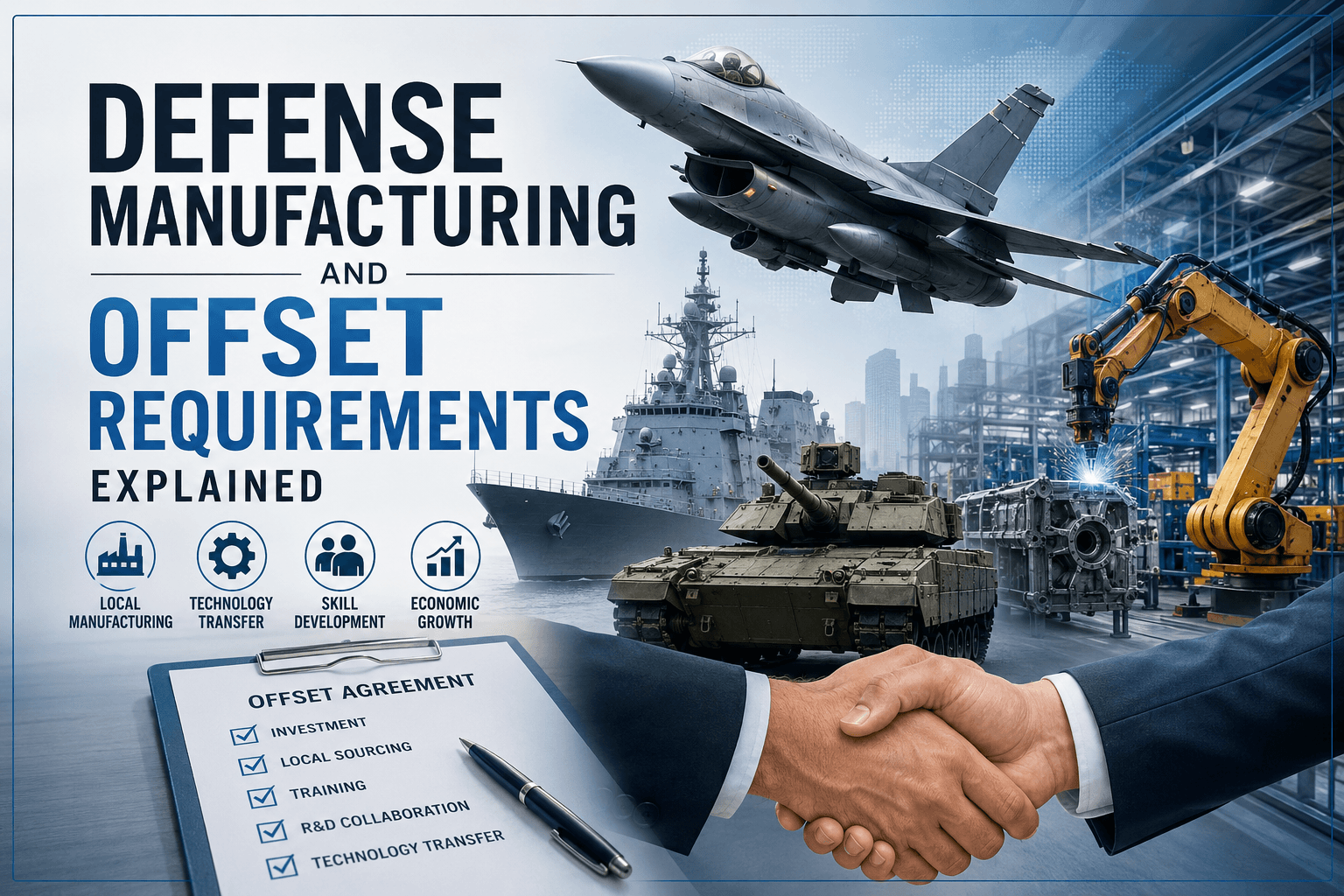
Defense manufacturing is one of the most regulated and strategically important industries in the world. Governments invest heavily in military equipment, but they also want those investments to strengthen domestic industries, create skilled jobs, and improve national security. One of the primary tools used to achieve these goals is the defense offset.
Offset requirements influence how defense contracts are awarded and how international defense companies do business. Whether a country is buying fighter aircraft, naval vessels, missile systems, or cybersecurity solutions, offset policies often play a major role in procurement decisions.
This article explains what defense manufacturing is, how offset requirements work, and why they matter for governments, defense contractors, and local industries.
What Is Defense Manufacturing?
Defense manufacturing is the design, development, production, testing, and maintenance of military equipment and defense technologies. The sector covers a wide range of products, including:
- Aircraft and helicopters
- Naval ships and submarines
- Armored vehicles
- Missiles and weapons systems
- Radar and surveillance equipment
- Communication systems
- Electronic warfare technologies
- Space and satellite systems
- Unmanned aerial vehicles (UAVs)
- Cybersecurity and defense software
Unlike commercial manufacturing, defense manufacturing operates under strict security regulations, export controls, and government oversight. Manufacturers must comply with national defense standards while protecting sensitive technologies and intellectual property.
What Are Defense Offset Requirements?
Defense offsets are contractual obligations that require foreign defense suppliers to invest in the purchasing country’s economy as part of a defense procurement contract.
When a government buys military equipment from an international supplier, it may require the supplier to provide economic or industrial benefits beyond delivering the equipment.
These benefits can include:
- Local manufacturing
- Technology transfer
- Workforce training
- Research and development partnerships
- Investments in domestic industries
- Procurement from local suppliers
- Establishment of maintenance and repair facilities
Offset requirements help ensure that defense spending contributes to long-term national industrial development rather than simply importing military equipment.
Why Governments Require Defense Offsets
Defense procurement often involves billions of dollars in public investment. Governments use offset policies to maximize the economic and strategic value of these purchases.
Common objectives include:
Strengthening Domestic Industry
Offsets encourage international companies to partner with local manufacturers, helping domestic businesses develop advanced production capabilities.
Creating Skilled Employment
Defense manufacturing generates high-value engineering, manufacturing, software, and technical jobs that support long-term economic growth.
Building National Security Capabilities
Local production reduces dependence on foreign suppliers during geopolitical tensions or supply chain disruptions.
Encouraging Technology Transfer
Governments often require foreign contractors to share manufacturing expertise, engineering knowledge, or production processes that strengthen local capabilities.
Developing Export Potential
Countries seek to build competitive defense industries capable of supplying products and services to international markets.
Types of Defense Offsets
Defense offsets generally fall into two categories.
Direct Offsets
Direct offsets relate specifically to the defense equipment being purchased.
Examples include:
- Manufacturing components locally
- Licensing production to domestic companies
- Establishing maintenance facilities
- Training local engineers
- Joint production agreements
- Technology transfer for the purchased system
For example, a fighter aircraft manufacturer may agree to assemble part of the aircraft within the purchasing country while training local technicians.
Indirect Offsets
Indirect offsets involve investments outside the specific defense program.
Examples include:
- Investing in local manufacturing industries
- Funding research institutions
- Supporting aerospace startups
- Building technology parks
- Purchasing goods from domestic companies
- Developing civilian aerospace capabilities
Indirect offsets aim to stimulate broader economic development beyond the defense sector.
Common Offset Activities
Defense contractors may fulfill offset obligations through various initiatives, including:
- Joint ventures with domestic firms
- Licensed production agreements
- Local assembly facilities
- Component sourcing from local suppliers
- Research collaborations with universities
- Workforce development programs
- Engineering training
- Supply chain development
- Export assistance for local manufacturers
- Infrastructure investments
The specific requirements depend on each country’s defense procurement policies.
Benefits of Offset Requirements
Well-designed offset programs can provide significant advantages.
Economic Growth
Local manufacturing and investment generate new business opportunities across engineering, electronics, logistics, and advanced manufacturing sectors.
Technology Advancement
Access to advanced production methods and engineering expertise helps domestic companies improve their competitiveness.
Supply Chain Development
Offsets often encourage international suppliers to integrate local businesses into global defense supply chains.
Skills Development
Training programs enhance the technical capabilities of engineers, technicians, and manufacturing professionals.
Increased Industrial Capacity
Domestic firms gain experience producing complex systems that can later support civilian aerospace, automotive, and advanced manufacturing industries.
Challenges of Defense Offsets
Despite their benefits, offset programs present several challenges.
Complex Compliance
Managing offset obligations requires extensive documentation, reporting, auditing, and government oversight.
Technology Restrictions
Some advanced military technologies cannot be transferred because of national security or export control regulations.
Higher Procurement Costs
Meeting offset obligations can increase project costs for defense contractors, which may affect overall contract pricing.
Long Implementation Timelines
Building local manufacturing capabilities often takes years and requires sustained investment.
Measuring Economic Impact
Governments may find it difficult to quantify the long-term value created through offset agreements.
Technology Transfer in Defense Manufacturing
Technology transfer is one of the most valuable aspects of many offset agreements.
It may involve:
- Manufacturing know-how
- Engineering documentation
- Production processes
- Quality assurance systems
- Software development practices
- Testing procedures
- Maintenance capabilities
Technology transfer enables domestic companies to move beyond simple assembly work and develop advanced manufacturing expertise.
However, governments and contractors must balance industrial development with the protection of sensitive technologies.
Defense Offsets Around the World
Many countries have established offset policies tailored to their industrial and strategic priorities.
Some focus on:
- Local production requirements
- Domestic content thresholds
- Aerospace manufacturing
- Research and development investment
- Export partnerships
- Indigenous defense capability development
Offset policies vary significantly in scope, value thresholds, compliance requirements, and reporting obligations. Companies competing for international defense contracts must understand each country’s procurement regulations before submitting proposals.
Best Practices for Defense Contractors
Organizations pursuing defense contracts with offset obligations should:
- Understand procurement regulations early.
- Develop partnerships with qualified local companies.
- Create realistic offset implementation plans.
- Maintain detailed compliance documentation.
- Invest in workforce development.
- Build sustainable local supply chains.
- Align offset activities with long-term business goals.
Early planning improves compliance while creating lasting value for both contractors and host countries.
The Future of Defense Manufacturing and Offsets
Defense manufacturing continues to evolve as governments prioritize resilient supply chains, advanced technologies, and greater domestic industrial capacity.
Emerging technologies such as artificial intelligence, autonomous systems, additive manufacturing, advanced electronics, and cybersecurity are expanding the scope of future offset agreements. Instead of focusing solely on traditional manufacturing, many countries are placing greater emphasis on innovation partnerships, research collaboration, and digital capabilities.
As geopolitical competition and defense spending increase, offset requirements are expected to remain an essential part of international defense procurement.
Key Takeaways
Defense manufacturing extends far beyond producing military equipment. It supports national security, technological innovation, and economic development.
Offset requirements allow governments to leverage major defense purchases to build domestic industrial capabilities, develop skilled workforces, and strengthen long-term strategic resilience. For defense contractors, understanding offset obligations is essential to winning international contracts and delivering successful procurement programs.
As defense technologies become more advanced and supply chains more interconnected, effective offset strategies will continue to play a critical role in shaping the global defense industry.
FAQs
Q. Are defense offsets mandatory?
Not always. Requirements depend on each country’s procurement laws and the value of the defense contract. Many nations apply offsets only above specific contract thresholds.
Q. What is the difference between direct and indirect offsets?
Direct offsets relate to the defense equipment being purchased, such as local manufacturing or maintenance. Indirect offsets involve investments in other sectors of the purchasing country’s economy.
Q. Why is technology transfer important in defense offsets?
Technology transfer helps domestic companies develop advanced engineering and manufacturing capabilities, reducing reliance on foreign suppliers over time.
Q. Do offset requirements increase contract costs?
They can. Contractors may incur additional expenses to establish local production, training programs, or industrial partnerships. Governments weigh these costs against the long-term economic and strategic benefits.
Q. Which industries benefit from defense offsets?
Beyond defense, industries such as aerospace, electronics, software, advanced manufacturing, research, education, logistics, and engineering services often benefit from offset programs.