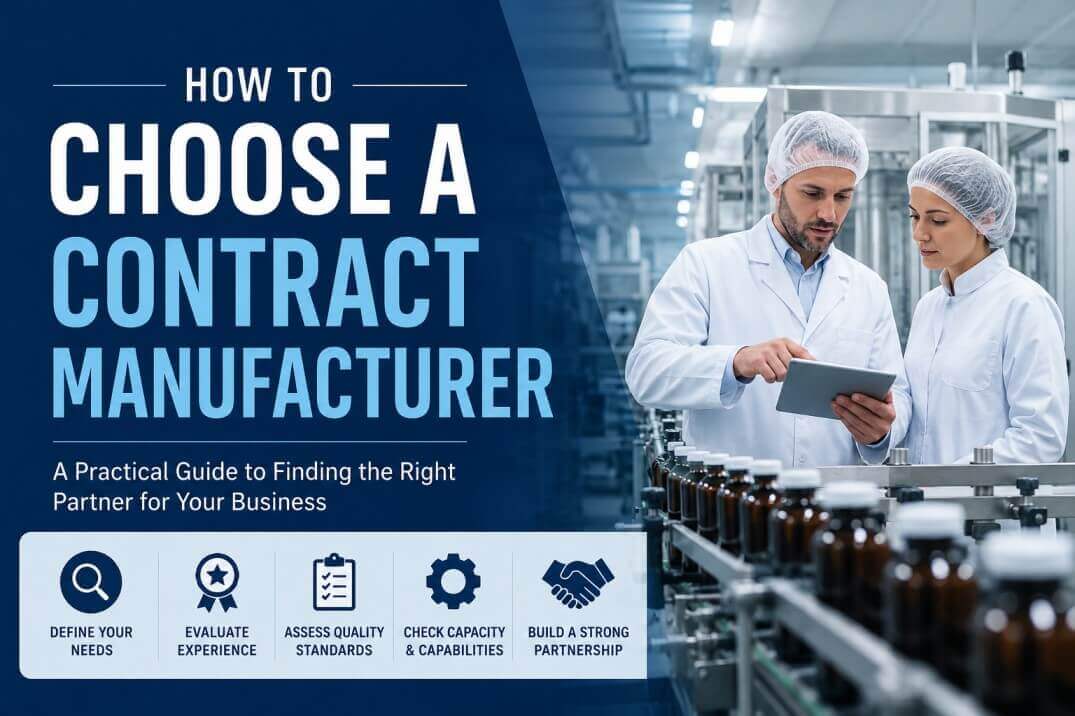
Contract Manufacturing vs. In-House Manufacturing: A Decision Framework for 2026
The make-vs-buy decision is one of the most consequential a manufacturing company will make. Get it right and you build a lean, scalable operation. Get it wrong and you tie up capital in facilities that constrain your flexibility for years. This guide gives you a rigorous framework – not a generic pros-and-cons list – to make the right call for your business.
Two Models, One Critical Decision
What Contract Manufacturing Actually Means
In contract manufacturing, you outsource production to a third-party manufacturer who builds to your design, your specifications, and your quality requirements. You own the IP and the brand. They own the factory.
What In-House Manufacturing Actually Means
In-house manufacturing means you own or lease the facility, employ the production workforce, maintain the equipment, and carry the operational complexity of running a factory. You have direct control over every production variable – and direct responsibility for every cost.
The Core Trade-off
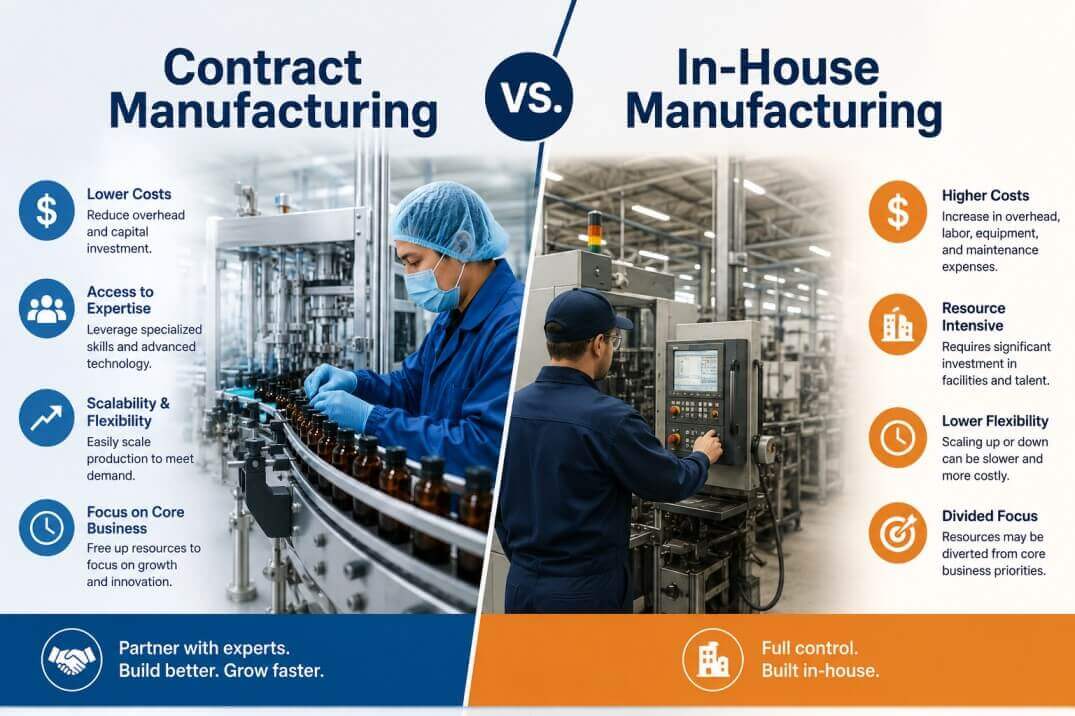
Contract manufacturing trades control for flexibility and capital efficiency. In-house manufacturing trades flexibility and capital efficiency for control. Neither is universally superior. The right answer depends on your product, your volumes, your growth stage, and your competitive strategy.
Head-to-Head Comparison: 8 Key Dimensions
Upfront Capital and Fixed Costs
Building a factory capable of producing at commercial scale requires substantial capital investment – machinery, tooling, facilities, infrastructure, and working capital for inventory. For most product companies, this capital would generate far higher returns deployed into product development, marketing, or market expansion.
Contract manufacturing converts production capex into a variable operating expense. You pay per unit shipped. Your balance sheet stays clean.
Edge: Contract Manufacturing
Scalability and Demand Flexibility
In-house capacity is fixed. When demand exceeds capacity, you either turn away orders or invest in expansion – a process that takes months and significant capital. When demand falls below capacity, you carry the overhead of idle assets.
Contract manufacturers are built to flex. Platforms with multi-supplier networks can respond to demand changes in days, not months.
Edge: Contract Manufacturing
Speed to Market
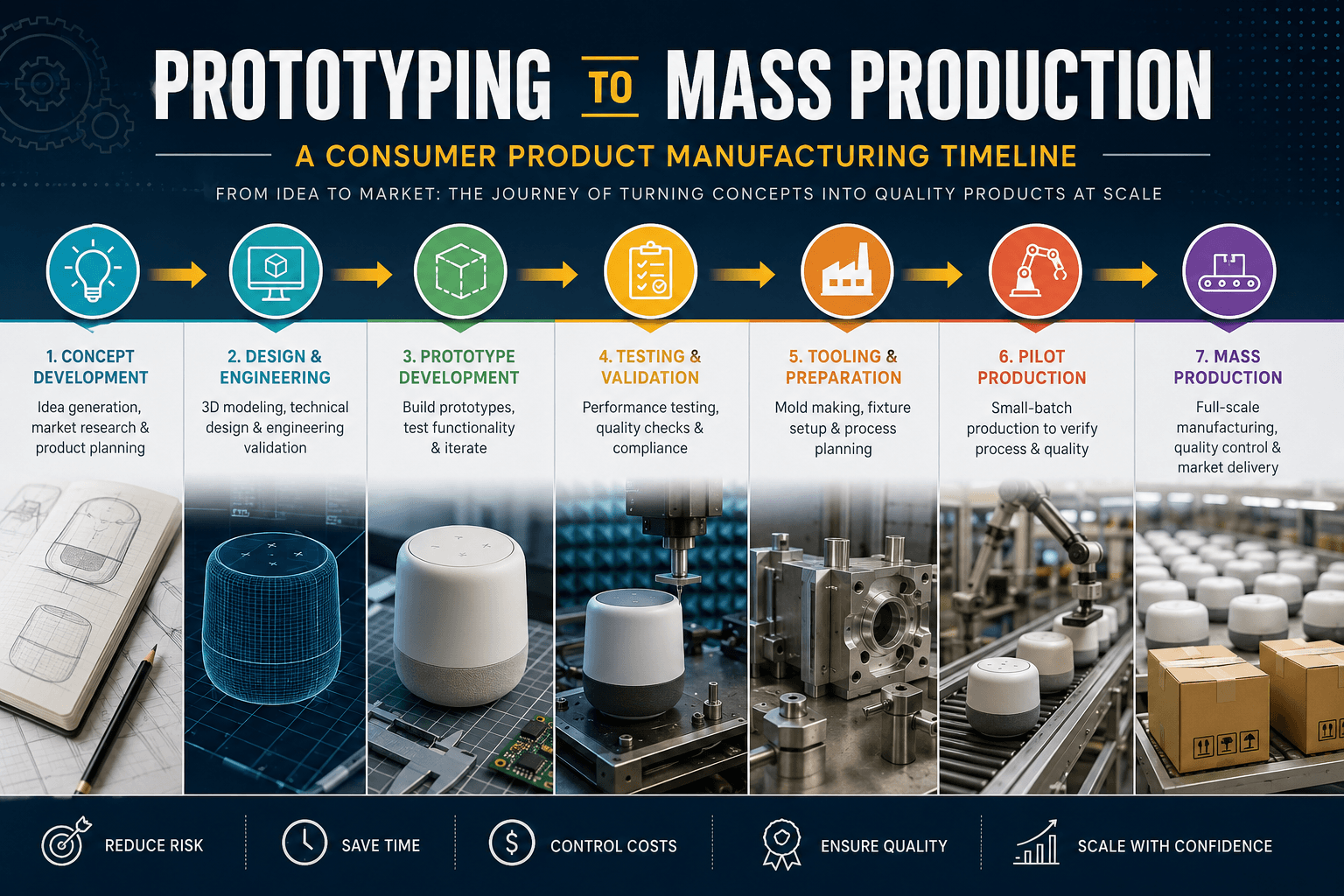
An experienced contract manufacturer has already built the production processes, qualified the suppliers, and validated the quality systems for the type of product you are making. They have done this dozens of times. Your in-house team would spend 6–18 months reaching the same production readiness.
Edge: Contract Manufacturing
Quality Control and Oversight
In-house manufacturing gives you direct, real-time control over every production variable. You can walk the floor, stop the line, and implement changes immediately. With a contract manufacturer, you exercise quality control through inspection, audits, and contractual requirements – which requires discipline and good process design.
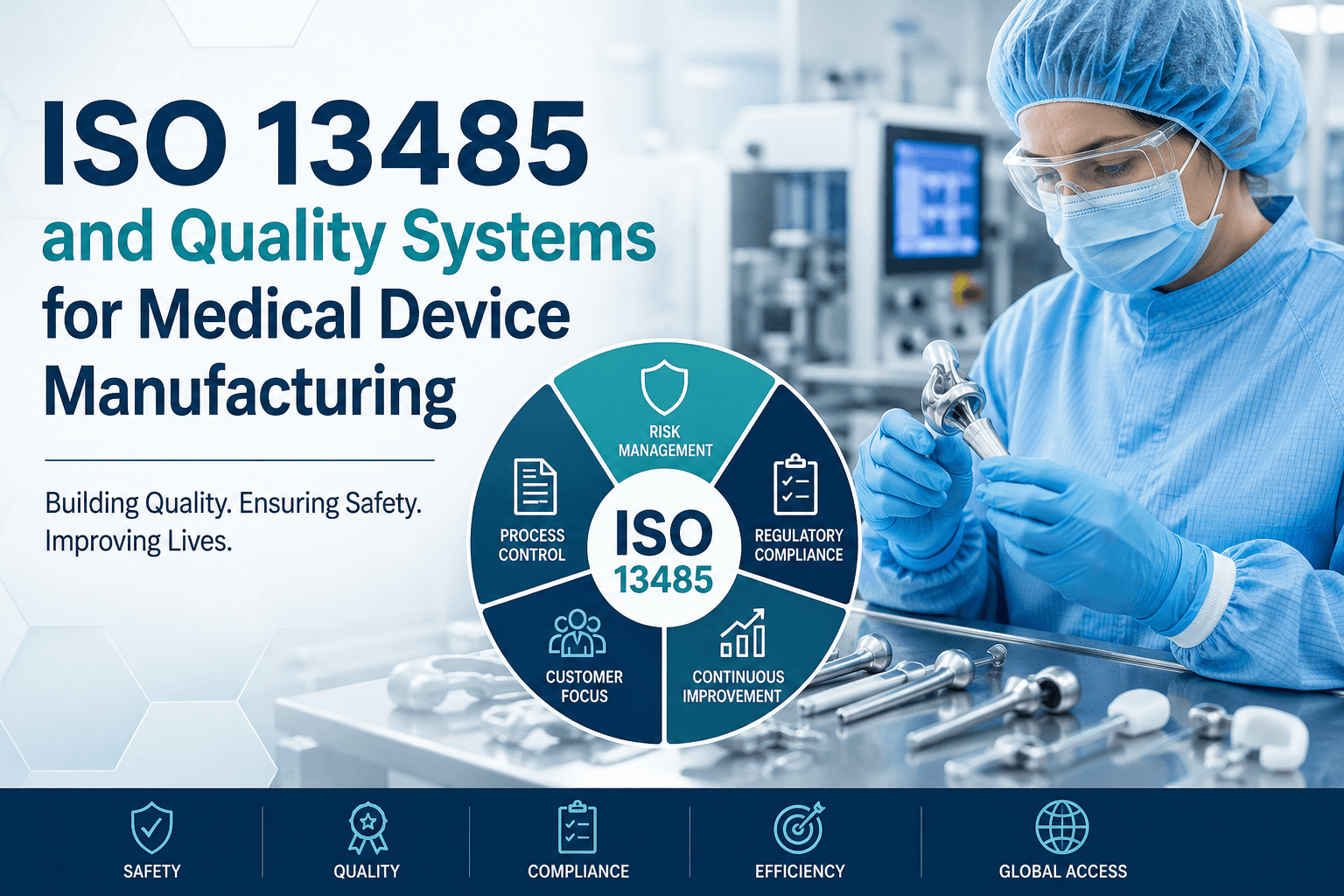
That said, reputable contract manufacturers carry ISO 9001 and sector-specific certifications that many in-house operations would struggle to achieve and maintain.
Edge: In-house (marginal) – unless the CM has stronger QMS than your in-house team would build
IP and Proprietary Process Protection
In-house manufacturing carries zero risk of IP leakage through the supply chain. Your processes, formulations, and designs stay entirely within your control.
Contract manufacturing introduces IP exposure – though this is manageable through comprehensive NDAs, IP registration, and careful CM partner selection.
Edge: In-house
Access to Specialised Technology
State-of-the-art CNC machining centres, HPDC lines, investment casting facilities, and SMT assembly lines each require years of capital investment and process mastery to operate at quality. Contract manufacturers have made those investments for you.
Edge: Contract Manufacturing
Operational Focus
Managing a factory is a full-time job requiring manufacturing engineering expertise, operational management talent, and ongoing capital for maintenance and upgrades. Every internal resource dedicated to running production is a resource not focused on your product, your customers, or your market.
Edge: Contract Manufacturing
Long-Term Unit Economics
At very high volumes – say, a single product manufactured in the millions of units annually – the fixed cost of in-house production can be amortised to a per-unit cost that beats contract manufacturing. Below that threshold, the variable cost structure of CM is almost always more efficient.
Edge: In-house at ultra-high stable volume; Contract Manufacturing below that
When Contract Manufacturing Wins
Early-Stage Companies and New Product Launches
Before you have validated market demand and production volumes, committing capex to in-house manufacturing is an enormous risk. Contract manufacturing lets you prove the product in the market before making irreversible facility investments.
High-Mix, Low-to-Mid Volume Production
If your product portfolio spans dozens of SKUs with varying volumes, maintaining the tooling, equipment, and process expertise for all of them in-house is impractical. Contract manufacturers – especially platform-based networks – can handle high-mix production efficiently.
Rapid Market Expansion Without Capex
Entering a new geography or product category requires production capacity without the lead time to build it. Contract manufacturing gives you that capacity immediately.
When In-House Manufacturing Wins
Ultra-High Volume, Stable Production Runs
A consumer goods company producing tens of millions of identical units per year with no significant variation in demand has a genuine case for in-house manufacturing. At that scale and stability, the fixed-cost leverage outweighs the flexibility advantage of CM.
Proprietary Process as Competitive Advantage
If your manufacturing process is itself the source of your product’s differentiation – and that process is difficult to specify in a contract – in-house control may be worth the cost. This applies to a small number of highly specialised products.
Highly Regulated Industries With Tight Oversight
Certain pharmaceutical, nuclear, and classified defence applications require a level of direct oversight over production that the CM model cannot practically provide.
The Hybrid Model: Best of Both Worlds
Many sophisticated manufacturers operate a hybrid model – keeping strategically critical or highest-volume processes in-house while outsourcing everything else.
Keeping Core Processes In-House
The principle is simple: if a manufacturing process is a source of competitive advantage that cannot be protected through contract and NDA, keep it in-house. Everything else is a candidate for outsourcing.
Outsourcing Non-Core or Surge Capacity
A company with in-house assembly might outsource the machined components, castings, and sub-assemblies that feed the line. When a product launch drives volume beyond in-house capacity, contract manufacturers absorb the surge. This hybrid model gives you the control where it matters and the flexibility where it is needed.
The Decision Framework: 5 Questions to Ask
Rather than making this decision on intuition, work through these five questions:
What Stage of Growth Are You In?
Early-stage and growth-stage companies almost always benefit from contract manufacturing. The capex deployed into a factory is almost always better allocated to product and market development at this stage.
How Variable Is Your Demand?
Highly variable demand – seasonal spikes, product launches, uncertain forecast – is a strong signal for contract manufacturing. Stable, predictable, high-volume demand is the case for in-house.
How Proprietary Is Your Process?
If your manufacturing process is documented and specifiable, a contract manufacturer can execute it. If it is tacit knowledge that lives only in the heads of your best operators, the CM model carries IP risk.
What Is Your Capex Tolerance?
For most growth-stage companies, capex deployed into manufacturing facilities comes at the cost of investment in product, talent, and markets. Unless manufacturing is your core business, this trade-off rarely favours in-house investment.
How Critical Is Speed to Market?
If you need to ship in 90 days, an experienced contract manufacturer can get you there. Building in-house production capability from scratch in 90 days is not realistic.
A Third Option: Digital Manufacturing Platforms
The traditional framing of this decision as a binary – CM or in-house – misses a third option that has emerged in the last decade.
Access Multiple Contract Manufacturers Through One Platform
Digital manufacturing platforms like Zetwerk give you access to a curated network of pre-vetted manufacturers across dozens of capabilities and geographies – managed through a single interface. You get the flexibility of CM without the supplier management complexity of building a multi-vendor network yourself.
Real-Time Visibility Without In-House Operations
The historical argument for in-house manufacturing – direct visibility and control over production – has been substantially weakened by the real-time production tracking, in-process quality checkpoints, and supplier performance data that platforms now provide.
For most OEMs and product companies, the platform-based CM model combines the best elements of both worlds: the flexibility, cost structure, and capability access of contract manufacturing, with a level of visibility and control that approaches what in-house operations provide.
Key Takeaways
- Contract manufacturing wins on capex, flexibility, speed to market, and access to specialised capability
- In-house manufacturing wins on control, IP protection, and unit economics at ultra-high stable volumes
- The hybrid model – in-house for proprietary core processes, outsourced for everything else – works well for complex manufacturers
- For most growth-stage product companies, contract manufacturing is the right default
- Digital manufacturing platforms have changed the calculus significantly – providing CM’s cost advantages with in-house-level visibility
Frequently Asked Questions
Q. Is contract manufacturing cheaper than in-house?
For most companies at most volume levels, yes. The elimination of capex, fixed overhead, and operational complexity makes contract manufacturing economically superior for all but the highest-volume, most stable production scenarios.
Q. Can I switch from in-house to contract manufacturing?
Yes – and many companies do as they scale. The transition requires careful supplier qualification, IP protection agreements, and a qualification run before full production transfer.
Q. What happens to quality when I switch to contract manufacturing?
Quality improves or stays the same when you partner with a certified contract manufacturer with a mature QMS. Many in-house operations lack the systematic quality infrastructure that established CMs bring as standard.