
Residential Battery Energy Storage Systems in India: Sizing and Costs
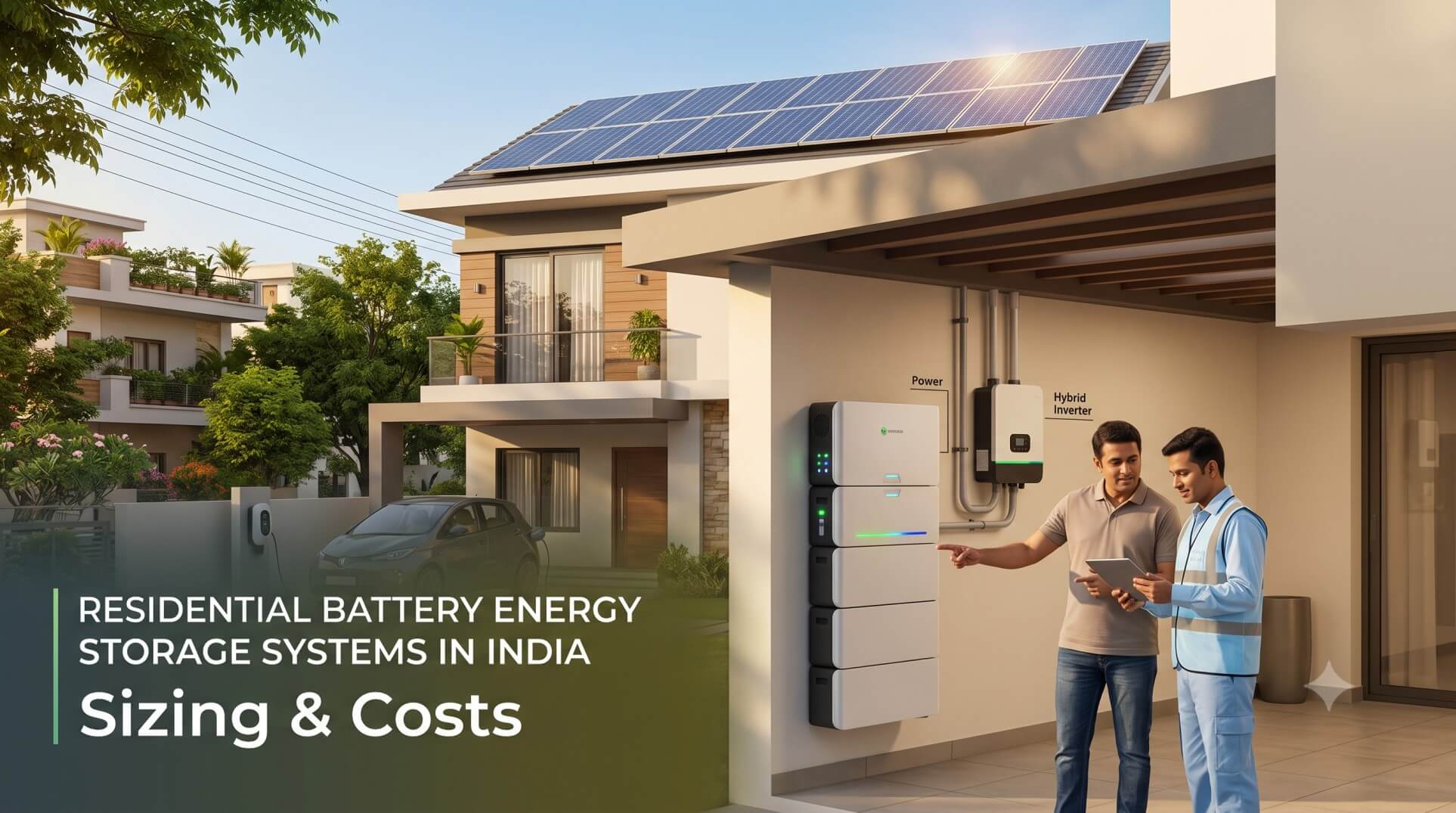
Residential battery energy storage systems help Indian homeowners store electricity for use during power cuts, at night, or when solar panels are not generating enough power. The right system size depends on household consumption, backup requirements, inverter capacity, battery chemistry, and whether the home already has rooftop solar.
For most homes, the first step is to calculate how much energy essential appliances consume during a typical outage. This gives you a practical starting point for choosing a battery without overspending on unused capacity.
What Is a Residential Battery Energy Storage System?
A residential battery energy storage system (BESS) stores electricity and supplies it when the home needs it. It can work with rooftop solar, the utility grid, or both, depending on the system design.
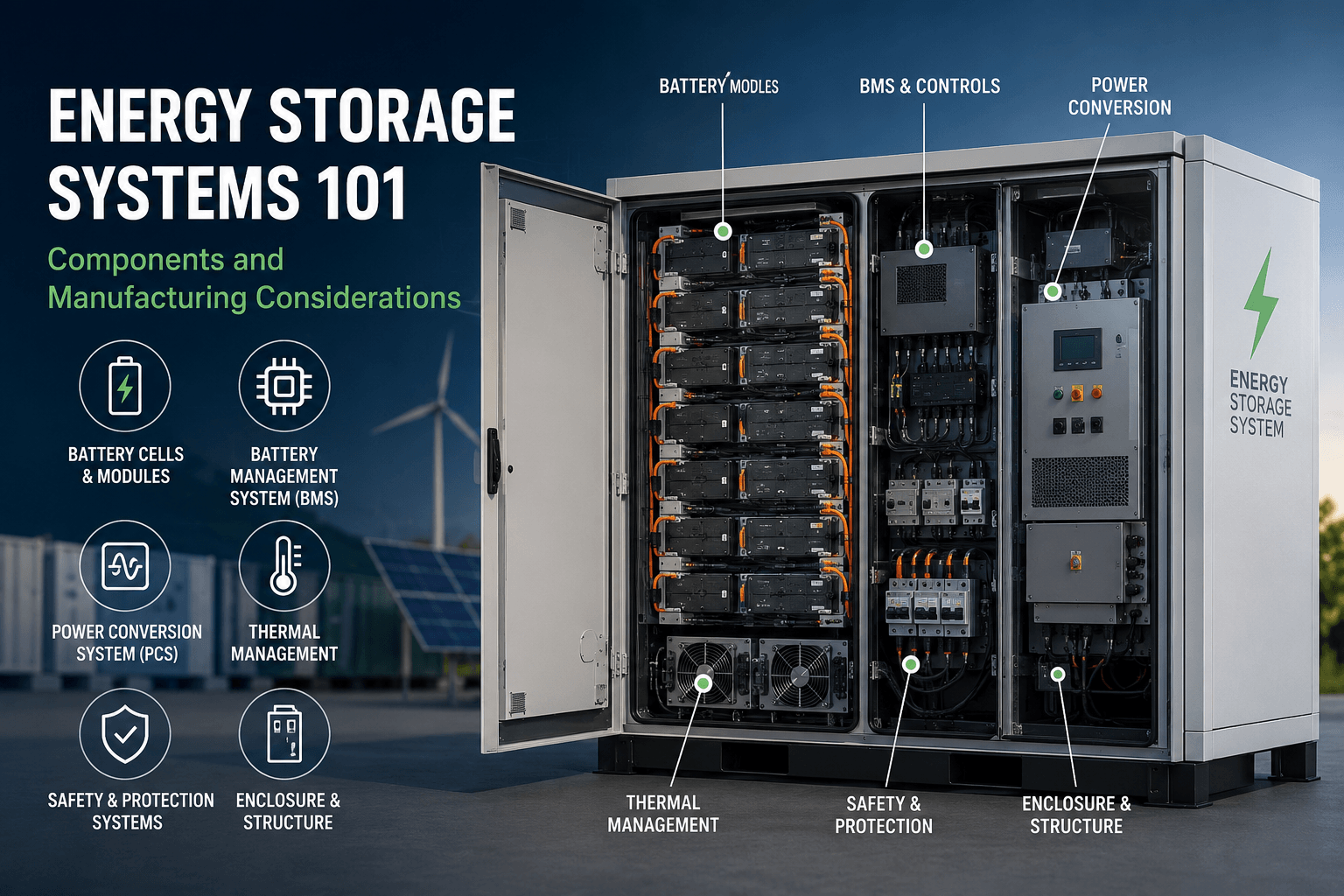
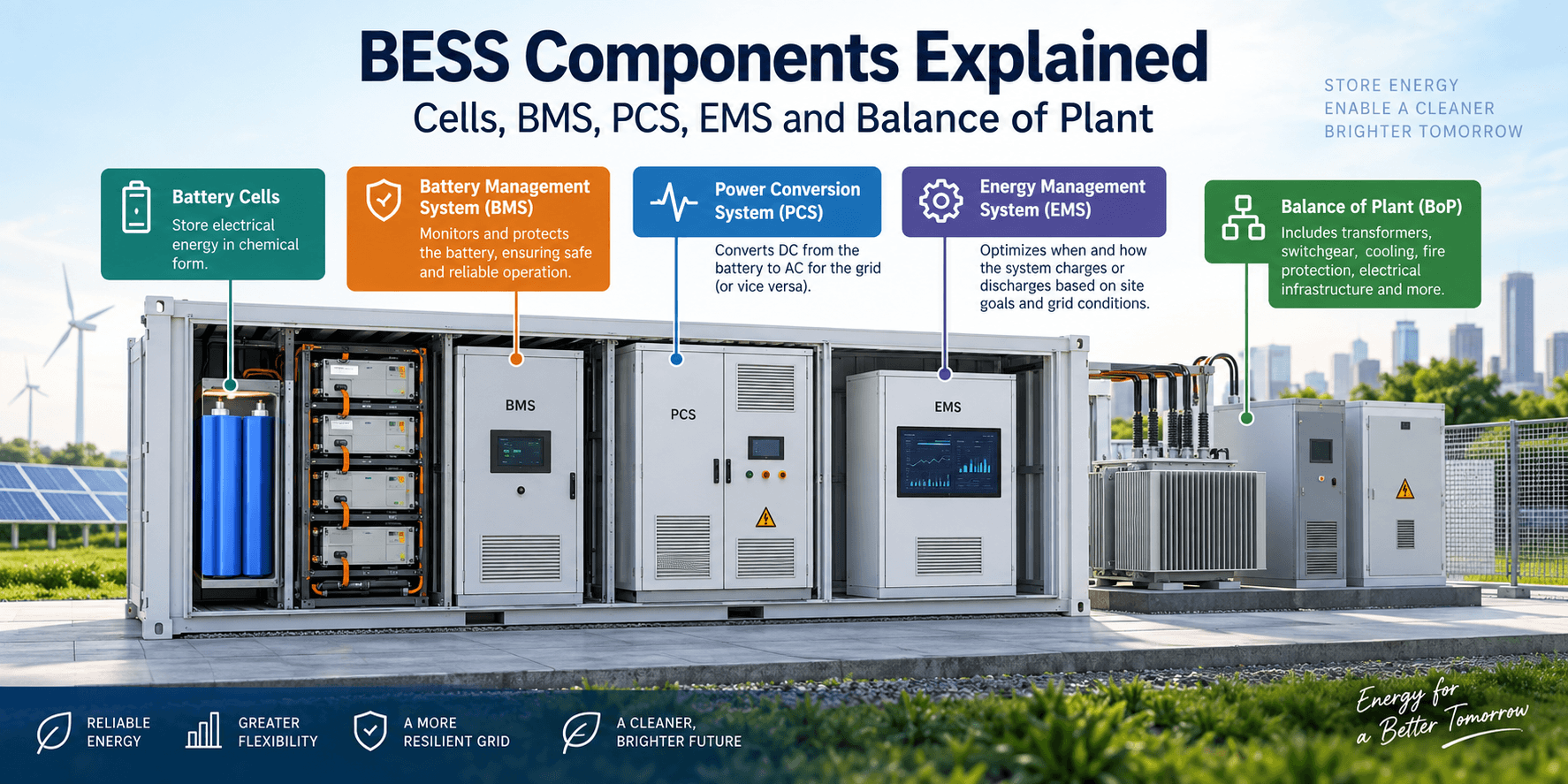
A typical residential BESS includes:
- Battery pack: Stores energy, usually using lithium iron phosphate (LFP) or lead-acid technology.
- Battery management system (BMS): Monitors battery temperature, voltage, charging, and protection limits.
- Inverter: Converts battery power into the AC electricity used by household appliances.
- Energy management system: Controls charging, discharging, and energy flows between solar panels, the battery, and the grid.
- Protection and wiring: Includes breakers, isolation devices, cables, and other safety equipment.
The main benefit is control over when electricity is available. A household can store surplus solar generation during the day and use it in the evening, or keep the battery charged to prepare for a power cut.
How Much Does a Home Battery Storage System Cost in India?
As of October 2026, indicative installed costs for residential lithium battery systems vary significantly by battery capacity, inverter compatibility, brand, and installation requirements. The estimates below are planning ranges, not fixed market prices.
Estimated installed cost in India, excluding rooftop solar panels and allowing for variation in system configuration.
| Usable battery capacity | Indicative installed cost | Typical application |
|---|---|---|
| 2 kWh | ₹40,000–₹1.1 lakh | Lights, router, fans |
| 3 kWh | ₹1–₹1.5 lakh | Essential loads in a small home |
| 5 kWh | ₹1.5–₹2.5 lakh | Evening and outage backup |
| 10 kWh | ₹3–₹5 lakh | Longer backup, larger households |
| 15 kWh | ₹4.5–₹7 lakh | Higher consumption and selected AC loads |
| 20 kWh | ₹6–₹9 lakh | Large homes or extended backup |
These ranges reflect differences in what’s included. A quote might cover only the battery and basic installation, while another includes a hybrid inverter, backup distribution board, protection equipment, and commissioning. Confirm the scope before comparing prices.
What Drives the Cost?
The largest cost factors are:
- Battery chemistry: LFP batteries generally cost more upfront than basic lead-acid alternatives but offer greater usable capacity and typically longer cycle life.
- Inverter requirements: An existing compatible hybrid inverter can reduce upgrade costs. A new inverter may add a substantial amount to the project.
- Backup power rating: Homes running air conditioners, pumps, or other high-load appliances need equipment capable of supplying the required instantaneous power.
- Installation complexity: Electrical upgrades, longer cable runs, backup circuits, and additional protection devices can increase the final price.
- Warranty and support: Battery warranties, service availability, cycle limits, and throughput guarantees affect long-term value.
For budgeting, distinguish between the battery-only price and the complete installed storage system price. They are not interchangeable.
How to Size a Residential Battery Energy Storage System
Battery sizing starts with energy consumption, not the inverter’s kilowatt rating or the number of rooms in the house.
Two homes with the same floor area can need very different battery capacities. One may run a refrigerator, fans, lights, and Wi-Fi during outages. The other may need to run two air conditioners, a water pump, and kitchen appliances.
A practical sizing process has four steps.
Step 1: List the Appliances You Need to Run
Start by identifying the loads that must remain operational during a power cut.
| Appliance | Typical power draw | Daily backup usage | Energy required |
|---|---|---|---|
| LED lights | 60 W total | 5 hours | 0.30 kWh |
| Ceiling fans | 150 W total | 6 hours | 0.90 kWh |
| Refrigerator | 100 W average while running | 8 hours | 0.80 kWh |
| Wi-Fi router | 12 W | 8 hours | 0.10 kWh |
| Television | 100 W | 3 hours | 0.30 kWh |
| Laptop and phone charging | 60 W combined | 3 hours | 0.18 kWh |
| Total | 2.58 kWh |
Illustrative estimates only. Actual consumption varies by appliance, duty cycle, efficiency, and usage patterns. A refrigerator’s average power draw is lower than its compressor’s running or starting power.
Calculate each appliance’s energy consumption using:
\[ \text{Energy (kWh)}= \frac{\text{Power (W)}\times\text{Hours}}{1000} \]
Add the energy requirements of all the appliances you plan to use. This gives the daily energy your battery must deliver, before accounting for conversion losses and reserve capacity.
Step 2: Calculate the Required Usable Battery Capacity
The battery’s rated capacity is not always the amount of energy available to your appliances.
Some capacity is reserved to protect the battery, and energy is lost during conversion through the inverter. A sensible preliminary calculation is:
\[ \text{Rated battery capacity}= \frac{\text{Required load energy}} {\text{Usable fraction}\times\text{Inverter efficiency}} \]
For the example above, assume:
- Daily backup requirement: 2.58 kWh
- Usable fraction of rated battery capacity: 90%
- Inverter efficiency: 95%
Then:
\[ \frac{2.58}{0.90\times0.95} \approx 3.02\text{ kWh} \]
A battery of approximately 3.2 kWh nominal capacity would be a reasonable starting point for this example. A larger battery may be appropriate if outages last longer than expected or the household wants additional reserve.
Step 3: Check the Inverter’s Power Rating
Battery capacity determines how long the system can supply energy. Inverter power determines how much electricity it can deliver at a given moment.
Consider a home that needs 2 kW of continuous power, with a refrigerator compressor and pump that may start at the same time. The inverter must support the combined load and the relevant starting surge, subject to its manufacturer’s limits.
Check three ratings:
- Continuous output: The power the inverter can supply under normal conditions.
- Surge output: The temporary power available to start motors and compressors.
- Battery discharge limit: The maximum power the battery can safely provide.
A 5 kWh battery does not automatically support a 5 kW load. Capacity and power are separate specifications.
Step 4: Add a Practical Reserve
Sizing exactly to average consumption can leave a household short during longer outages or higher-than-usual usage.
Consider a reserve for:
- Unexpectedly long power cuts.
- Battery ageing over time.
- Higher appliance consumption in hot weather.
- Reduced solar generation during cloudy periods.
- Essential loads that may run longer than planned.
The right reserve depends on how critical backup power is and how frequently the battery will be used.
Example Battery Sizes for Indian Homes
The following configurations are starting points rather than fixed recommendations. Actual requirements depend on appliance consumption, outage duration, and inverter capability.
Small apartment
2–3 kWh battery
Suitable for selected lights, fans, Wi-Fi, phone charging, and limited refrigerator use. Best for short outages and essential-load backup.
Typical family home
5 kWh battery
A useful starting point for longer essential-load backup, including lighting, fans, refrigeration, Wi-Fi, and selected electronics.
Larger home with selected AC loads
10–15 kWh battery
Offers more stored energy for extended backup and some air-conditioning use. Confirm the AC’s actual consumption, starting characteristics, and inverter requirements.
A larger battery does not necessarily mean the entire house can run normally during an outage. High-power appliances can drain stored energy quickly, so a dedicated backup circuit for essential loads may be more cost-effective than backing up every circuit.
Lithium-Ion vs Lead-Acid Batteries for Residential Storage
Battery chemistry has a direct impact on upfront cost, usable energy, maintenance, and replacement frequency.
| Factor | Lithium iron phosphate (LFP) | Tubular lead-acid |
|---|---|---|
| Upfront cost | Higher | Lower |
| Usable capacity | Often 80–95% of rated capacity, subject to specifications | Often designed around a lower depth of discharge |
| Cycle life | Typically several thousand cycles, model-dependent | Generally fewer cycles |
| Maintenance | Usually low | May require periodic maintenance |
| Weight and footprint | Usually more compact | Typically heavier and bulkier |
| Best fit | Frequent cycling and long-term use | Budget-conscious, occasional backup |
For a new system that cycles frequently, LFP is often worth considering because it offers good cycle life and usable capacity. However, battery quality, operating temperature, warranty conditions, and service support matter as much as the chemistry label.
When comparing products, ask for the warranted cycle life at a stated depth of discharge, the end-of-warranty capacity, and any limits on annual energy throughput.
Solar Battery Storage vs Grid Backup
Not every home needs a battery, even if it has rooftop solar.
The right configuration depends on whether the priority is reducing electricity bills, maintaining power during outages, or operating with limited grid dependence.
| System type | Works during a grid outage? | Main purpose |
|---|---|---|
| Standard on-grid solar | Generally no, unless specifically equipped for backup | Reduce grid electricity consumption |
| Grid-connected hybrid solar with battery | Yes, when configured for backup | Solar self-consumption and outage protection |
| Off-grid solar with battery | Yes, subject to available stored energy and generation | Operation without a dependable grid connection |
| Grid-connected battery without solar | Yes, if designed for backup | Outage protection and possible time-based energy management |
Standard grid-tied inverters typically shut down during a blackout to prevent unsafe electricity export onto the grid. A hybrid system must have the correct backup capability, isolation arrangements, and configured output circuits to supply power safely.
Is a Battery Worth It With Rooftop Solar?
A battery can improve solar self-consumption by storing surplus daytime generation for use later. However, it also adds upfront cost and incurs charging and discharging losses.
The financial case is stronger when:
- Power cuts are frequent or costly.
- Export compensation for surplus solar electricity is low.
- Evening electricity use is high.
- The household values backup reliability.
- The battery can be charged from solar regularly.
If grid supply is reliable and the main objective is to lower electricity bills, compare the battery’s total cost with the value of exported solar electricity before buying. Battery storage is not automatically the most economical addition to every rooftop solar system.
Government Subsidies and Policies in India
India’s PM Surya Ghar: Muft Bijli Yojana supports eligible residential rooftop solar installations under its applicable rules. However, the central subsidy should not be assumed to cover the battery itself. Battery storage and associated hybrid equipment may be additional costs.
Before budgeting for a system:
- Check current eligibility and subsidy terms through the official PM Surya Ghar portal.
- Confirm whether the proposed installation meets the relevant technical and vendor requirements.
- Check your state electricity distribution company’s rules for rooftop solar, metering, and grid interconnection.
- Request a written quote that separates eligible solar components from battery storage and other equipment.
Official starting point: PM Surya Ghar scheme portal.
How to Compare Battery Quotes
A low headline price may not reflect the total cost of a working installation. Ask each installer to provide the same information so you can compare like for like.Nominal and usable battery capacity in kWhBattery chemistry, model, and manufacturerContinuous and peak discharge powerCompatible inverter model and backup functionalityInstalled price, GST, wiring, protection, and commissioningWarranty duration, cycle limits, and end-of-warranty capacityExpected backup runtime for your actual appliance listService availability and replacement terms
Also ask the installer to demonstrate how the system behaves during a power cut, including whether solar charging remains available while the grid is down. This capability varies by inverter and installation design.
Frequently Asked Questions
How many kWh of battery storage does a typical Indian home need?
A home needing only a few hours of essential-load backup might start with 2–5 kWh. Homes requiring longer backup or running selected air conditioners may need 10 kWh or more. Calculate consumption first rather than choosing a size based on home size alone.
How long will a 5 kWh battery last?
Runtime depends on actual load and usable capacity. For example, a battery delivering 4.5 kWh of usable energy can theoretically run a 500 W load for about nine hours before additional system losses or operating limits. A 1 kW load would reduce that to about four and a half hours.
Can a home battery run an air conditioner?
Yes, if the battery, inverter, wiring, and protection equipment are designed for the AC’s running power and starting requirements. Runtime depends on the AC’s actual energy consumption, not just its advertised tonnage.
Is a 5 kWh battery enough for overnight backup?
It may be enough for essential loads in many homes, but not necessarily for unrestricted overnight use. Air conditioning, electric water heating, cooking appliances, and pumps can consume stored energy rapidly.
How long does a residential lithium battery last?
Many LFP products are designed for several thousand charge cycles, but actual service life depends on temperature, charging practices, depth of discharge, and usage. Check the specific manufacturer’s warranty and capacity-retention conditions rather than relying on a generic lifespan estimate.
Conclusion
Residential battery energy storage in India is best sized around the appliances you need to run, the duration of power cuts, and the amount of usable energy you want to keep in reserve. A smaller battery with a well-designed essential-load circuit can be more useful than a larger battery connected to every appliance without a clear backup plan.
For most buyers, the key decisions are straightforward: calculate daily backup energy, check the inverter’s power capability, compare LFP and lead-acid lifecycle costs, and obtain an itemised installed quote. That process helps avoid paying for capacity you will rarely use or buying a system that cannot handle your actual loads.