

CEA’s Energy Storage Mandate for Solar and Wind Projects: What It Means for Developers
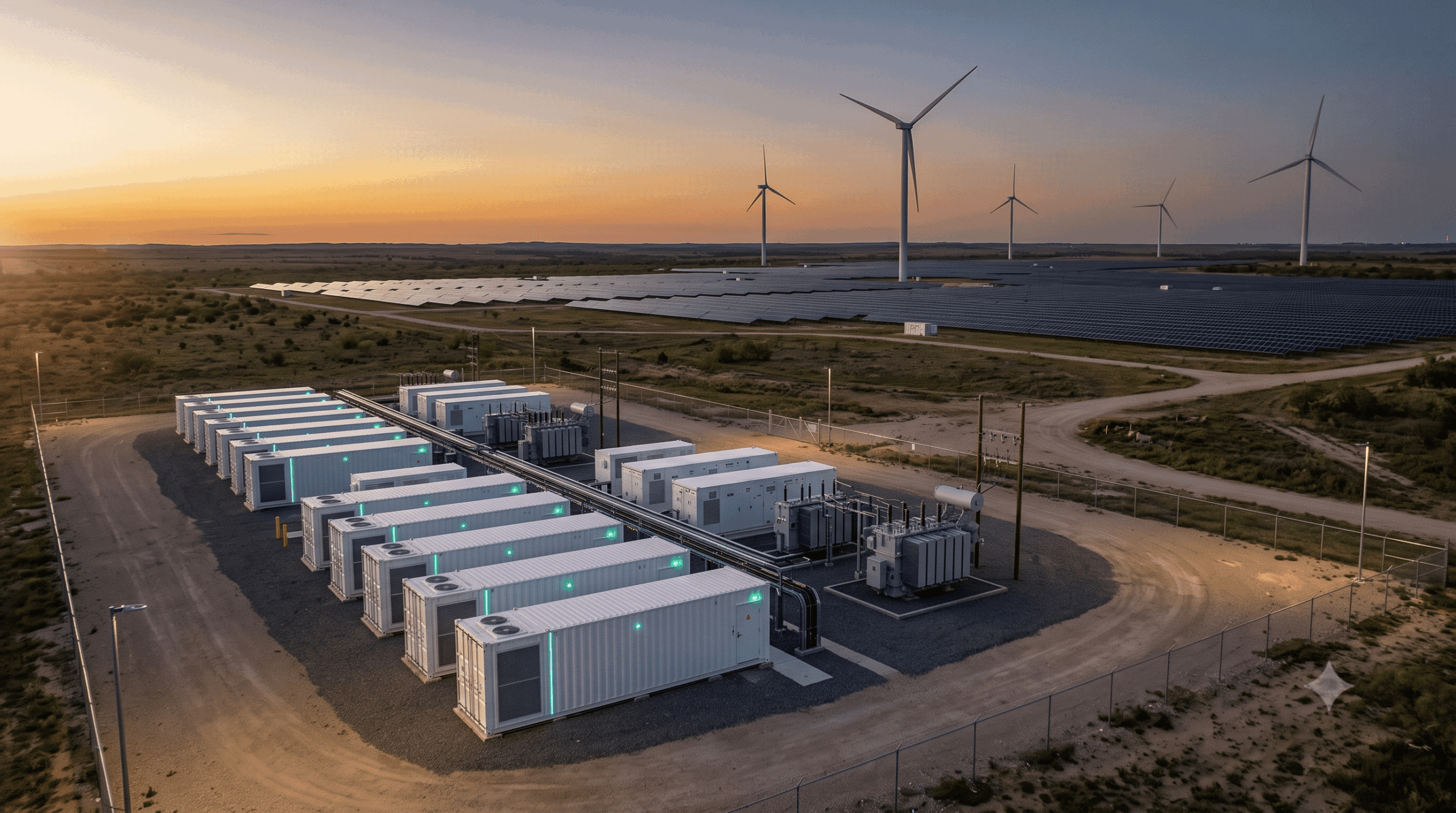
India’s renewable energy market is moving toward a model where generation capacity alone is no longer enough. Developers will increasingly need to show that renewable power can be shifted, dispatched, and integrated into the grid when it is actually needed.
That shift is reflected in the Central Electricity Authority’s (CEA) latest proposal to make co-located energy storage mandatory for new ground-mounted solar and onshore wind projects.
The proposal is still draft regulation, not a final rule. But it gives developers an important signal about where project design and grid requirements are heading. Under the draft, projects commissioned after July 1, 2027 would need storage equal to at least 10% of installed plant capacity, with a minimum two-hour storage duration. For projects commissioned after July 1, 2029 through June 30, 2031, the proposed duration increases to four hours.
For developers, the change is bigger than simply adding batteries. It can affect project economics, land requirements, equipment procurement, grid connection, financing, EPC contracts, PPAs, and commissioning schedules.
What Is CEA Proposing?
The proposed requirement comes through CEA’s draft technical standards for the construction of electric plants and electric lines.
The draft proposes that ground-mounted solar and onshore wind projects commissioned after July 1, 2027 have a co-located energy storage system with:
- Storage power capacity of at least 10% of the renewable plant’s installed capacity
- Minimum storage duration of 2 hours
- A longer, 4-hour minimum duration for projects commissioned after July 1, 2029 through June 30, 2031
In practical terms, a 100 MW renewable project would need at least 10 MW of storage. At two hours, that translates to 20 MWh of storage. Under the proposed four-hour requirement, the same 10 MW storage capacity would represent 40 MWh.
The draft also proposes grid-forming capabilities for renewable projects. At least 15% of inverters in renewable energy power plants commissioned after July 1, 2027 would need grid-forming control, while BESS power conversion systems would also face grid-forming requirements.
That means developers should view the proposal as part of a broader change in grid integration standards, rather than as a battery-only requirement.
How the New Proposal Differs From CEA’s 2025 Advisory
It is important to distinguish two developments.
In February 2025, CEA issued an advisory recommending that renewable energy implementing agencies and state utilities include at least two hours of co-located storage equivalent to 10% of installed solar capacity in future solar tenders. CEA specifically described this as an advisory for future solar tenders.
The newer 2026 proposal is more significant because it moves toward a technical requirement applying to qualifying new projects, including ground-mounted solar and onshore wind.
So developers should not treat the 2025 advisory and 2026 draft regulation as interchangeable.
The 2025 measure influenced tender design. The 2026 proposal points toward a broader technical compliance framework.
Why Is Energy Storage Becoming a Requirement?
The underlying problem is straightforward: solar and wind generation does not always match electricity demand.
Solar production typically peaks around the middle of the day, while electricity demand can remain high into the evening. Wind generation can also fluctuate significantly depending on weather conditions.
Storage creates a bridge between generation and demand.
A battery can charge when renewable generation is abundant and discharge later when the grid needs additional power. That makes renewable capacity more useful without requiring every megawatt of demand to be matched by conventional generation.
CEA’s 2025 advisory highlighted the scale of the challenge. Its planning assessment estimated that integrating 364 GW of solar and 121 GW of wind by 2031-32 would require about 73.93 GW / 411.4 GWh of storage, including both pumped storage and battery storage.
The policy direction is therefore not simply about making individual projects more expensive. It is about making a much larger renewable fleet more dispatchable and grid-compatible.
What Does the 10% Storage Requirement Actually Mean?
The percentage can be confusing because storage has two different measurements:
Power capacity, measured in MW, tells you how quickly the storage system can deliver electricity.
Energy capacity, measured in MWh, tells you how much electricity it can store.
For example:
| Renewable project | Minimum storage power | 2-hour storage | 4-hour storage |
|---|---|---|---|
| 50 MW | 5 MW | 10 MWh | 20 MWh |
| 100 MW | 10 MW | 20 MWh | 40 MWh |
| 250 MW | 25 MW | 50 MWh | 100 MWh |
| 500 MW | 50 MW | 100 MWh | 200 MWh |
The key point is that 10% refers to storage power capacity, not 10% of the plant’s energy output.
As the required duration increases, the MWh requirement rises even if the 10% MW requirement remains unchanged.
For developers, that distinction matters when calculating capex, degradation, replacement requirements, land use, and financing.
The Biggest Impact Will Be on Project Economics
Adding storage changes the economics of a renewable project in several ways.
The most obvious is additional upfront capital expenditure. But the financial impact does not stop at battery procurement.
Developers also need to consider:
- Battery energy storage system costs
- Power conversion systems
- Transformers and switchgear
- Fire detection and suppression systems
- HVAC and thermal management
- Civil works and foundations
- Additional electrical infrastructure
- Energy management and control systems
- Grid integration studies
- Operations and maintenance
- Battery augmentation or replacement
- Insurance
- Financing costs
The revenue side also becomes more important.
A storage-equipped project may be able to deliver electricity during higher-value periods, reduce curtailment, improve dispatchability, and potentially support additional grid services where market and regulatory frameworks allow.
That means developers should avoid evaluating the battery purely as an additional project cost.
The more useful question is: What additional value can the storage system create over the project’s operating life?
Storage Could Change How Developers Design Projects
The proposed requirement should push storage planning much earlier in the development cycle.
Historically, a developer might have designed the solar or wind plant first and considered storage later.
That approach becomes less practical when storage is embedded into the technical requirements.
Developers should instead assess storage alongside:
- Plant sizing
- DC-to-AC ratio
- Evacuation capacity
- Substation design
- Land acquisition
- Interconnection arrangements
- PPA requirements
- Curtailment assumptions
- Dispatch strategy
- Financing structure
This is particularly important because a battery does not operate independently from the renewable plant.
The control architecture, point of interconnection, transformer configuration and dispatch strategy all influence how effectively the combined project performs.
Procurement Strategy Will Need to Change
Developers preparing projects for the 2027 and later commissioning window should begin discussing storage requirements with EPC contractors and BESS suppliers much earlier.
The procurement question is not simply, “Which battery should we buy?”
A stronger procurement process evaluates the complete system.
Battery technology and degradation
Developers need to understand usable energy at different points in the battery’s life, rather than relying only on nameplate capacity at commissioning.
A system that initially provides the required MWh may need augmentation later to continue meeting contractual or regulatory obligations.
Warranty structure
Battery warranties should be evaluated against the project’s operating profile.
Developers should pay close attention to:
- Guaranteed capacity
- Round-trip efficiency
- Cycle limits
- Degradation assumptions
- Availability guarantees
- Augmentation obligations
- Performance testing
- Warranty exclusions
Safety and compliance
Large-scale BESS installations introduce additional requirements around thermal management, fire protection, emergency response and electrical protection.
These requirements should be incorporated into engineering and permitting decisions from the beginning.
Transmission Planning Becomes More Important
One of the potential benefits of co-located storage is better utilization of existing transmission infrastructure.
CEA’s 2025 advisory specifically noted that storage can improve the utilization of transmission lines built to evacuate solar generation by shifting some renewable output into non-solar hours.
For developers, this creates an important design consideration.
If the renewable plant and battery share evacuation infrastructure, the project may be able to use the connection more effectively across a longer portion of the day.
But developers should not assume that storage automatically eliminates transmission constraints.
The actual benefit depends on the project’s interconnection agreement, injection limits, dispatch requirements and applicable grid rules.
Financing Models May Need to Evolve
Storage also changes the way lenders and investors assess renewable projects.
A conventional solar project might be evaluated primarily through expected generation, tariff, degradation, operating costs and PPA strength.
A solar-plus-storage project adds another layer of variables.
Investors will need visibility into:
- Battery replacement assumptions
- Storage availability
- Degradation
- Dispatch obligations
- Revenue stacking
- PPA penalties
- Auxiliary consumption
- Augmentation costs
- Merchant exposure
- Grid-service revenues
This makes the quality of the project’s operating model increasingly important.
A low battery purchase price is not necessarily the lowest-cost storage solution over the project’s full life.
Developers Should Watch the Difference Between a Draft and a Final Rule
This is one of the most important points for anyone making investment decisions today.
The 2026 CEA proposal is not yet the same thing as a final notified requirement.
CEA’s draft regulations were issued for stakeholder comments, with the comment deadline of October 4, 2026.
Developers should therefore avoid building investment decisions around assumptions that could change in the final regulation.
At the same time, ignoring the proposal would also be risky.
Projects take years to develop. A project being conceptualized today could easily fall within the commissioning windows covered by the proposed requirements.
The sensible approach is to model the project under both scenarios:
Base case: existing applicable requirements.
Regulatory case: proposed storage and grid-forming requirements.
That gives the investment team visibility into the potential cost and schedule impact before the project reaches financial close.
How the Proposal Fits Into India’s Broader Storage Policy
The CEA proposal is part of a much larger policy shift.
India already has an Energy Storage Obligation trajectory that rises from 1% in FY 2023-24 to 4% in FY 2029-30. The obligation is measured on an energy basis and is considered fulfilled only when at least 85% of the energy stored annually comes from renewable sources.
The government has also introduced measures to support BESS deployment, including viability gap funding and transmission-charge incentives. In 2025, the Ministry of Power approved another VGF scheme supporting 30 GWh of BESS capacity with financial support of ₹5,400 crore. Co-located BESS projects have also received an extension of the 100% ISTS charge waiver for projects commissioned by June 2028, subject to the applicable conditions.
This matters because the economics of storage will depend not only on the technical requirement but also on the incentives, procurement mechanisms and electricity-market rules surrounding it.
What Developers Should Do Now
Developers do not need to wait for the final regulation to start preparing.
1. Add storage to early-stage project models
Run the project’s financial model with the proposed 10% storage requirement.
Do not wait until EPC negotiations to determine whether the project can absorb the additional cost.
2. Model both two-hour and four-hour scenarios
A project expected to commission close to the proposed regulatory transition dates should model both scenarios.
The difference between 20 MWh and 40 MWh on a 100 MW project can materially affect capital requirements and financing assumptions.
3. Review land and layout requirements
A co-located BESS requires physical space for battery containers, electrical equipment, fire protection, access roads and other supporting infrastructure.
Land that looks sufficient for a standalone solar project may not be sufficient once storage is incorporated.
4. Review the evacuation design
Storage should be considered together with the project’s transmission and interconnection architecture.
The goal should be to understand exactly how much power can be injected, when it can be injected and whether the battery can improve utilization of the connection.
5. Update EPC and O&M contracts
Contracts should clearly allocate responsibility for battery performance, degradation, availability, augmentation, warranties, safety systems and regulatory compliance.
6. Engage lenders early
If the project depends on storage to meet a regulatory or contractual requirement, lenders will need to understand the battery’s lifecycle economics.
Storage should therefore be part of the financing discussion, not an engineering footnote.
7. Track the final CEA regulations
The final notified requirements will matter more than the current draft.
Developers should monitor changes to commissioning dates, eligible technologies, storage duration, power capacity, grid-forming requirements and compliance mechanisms before locking project assumptions.
The Bigger Shift: From Renewable Generation to Dispatchable Renewable Power
The most important takeaway is that India’s renewable market is gradually changing from a capacity race to a grid-value race.
A 500 MW solar plant and a 500 MW solar-plus-storage project do not provide the grid with the same product.
Storage can shift energy, improve dispatchability and potentially make renewable generation more useful during periods when demand is high and renewable output is lower.
For developers, that means batteries should increasingly be viewed as part of the power plant’s core architecture rather than an optional add-on.
The CEA’s proposed mandate makes that direction clearer. The final rules may change some details, but the underlying trend is unlikely to disappear: future renewable projects will need to be designed around when electricity is needed, not simply how much renewable capacity can be installed.
Key Takeaways
- CEA has proposed mandatory co-located storage for qualifying new ground-mounted solar and onshore wind projects.
- The draft proposes 10% storage power capacity with a minimum two-hour duration for projects commissioned after July 1, 2027.
- The proposed duration increases to four hours for projects commissioned after July 1, 2029 through June 30, 2031.
- The proposal is currently a draft, so developers should distinguish it from the 2025 CEA advisory and wait for the final notified requirements.
- Storage will affect project capex, land, transmission, EPC contracts, financing and long-term operations.
- Developers planning projects for the 2027-31 commissioning window should already be stress-testing their models against the proposed requirements.