Textile and Apparel Manufacturing Sourcing Guide: How to Find the Right Manufacturing Partner
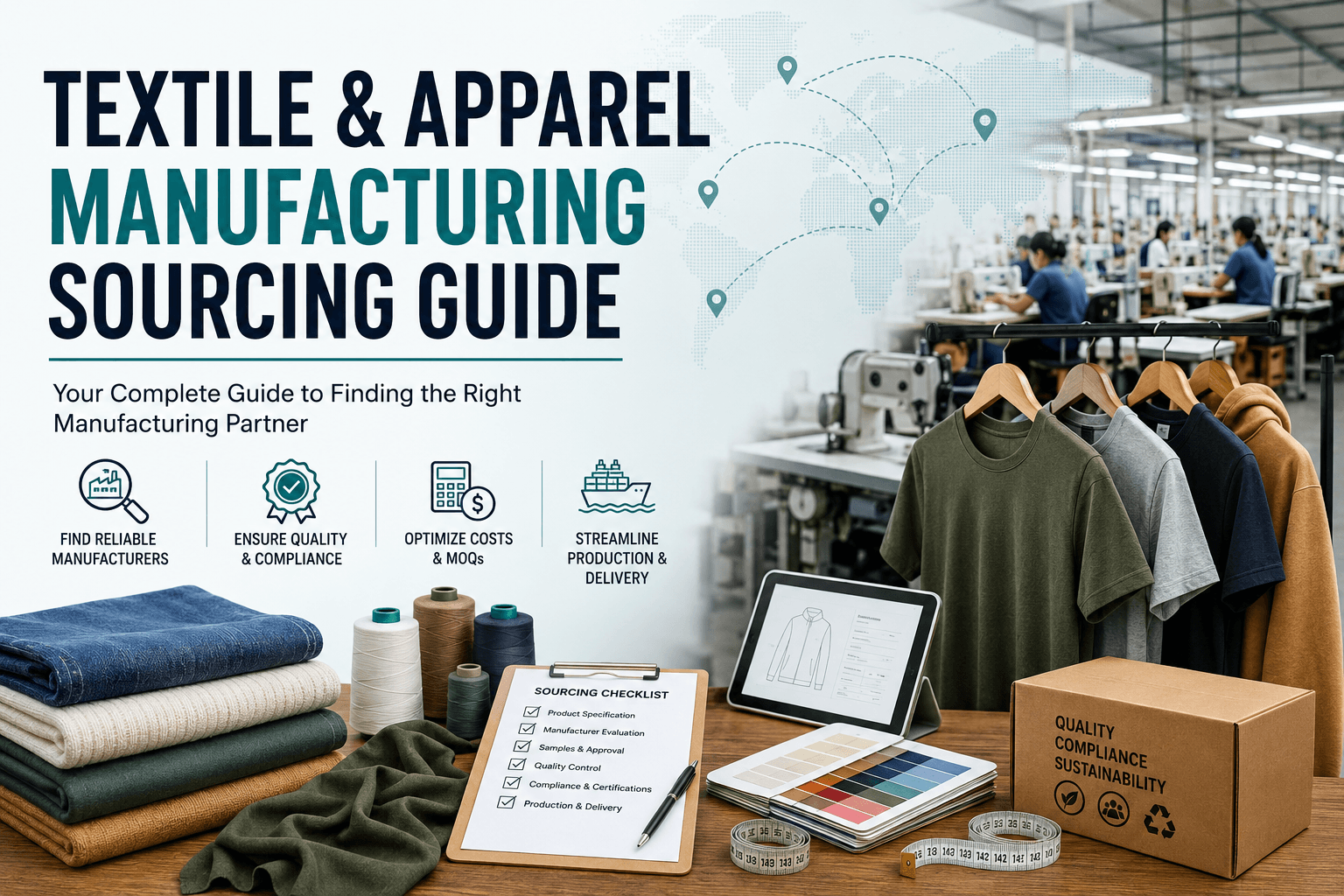
Finding the right textile and apparel manufacturer can determine whether your clothing brand grows smoothly or struggles with delays, inconsistent quality, and rising costs. Whether you’re launching a fashion startup, expanding an established label, or sourcing uniforms and private-label products, choosing the right manufacturing partner is one of the most important business decisions you’ll make.
Modern sourcing is about more than comparing prices. Successful brands evaluate manufacturing capabilities, quality systems, ethical standards, production capacity, communication, and long-term reliability.
This guide explains the textile and apparel sourcing process from start to finish, helping you make informed decisions that reduce risk and improve product quality.
What Is Textile and Apparel Manufacturing Sourcing?
Textile and apparel manufacturing sourcing is the process of identifying, evaluating, and partnering with suppliers that produce fabrics, garments, trims, accessories, or finished apparel products.
Depending on your business model, sourcing may involve:
- Fabric mills
- Garment factories
- Trim suppliers
- Printing and embroidery facilities
- Packaging suppliers
- Logistics providers
- Quality inspection companies
Rather than working with dozens of separate vendors, some businesses choose full-package manufacturers that manage product development, sourcing, production, and shipping under one roof.
Why Choosing the Right Manufacturer Matters
Your manufacturer directly influences nearly every aspect of your business, including:
- Product quality
- Customer satisfaction
- Production speed
- Profit margins
- Inventory management
- Brand reputation
- Sustainability goals
An experienced manufacturing partner can help improve production efficiency, reduce waste, identify cost savings, and maintain consistent quality as your business scales.
Understanding Different Manufacturing Models
Before contacting suppliers, it’s important to understand the different manufacturing models available.
Cut, Make, Trim (CMT)
With the CMT model, you provide:
- Fabrics
- Patterns
- Trims
- Labels
- Packaging
The factory performs garment assembly only.
Best for:
- Established brands
- Designers with existing supply chains
- Businesses needing production flexibility
Full Package Production (FPP)
A full-package manufacturer handles nearly every stage of production, including:
- Fabric sourcing
- Product development
- Pattern making
- Sampling
- Manufacturing
- Packaging
- Shipping coordination
Best for:
- New clothing brands
- Private-label businesses
- Growing fashion companies
OEM Manufacturing
Original Equipment Manufacturing allows factories to produce products according to your custom specifications and branding.
ODM Manufacturing
Original Design Manufacturing enables brands to customize existing factory designs rather than creating products entirely from scratch.
ODM generally offers:
- Lower development costs
- Faster production
- Smaller design investment
Step 1: Define Your Product Requirements
Before requesting quotes, clearly define your product specifications.
Prepare a detailed product brief that includes:
- Garment type
- Target customer
- Fabric composition
- GSM or fabric weight
- Color requirements
- Size range
- Stitching details
- Labels
- Packaging
- Estimated order quantity
- Target price
- Delivery schedule
The more detailed your requirements, the more accurate supplier quotations will be.
Step 2: Decide Where to Manufacture
Different countries offer different advantages depending on your priorities.
China
China remains one of the world’s largest textile and apparel manufacturing hubs.
Advantages include:
- Massive production capacity
- Advanced machinery
- Wide material availability
- Strong supply chain integration
- Fast sampling
Considerations:
- Higher labor costs than some competitors
- Trade policies may affect pricing in certain markets
India
India is known for:
- Cotton production
- Organic textiles
- Handcrafted fabrics
- Home textiles
- Embroidery expertise
India is particularly attractive for brands focused on natural fibers and sustainable production.
Bangladesh
Bangladesh specializes in:
- Knitwear
- T-shirts
- Denim
- Large-volume production
Its competitive labor costs make it a preferred destination for large apparel orders.
Vietnam
Vietnam has become a leading apparel exporter because of:
- Skilled workforce
- Competitive manufacturing costs
- Strong quality standards
- Growing technical textile capabilities
Turkey
Turkey offers several benefits for European brands:
- Shorter shipping times
- High-quality manufacturing
- Fashion-forward production
- Lower lead times
Portugal
Portugal is known for premium apparel manufacturing, particularly for luxury brands and smaller production runs.
Step 3: Evaluate Potential Suppliers
Price should never be the only selection criterion.
Evaluate suppliers based on:
Manufacturing Experience
Ask:
- How many years have you been manufacturing?
- Which product categories do you specialize in?
- Which export markets do you serve?
Factories with relevant experience usually understand your quality expectations better.
Production Capacity
Verify whether the factory can handle:
- Peak seasonal demand
- Future order growth
- Rush production when necessary
Equipment
Modern equipment often improves:
- Stitch consistency
- Fabric utilization
- Production speed
- Product quality
Communication
Responsive communication often predicts smoother production.
Good suppliers provide:
- Clear answers
- Fast updates
- Technical knowledge
- Transparent timelines
Step 4: Request Samples
Never place a large order without reviewing samples.
Common sample types include:
Prototype Sample
Tests the initial design.
Fit Sample
Confirms garment sizing.
Sales Sample
Used for marketing and wholesale presentations.
Pre-Production Sample
Represents the approved version before mass production.
Evaluate samples for:
- Stitch quality
- Fabric feel
- Color accuracy
- Measurements
- Printing quality
- Embroidery
- Wash performance
- Packaging
Step 5: Understand Pricing
Apparel pricing includes many cost components beyond sewing.
Typical costs include:
- Fabric
- Trims
- Labor
- Sampling
- Labels
- Packaging
- Freight
- Customs duties
- Quality inspections
Request a detailed cost breakdown whenever possible.
Understanding Minimum Order Quantities (MOQs)
Factories establish MOQs based on production efficiency.
MOQs vary depending on:
- Fabric availability
- Dyeing requirements
- Printing methods
- Machinery setup
- Garment complexity
If you’re launching a new brand, look for manufacturers specializing in low-MOQ production.
Quality Control Best Practices
Quality issues become significantly more expensive after products reach customers.
Build quality control into every production stage.
Incoming Material Inspection
Inspect:
- Fabric quality
- Color consistency
- Shrinkage
- Weight
- Defects
During Production Inspection
Monitor:
- Stitch quality
- Measurements
- Construction
- Fabric handling
- Label placement
Final Inspection
Review:
- Finished garments
- Packaging
- Carton labeling
- Quantity
- Overall workmanship
Many brands also use independent third-party inspection services before shipment.
Compliance and Certifications
Increasingly, retailers and consumers expect responsible manufacturing practices.
Common certifications include:
GOTS
Demonstrates compliance with organic textile processing standards.
OEKO-TEX
Indicates textiles have been tested for harmful substances.
WRAP
Focuses on ethical manufacturing practices.
BSCI
Supports responsible social compliance across supply chains.
Sedex
Provides supply chain transparency and ethical auditing.
ISO 9001
Demphasizes quality management systems and continuous improvement.
Choose certifications based on your customer expectations, regulatory requirements, and sustainability goals.
Sustainable Textile Sourcing
Sustainability has become a competitive advantage rather than a niche consideration.
Many brands now prioritize:
- Organic cotton
- Recycled polyester
- Regenerated fibers
- Water-efficient dyeing
- Renewable energy
- Reduced packaging waste
- Ethical labor practices
Ask suppliers about their environmental initiatives and how they measure progress.
Logistics and Shipping
Selecting the right shipping method affects both cost and delivery times.
Air Freight
Best for:
- Urgent orders
- Small shipments
- Product launches
Ocean Freight
Best for:
- Large production runs
- Lower transportation costs
- Planned inventory replenishment
Work with experienced freight forwarders who understand textile documentation and customs requirements.
Common Sourcing Challenges
Even experienced buyers encounter production issues.
Common challenges include:
Delayed Production
Causes:
- Material shortages
- Capacity constraints
- Holiday shutdowns
- Poor planning
Quality Variations
Often caused by:
- Inconsistent raw materials
- Limited quality control
- Operator errors
Communication Problems
Misunderstandings may arise from:
- Language differences
- Incomplete technical specifications
- Unclear approval processes
Cost Increases
Material prices, labor costs, and shipping rates can fluctuate. Build contingency into your budget and review contracts carefully.
Tips for Building Long-Term Supplier Relationships
The best manufacturing partnerships improve over time.
To strengthen relationships:
- Share accurate forecasts.
- Pay invoices on time.
- Communicate changes early.
- Visit factories when possible.
- Provide constructive feedback.
- Celebrate successful production runs.
- Treat suppliers as strategic partners rather than transactional vendors.
Strong relationships often result in better pricing, priority production slots, and improved collaboration during product development.
Common Mistakes to Avoid
Many sourcing problems can be prevented with better preparation.
Avoid these common mistakes:
- Choosing suppliers based only on price.
- Skipping factory verification.
- Ignoring quality inspections.
- Providing incomplete specifications.
- Rushing sampling.
- Overlooking compliance requirements.
- Ordering large quantities before validating product quality.
- Failing to establish written agreements.
Textile and Apparel Supplier Evaluation Checklist
Before selecting a manufacturing partner, confirm that the supplier:
- Has relevant product experience.
- Demonstrates strong quality control processes.
- Communicates clearly and promptly.
- Meets your production capacity needs.
- Provides competitive but realistic pricing.
- Holds relevant certifications.
- Offers transparent production timelines.
- Supports future business growth.
- Understands export requirements.
- Has positive references or a proven track record.
Frequently Asked Questions
Q. How do I find reliable apparel manufacturers?
Start by defining your product requirements, researching manufacturers with relevant expertise, requesting samples, verifying certifications, checking references, and conducting factory audits when possible.
Q. What is a good MOQ for a startup clothing brand?
Many manufacturers offer low-MOQ programs ranging from 50 to 300 pieces per style, while larger factories may require significantly higher order volumes.
Q. Should I choose domestic or overseas manufacturing?
Domestic production often offers faster communication and shorter lead times, while overseas manufacturing can provide broader material options and lower production costs. The right choice depends on your priorities, budget, and target market.
Q. Why are samples important?
Samples help validate fit, construction, fabric quality, color accuracy, and manufacturing capability before committing to larger production runs.
Q. How can I reduce sourcing risks?
Work with experienced suppliers, document product specifications thoroughly, approve samples carefully, perform quality inspections, and maintain open communication throughout production.
Key Takeaways
Successful textile and apparel sourcing requires balancing cost, quality, reliability, and long-term partnership potential. While pricing is important, manufacturers should also be evaluated for their expertise, communication, compliance, production capacity, and commitment to quality.
Investing time in supplier research, product development, and quality assurance helps reduce costly mistakes and builds a stronger foundation for growth. As your business expands, trusted manufacturing partners can become valuable collaborators who support innovation, efficiency, and consistent customer satisfaction.