Sheet Metal Fabrication: Processes, Materials, and Applications
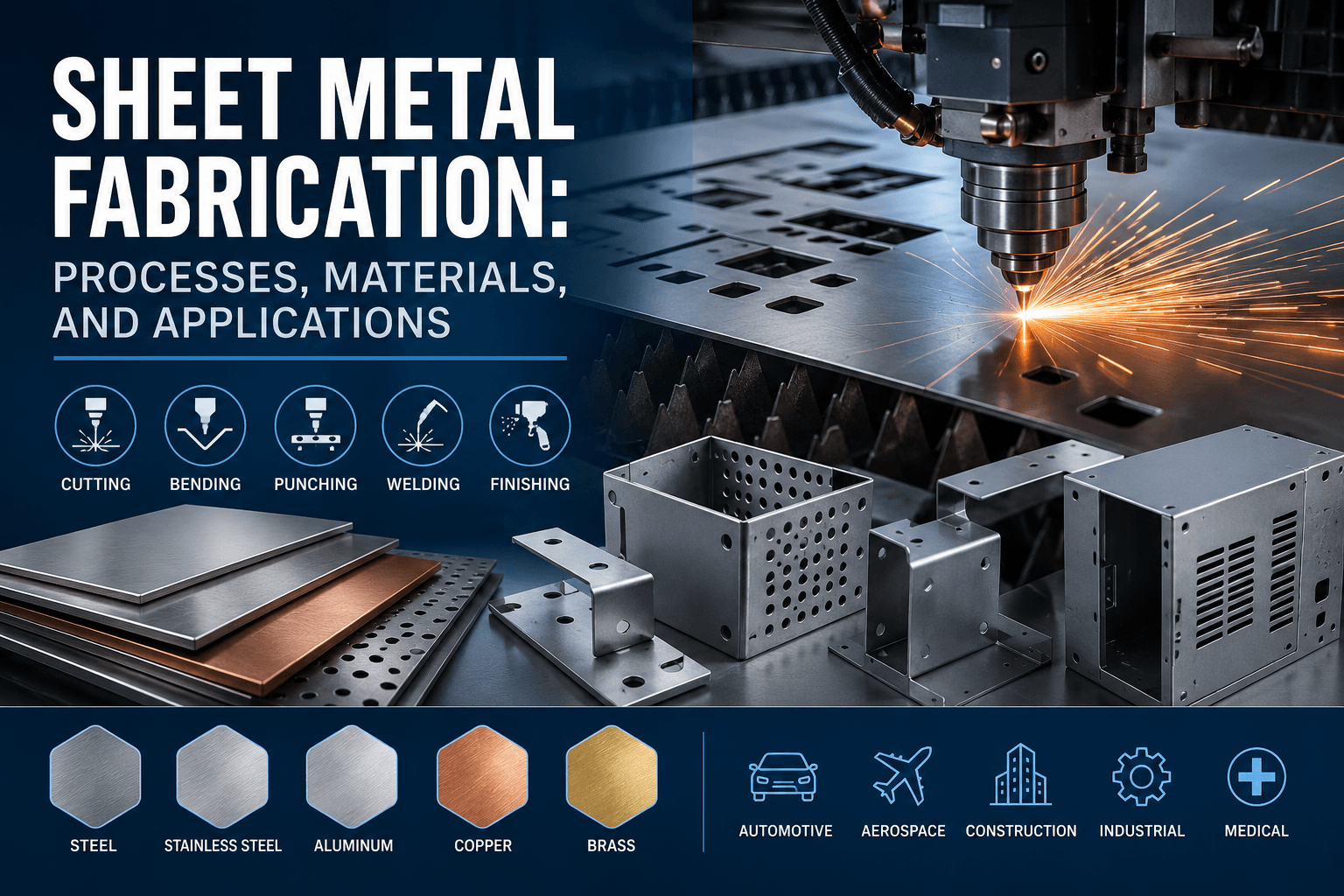
Sheet metal fabrication is one of the most widely used manufacturing methods in modern industry. From automotive parts and aircraft components to electrical enclosures and kitchen appliances, fabricated sheet metal products are found almost everywhere.
The process transforms flat metal sheets into finished components through cutting, bending, forming, welding, and assembly. Advances in CNC machinery, laser cutting, and automation have made sheet metal fabrication faster, more accurate, and more cost-effective than ever.
This guide explains how sheet metal fabrication works, the most common fabrication processes, the materials used, and the industries that rely on fabricated metal parts.
What Is Sheet Metal Fabrication?
Sheet metal fabrication is the process of converting flat metal sheets into finished parts or assemblies using various manufacturing techniques. Depending on the design, the material may be cut, punched, bent, rolled, welded, or assembled into its final shape.
Unlike casting or machining from solid blocks, sheet metal fabrication starts with thin metal sheets that typically range from less than 1 mm to several millimeters thick.
Modern fabrication shops use computer-controlled equipment to achieve consistent quality, tight tolerances, and efficient production for both prototypes and high-volume manufacturing.
Common Sheet Metal Fabrication Processes
Each fabrication project may involve one or several manufacturing processes depending on the complexity of the part.
1. Cutting
Cutting separates the metal sheet into the required shape or size.
Common cutting methods include:
- Laser cutting
- Plasma cutting
- Waterjet cutting
- Mechanical shearing
- CNC punching
Laser cutting is widely used because it delivers high precision, clean edges, and minimal material waste.
2. Bending
Bending changes the shape of the metal without removing material.
Press brakes equipped with CNC controls create accurate bends at specific angles. Proper bend radius and material thickness must be considered to prevent cracking or deformation.
Typical applications include:
- Brackets
- Cabinets
- Electrical enclosures
- Structural supports
3. Punching
Punching creates holes, slots, embosses, and custom shapes using specialized tooling.
CNC turret punch presses can perform multiple punching operations quickly, making them suitable for medium- to high-volume production.
4. Stamping
Stamping uses dies and presses to form complex shapes in a single or multi-stage operation.
Common stamping operations include:
- Blanking
- Coining
- Deep drawing
- Embossing
- Progressive die stamping
Stamping is ideal for producing large quantities of identical components.
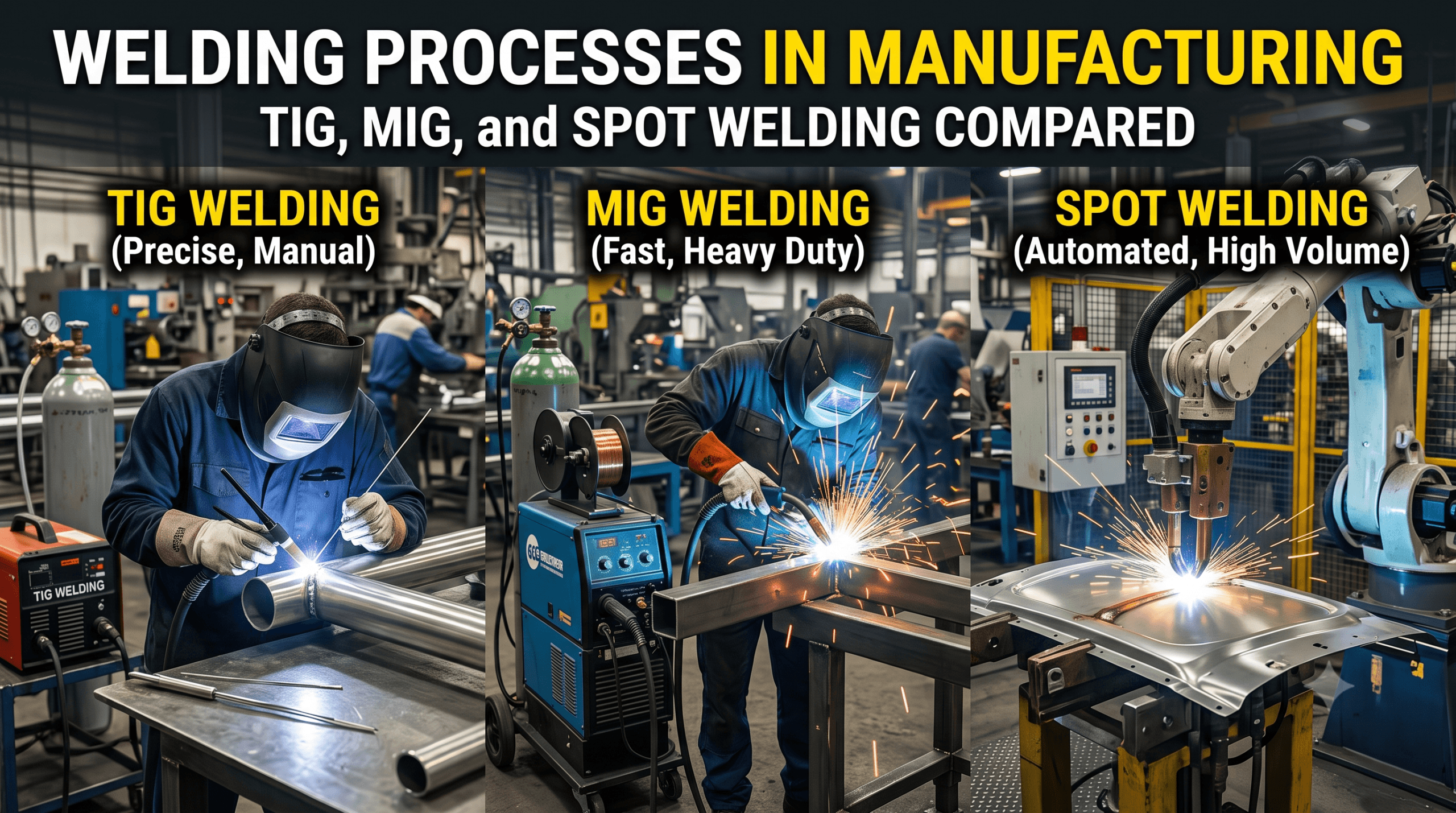
5. Welding
Individual fabricated parts are often joined together through welding.
Common welding techniques include:
- MIG welding
- TIG welding
- Spot welding
- Laser welding
The choice of welding process depends on the material, thickness, strength requirements, and desired finish.
6. Forming and Rolling
Some components require curved or cylindrical shapes rather than sharp bends.
Rolling machines gradually shape flat sheets into:
- Cylinders
- Cones
- Curved panels
- Pipes
- Tanks
This process is common in HVAC systems, pressure vessels, and industrial equipment.
7. Surface Finishing
After fabrication, metal components often undergo finishing to improve appearance, durability, and corrosion resistance.
Common finishing methods include:
- Powder coating
- Painting
- Galvanizing
- Anodizing
- Sandblasting
- Polishing
- Brushing
The finishing process depends on the intended application and operating environment.
Common Materials Used in Sheet Metal Fabrication
Material selection affects strength, weight, corrosion resistance, machinability, and overall cost.
Steel
Steel is one of the most popular fabrication materials due to its strength and affordability.
Applications include:
- Construction
- Machinery
- Industrial equipment
- Structural components
Stainless Steel
Stainless steel offers excellent corrosion resistance and a clean appearance.
It is commonly used for:
- Food processing equipment
- Medical devices
- Pharmaceutical machinery
- Commercial kitchens
- Architectural applications
Aluminum
Aluminum is lightweight, corrosion resistant, and easy to fabricate.
Typical uses include:
- Aerospace
- Automotive
- Consumer electronics
- Transportation
- HVAC systems
Copper
Copper provides excellent electrical and thermal conductivity.
Common applications include:
- Electrical components
- Bus bars
- Heat exchangers
- Roofing
- Decorative products
Brass
Brass combines corrosion resistance with an attractive appearance.
It is often used for:
- Plumbing fittings
- Decorative hardware
- Musical instruments
- Electrical connectors
Advantages of Sheet Metal Fabrication
Sheet metal fabrication offers several benefits that make it suitable for a wide range of manufacturing projects.
High Precision
Modern CNC equipment produces accurate components with consistent dimensions and repeatable quality.
Cost Efficiency
Efficient nesting, automated production, and reduced material waste help lower manufacturing costs, especially for large production runs.
Fast Production
Digital manufacturing systems allow quick transitions from design to production, reducing lead times.
Design Flexibility
Fabrication supports simple brackets as well as highly complex assemblies with multiple bends, cutouts, and welded sections.
Material Variety
Manufacturers can select materials based on strength, corrosion resistance, weight, appearance, or budget.
Scalability
The same fabrication process can support prototype development, low-volume custom production, and high-volume manufacturing.
Industries That Use Sheet Metal Fabrication
Sheet metal fabrication serves nearly every manufacturing sector.
Automotive
Automotive manufacturers use fabricated metal parts for:
- Chassis components
- Body panels
- Exhaust systems
- Battery enclosures
- Mounting brackets
Aerospace
Aircraft require lightweight yet strong fabricated components made primarily from aluminum and specialty alloys.
Applications include:
- Structural panels
- Airframes
- Interior components
- Engine parts
Construction
The construction industry relies on fabricated sheet metal for:
- Roofing
- Cladding
- Structural supports
- HVAC ductwork
- Architectural features
Electronics
Precision-fabricated enclosures protect sensitive electronic equipment and improve thermal management.
Examples include:
- Server cabinets
- Control panels
- Electrical boxes
- Telecom equipment
Medical Equipment
Medical devices often require stainless steel fabricated parts that meet strict hygiene and quality standards.
Applications include:
- Surgical equipment
- Laboratory devices
- Hospital furniture
- Medical enclosures
Energy and Industrial Equipment
Fabricated metal components are widely used in:
- Power generation
- Oil and gas
- Renewable energy systems
- Manufacturing machinery
- Industrial automation
Factors to Consider When Choosing a Fabrication Method
Selecting the right fabrication process depends on several factors:
- Material type
- Sheet thickness
- Part complexity
- Production volume
- Dimensional tolerance
- Surface finish requirements
- Budget
- Lead time
Working with an experienced fabrication partner early in the design process can help reduce manufacturing costs while improving product quality.
Emerging Trends in Sheet Metal Fabrication
The industry continues to evolve through automation and digital manufacturing technologies.
Key trends include:
- AI-assisted production planning
- Automated robotic welding
- Smart factory integration
- Fiber laser cutting
- Real-time quality monitoring
- Digital twins for manufacturing
- Sustainable production practices
These innovations improve productivity, reduce waste, and increase manufacturing precision.
Best Practices for Successful Fabrication Projects
To achieve the best results:
- Design parts with manufacturability in mind.
- Choose the right material for the operating environment.
- Specify realistic tolerances.
- Minimize unnecessary bends and welds.
- Consider finishing requirements early in the design process.
- Collaborate closely with fabrication specialists during product development.
Following these practices helps reduce production costs while improving quality and reliability.
Conclusion
Sheet metal fabrication is a versatile manufacturing process that combines precision, efficiency, and flexibility. Using techniques such as laser cutting, bending, punching, welding, and surface finishing, manufacturers can produce durable, high-quality components for industries ranging from automotive and aerospace to construction and electronics.
As automation, CNC technology, and smart manufacturing continue to advance, sheet metal fabrication will remain a cornerstone of modern production, enabling businesses to manufacture complex metal components with greater speed, consistency, and cost efficiency.
Frequently Asked Questions
What is sheet metal fabrication?
Sheet metal fabrication is the process of transforming flat metal sheets into finished components using cutting, bending, welding, punching, and assembly techniques.
Which material is best for sheet metal fabrication?
The best material depends on the application. Steel offers strength and affordability, stainless steel provides excellent corrosion resistance, aluminum is lightweight, and copper delivers superior electrical conductivity.
What industries use sheet metal fabrication?
Major industries include automotive, aerospace, construction, electronics, medical equipment, industrial manufacturing, energy, and telecommunications.
What is the difference between fabrication and machining?
Fabrication shapes metal primarily through cutting, bending, forming, and joining sheet material. Machining removes material from a solid workpiece using tools such as mills, lathes, and drills to create precise dimensions.
What are the benefits of CNC sheet metal fabrication?
CNC fabrication improves precision, repeatability, production speed, material utilization, and overall product quality while reducing manual errors.