

How to Run an Effective Factory Audit in India: A Procurement Manager’s Complete Checklist

Introduction
A factory audit in India is not just a box-ticking exercise. It is the primary risk mitigation tool between committing programme spend and discovering quality problems after you’ve cut your existing supplier. Experienced procurement managers who audit India factories frequently – including for Tier-1 automotive OEMs, aerospace primes, and Fortune 500 industrials – have a consistent finding: the gap between a factory’s certification status and its actual operational quality can be substantial. This checklist gives you the assessment protocol that experienced auditors use.
Before the Audit: Preparation
Request in advance and review before arriving:
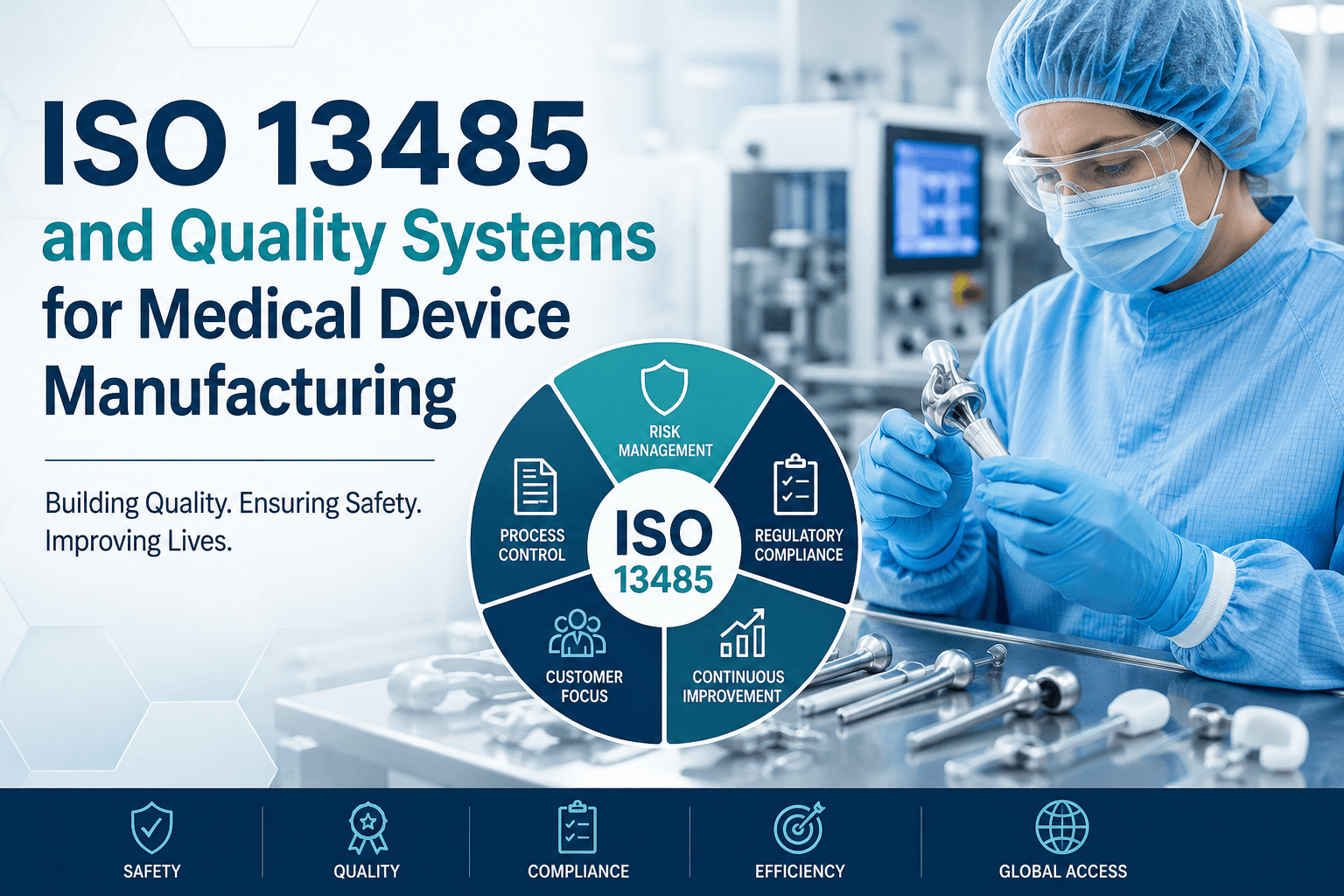
- Current quality management certification (ISO 9001, IATF 16949, AS9100, ISO 13485) – verify the certificate is current (not expired), issued by an accredited CB, and covers the relevant scope (not just head office)
- Customer list: who do they supply, for how long, at what quality level (PPM data)
- Quality data: defect rate (PPM or DPMO), customer complaints in last 12 months, field returns data
- CAPEX and equipment list: what machinery do they operate, age, maintenance records
- Revenue and workforce size: understaffing relative to revenue is a red flag for quality system coverage
Section 1: Quality Management System Assessment
Documentation and Control
- Are quality procedures documented, current, and controlled (version-numbered, review date)?
- Are operators working to documented work instructions, or from memory?
- Is the document control system functional (superseded versions removed from production floor)?
- Are calibration certificates current for all measurement equipment? Ask to see 3 random instruments.
- Is the CAPA (Corrective and Preventive Action) system active – is there a log of open and closed CAPAs with root cause analysis?
Management Review
- Has a management review meeting been held in the last 6 months? Ask to see the minutes.
- Are quality KPIs (PPM, OTD, scrap rate) tracked, displayed, and reviewed by management?
- Is there a defined quality policy signed by the site leader?
Section 2: Manufacturing Process Assessment
Process Controls
- Are control plans in place for each key process? Are they specific (not generic) to the actual products manufactured?
- Is SPC (Statistical Process Control) being used on critical dimensions? Are charts current and showing in-control processes?
- Are process parameters (temperature, pressure, speed, feed) controlled and recorded? Ask to see a production traveller for a recent job.
- Is incoming material inspection performed? Ask to see incoming inspection records for the last 10 lots.
- Is a first article inspection (FAI) procedure in place and routinely followed?
Non-Conforming Material Control
- Is there a clearly marked and physically segregated quarantine area for non-conforming material?
- Is all material in the quarantine area tagged with disposition status?
- Is there a material review process for disposition of non-conforming parts (scrap, rework, use-as-is)?
- Has the quarantine area been cleaned recently, or is it full? A full quarantine area is a sign of unreported quality problems.
Section 3: Equipment and Measurement Capability
Equipment Condition
- Walk the production floor with attention to: machine cleanliness (clean machines are maintained machines), coolant condition, tooling storage (organised vs scattered), work-in-process flow (logical vs chaotic)
- Ask to see the Preventive Maintenance schedule for 3 critical machines. Is it current?
- Check calibration status on measurement equipment: CMMs, micrometers, calipers, torque wrenches. Calibration stickers should show current calibration date and next due date.
- Is there a gauge R&R (repeatability and reproducibility) programme for critical gauges?
Test and Inspection Equipment
- Does the supplier have the in-house test equipment required for your product (hardness tester, CMM, surface profilometer, functional test rigs)?
- Is test equipment NABL (National Accreditation Board for Testing and Calibration Laboratories) accredited or traceable to national standards?
- For electronics: does the supplier have AOI (Automated Optical Inspection), ICT (In-Circuit Test), or functional test equipment relevant to your programme?
Section 4: Workforce Assessment
Operator Competency
- Are operators trained to documented procedures? Ask to see training records for 3 random production operators.
- Are critical process operators certified (e.g., IPC-A-610 CIS for electronics soldering, ASNT Level II for NDT)?
- Ask a production operator to demonstrate the control plan for their process – can they explain what they are checking and why?
- What is the supervisor-to-operator ratio? Below 1:15 on complex assembly is a risk indicator.
Retention and Stability
- What is the annual workforce turnover rate? Above 30-40% is a quality risk (constant retraining, loss of process knowledge).
- How long has the production manager / quality manager been in role? Frequent leadership turnover destabilises quality systems.
- Is the workforce directly employed, or heavily contractor-dependent? High contractor ratios reduce quality accountability.
Section 5: Supply Chain and Materials
- Does the supplier maintain an approved vendor list (AVL) for their key raw materials and sub-components?
- Are supplier quality agreements in place for critical materials?
- Is Tier-2 supply chain visibility maintained? Ask: do they know where their primary raw materials come from?
- For chemical-intensive processes: are hazardous materials stored, handled, and disposed per regulatory requirements (MSDS available, segregation, ventilation)?
Red Flags That Should Pause Qualification
- Calibration stickers missing or expired on measurement equipment: suggests systemic quality system breakdown
- Quarantine area overflowing with tagged non-conforming material: suggests unreported quality problems
- Certificates presented during audit that are expired or cover a different scope than the facility you are auditing
- Operators unable to explain what they are checking or what the pass/fail criteria are
- Customer reference list that cannot be verified (no contact names, suppliers unable to provide letters of commendation)
- Production floor where the “show area” is clean but the back of the factory is chaotic – staged audits are real
Green Flags That Indicate a Mature Supplier
- SPC charts on the production floor that show recent data (not last month’s) with evidence of response to out-of-control signals
- Quality KPI trend charts visible in the production area showing month-on-month improvement
- Operators who can spontaneously describe the FMEA risk for their process and what the detection method is
- A quality manager who proactively points out weaknesses during the audit (self-aware suppliers improve; defensive suppliers don’t)
- Multiple current customer reference letters from recognisable global OEMs (Toyota, Bosch, Honeywell)
Key Takeaways
- A factory audit in India is not a certification check – it is an operational quality assessment. Certification is necessary but not sufficient.
- The highest-value audit activities are: CAPA system review, production-floor conversation with operators, quarantine area inspection, and calibration verification.
- Red flags that should pause qualification: expired calibrations, full quarantine area, operators unaware of control criteria, and certificates covering wrong scope.
- A staged audit (clean show area, messy back areas) is a real risk in India and globally – walk the entire facility, not just the presentation area.
- The best predictor of future quality is the supplier’s current customer reference list and their PPM data with those customers.
FAQs
Q: Should I conduct a factory audit myself or use a third-party audit firm?
A: For initial qualification of high-risk or high-spend suppliers: conduct your own audit (use this checklist), supplemented by a third-party audit from a firm with India manufacturing expertise (SGS, Bureau Veritas, Intertek, TUV SUD India). Third-party audits add credibility for regulatory submissions. For ongoing surveillance of qualified suppliers: third-party annual audits are cost-efficient. For critical programmes: both.
Q: How long should a factory audit take?
A: Full qualification audit for a medium-complexity supplier: 1 full day (6-8 hours on-site). Targeted process audit for a specific concern: half day. Routine surveillance audit of an established supplier: 4 hours. Do not accept supplier-organised audits that are compressed to 2 hours – the production floor walk alone should take 90 minutes for a meaningful assessment.
Q: What are the most important questions to ask the quality manager during an India factory audit?
A: (1) What was your worst quality escape in the last 12 months – what happened and what did you change? (A supplier who can answer this has a functioning quality system. A supplier who says they have had no quality escapes is either exceptional or not measuring.) (2) Show me the last 3 corrective actions you issued to your own suppliers. (3) What is your current internal scrap rate by process?