
Additive Manufacturing vs Traditional Manufacturing: When 3D Printing Makes Economic Sense in 2026
Introduction
Additive manufacturing (AM) has moved beyond prototyping. In 2026, production-volume metal AM is used for aerospace brackets, surgical implants, heat exchangers, and complex fluid manifolds. Polymer AM is used for end-use tooling jigs, custom assembly aids, and low-volume functional parts. The question is no longer “can 3D printing make this part?” but “should 3D printing make this part – and at what volume does the economics flip to traditional manufacturing?”
This guide gives engineers and procurement teams a systematic framework for the AM vs traditional manufacturing decision, with cost crossover data, application fit analysis, and India sourcing context for both paths.
Additive Manufacturing Processes in 2026: The Landscape
Metal AM
DMLS/SLM (Direct Metal Laser Sintering / Selective Laser Melting): Laser powder bed fusion (LPBF) – the dominant metal AM process for structural parts. Materials: Ti-6Al-4V, Inconel 718, AlSi10Mg, 316L stainless, cobalt-chrome, copper alloys. Achievable tolerance: +/- 0.05-0.1mm. Surface finish: Ra 5-15 micron as-built (requires post-processing for precision surfaces).
DED (Directed Energy Deposition): Wire or powder-fed AM for large structural parts and repair. Lower resolution than LPBF but higher deposition rates and larger part capability. Used for aerospace structural repairs and large titanium components.
Binder Jetting: Metal binder jetting (Desktop Metal, ExOne) offers high throughput at lower cost than LPBF. Achievable porosity: below 99.5% density after sintering. Growing adoption for automotive and industrial production.
Polymer AM
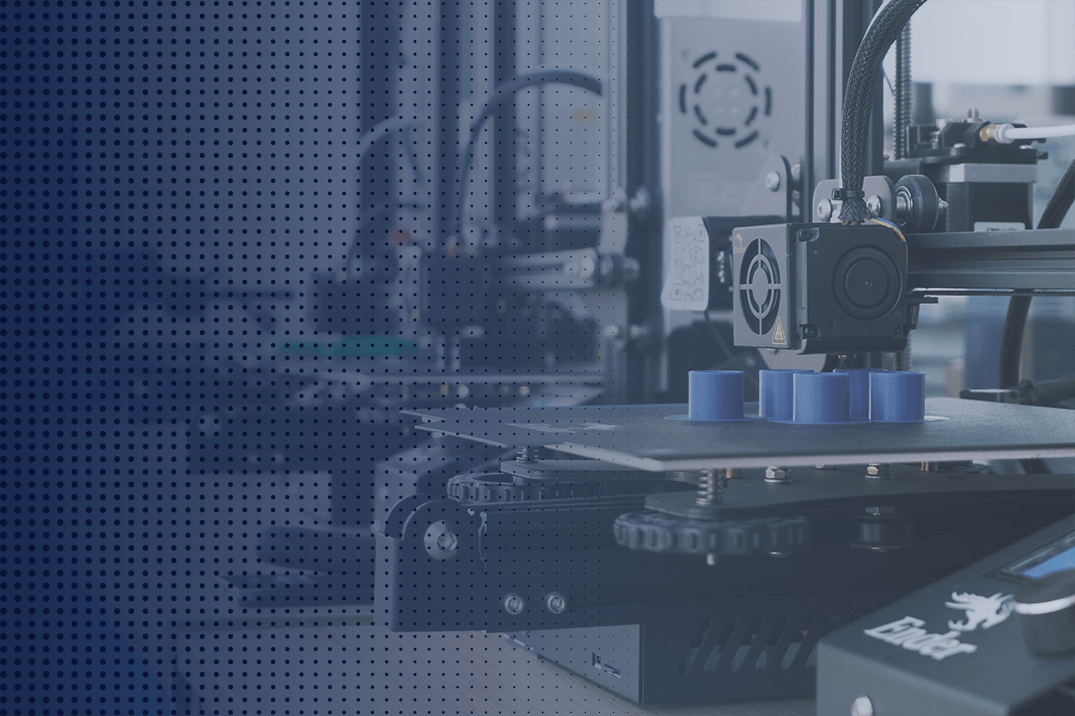
FDM/FFF: The most widely used polymer AM process. Engineering materials: PC, Nylon, ULTEM, CF-Nylon. Suitable for jigs, fixtures, tooling inserts, low-load functional parts. Not suitable for precision-critical or high-surface-finish applications.
SLA / MSLA: Photopolymer resin printing. High resolution (25-50 micron layer), excellent surface finish. Suitable for complex enclosures, anatomical models, casting patterns. Limited material strength vs FDM for functional applications.
MJF / SLS: Nylon powder bed processes. Near-isotropic mechanical properties, good feature resolution, no support structures required. Increasingly used for end-use parts in automotive, consumer, and industrial applications.
The Economics: When AM Beats Traditional Manufacturing
Low Volume (Below ~50 Units) – AM Almost Always Wins
Below approximately 50 units, the tooling amortisation cost of traditional manufacturing (injection moulding: $5,000-50,000; investment casting: $3,000-30,000; CNC fixturing: $1,000-10,000) dominates unit economics. AM has zero tooling cost – you pay only for material and machine time. For 1-50 units, AM delivers functional parts in 2-5 days vs 4-12 weeks for traditionally manufactured equivalents.
Medium Volume (50-500 Units) – AM Competes Depending on Geometry
In the 50-500 unit range, AM competes when the part geometry justifies it: complex internal channels impossible in casting/machining, topology-optimised structures that cannot be manufactured traditionally, or when multiple traditionally-manufactured parts can be consolidated into one AM part (reducing assembly cost and weight).
Cost crossover example for a complex titanium bracket (aerospace): Traditional machining from billet at 500 units: $280/part (includes fixturing, 5-axis machining time, scrap). LPBF AM at 500 units: $380/part. Traditional wins on unit cost but loses on design freedom.
High Volume (Above 500 Units) – Traditional Manufacturing Wins on Cost
For volumes above 500 units, traditional manufacturing (CNC machining, investment casting, injection moulding) wins on cost in most cases. The exception is parts where AM’s geometric freedom enables:
- Part consolidation: 8 machined parts consolidated into 1 AM part; traditional manufacturing at “8 parts x $40 each + assembly labour” vs AM at “1 part x $180” – AM wins on system cost despite higher part cost.
- Performance-driven design: Topology-optimised structural parts where AM’s lighter weight justifies premium cost (aerospace, performance automotive).
- Mass customisation: Medical implants (patient-specific orthopaedic), dental prosthetics, customised industrial tooling – each unit is unique, making traditional tooling impossible.
The AM vs Traditional Decision Framework
Step 1: Volume Check
Below 50 units: default to AM unless material is not AM-compatible. 50-500 units: evaluate based on geometry, weight sensitivity, and part consolidation opportunity. Above 500 units: default to traditional manufacturing unless a specific AM advantage exists.
Step 2: Geometry Check
Does the part have: internal lattice structures or conformal cooling channels (impossible in casting/machining)? Extreme undercuts or internal features inaccessible to machining tools? Weight reduction through topology optimisation that traditional manufacturing cannot achieve? If yes to any: AM warrants serious evaluation regardless of volume.
Step 3: Material Check
Is the required material processable by AM? Titanium Ti-6Al-4V: excellent LPBF results, close to wrought properties. Inconel 718: excellent LPBF, used in production aerospace. Aluminium AlSi10Mg: good AM properties. Stainless 316L: production-ready AM. Hardened tool steels: limited AM capability. Cast iron: not AM-compatible. Polymers: MJF nylon or ULTEM FDM for most functional applications.
Step 4: Property Check
Does the part require forging-level fatigue life or impact resistance? If yes, AM is unlikely to be the right choice – LPBF metals have fatigue properties approaching wrought but typically do not exceed cast, and are below forged properties. If static structural loads only: AM is viable.
AM in India: What Is Available in 2026
India’s additive manufacturing ecosystem has matured significantly:
- Metal AM (LPBF/DMLS): Multiple service bureaux in Bengaluru, Pune, and Hyderabad operate EOS, SLM Solutions, and Renishaw LPBF systems. Tier-1 aerospace and defence AM suppliers (Cyient, Wipro 3D, TSAT) produce qualified aerospace components. Material certification (AS9100, NADCAP for AM) is available.
- Polymer AM production: Multiple production-scale MJF (HP 4200, 5200) operators in Pune, Chennai, and NCR produce end-use parts for automotive and industrial OEMs.
- Dental and medical AM: Dedicated dental CAD/CAM and metal AM ecosystem in Hyderabad, Mumbai, and Chennai for custom implants and prosthetics.
- Research and capability: IIT institutions (Bombay, Madras, Delhi, Roorkee) and DRDO labs are active in AM research, providing a talent pipeline.
Key Takeaways
- Additive manufacturing wins decisively below 50 units on cost and lead time vs any traditional manufacturing process.
- Above 500 units, traditional manufacturing wins on unit cost for most part geometries – the exception is part consolidation, mass customisation, and topology-optimised designs.
- The 50-500 unit range requires case-by-case evaluation; geometry complexity and weight sensitivity are the primary tie-breakers.
- Metal AM (LPBF/DMLS) achieves mechanical properties close to wrought but does not match forged properties for fatigue-loaded applications.
- India has production-qualified metal and polymer AM capability in 2026 – it is not necessary to source AM parts from Europe or the US.
FAQ
Q: Can AM-produced metal parts be used in aerospace structural applications?
A: Yes – with qualification. AM aerospace components are in production service at Airbus, GE Aviation, Boeing, and Safran. Qualification requirements: powder traceability, build parameter certification, NDT (CT scan or X-ray) for internal defects, mechanical coupon testing (UTS, fatigue), and design approval per the applicable airworthiness standard (EASA, FAA). India has NADCAP-accredited AM facilities capable of this qualification.
Q: What is the typical cost premium of metal AM over CNC machining for simple prismatic parts?
A: For a simple block or bracket (no complex internal features) at 10 units: AM is approximately 20-40% cheaper than CNC (no setup, faster). At 100 units: CNC is 30-50% cheaper than AM (setup amortises, machining is fast). At 500+ units: CNC is 60-80% cheaper. AM’s cost advantage on simple parts exists only at very low volumes.
Q: How do I specify quality requirements for an AM metal part from an India service bureau?
A: Specify: material specification (e.g., Ti-6Al-4V per AMS 4999 for LPBF), minimum density (above 99.5% for structural, above 99.8% for fatigue-loaded), surface roughness requirement (as-built Ra, or post-machined Ra for precision surfaces), NDT requirement (X-ray CT for internal defects if safety-critical), and mechanical property minimums (UTS, yield, elongation per build direction). Request material certifications and build parameter documentation with each order.