

Wind-Solar Hybrid with BESS: A Solution for Manufacturers
Why Manufacturers Need a Smarter Energy Strategy
Electricity is one of the most important operating costs for manufacturers. From running production lines and industrial motors to powering HVAC systems and compressed air equipment, factories need a steady supply of energy to keep operations running efficiently.
At the same time, manufacturers face growing pressure to control energy expenses, reduce carbon emissions, and meet sustainability requirements from customers and supply chain partners.
Traditional grid electricity and diesel backup generators can help meet these needs, but they also expose businesses to changing tariffs, fuel costs, and power interruptions.
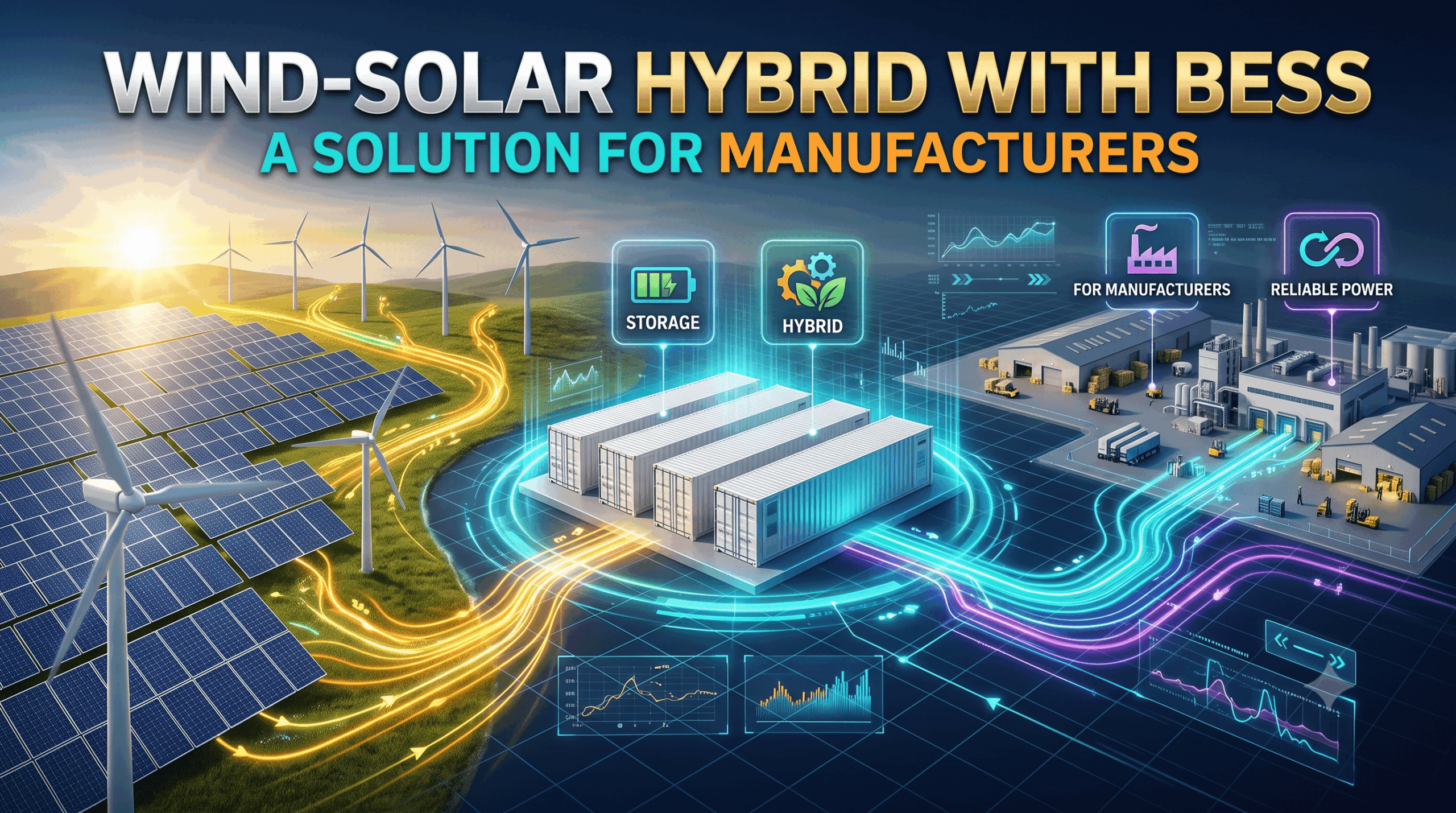
A wind-solar hybrid system integrated with a Battery Energy Storage System (BESS) offers another approach. By combining wind power, solar energy, and battery storage, manufacturers can build a more flexible energy supply that better matches their production requirements.
What Is a Wind-Solar Hybrid System with BESS?
A wind-solar hybrid system combines electricity generated by wind turbines and solar photovoltaic (PV) panels. A Battery Energy Storage System stores surplus electricity and releases it when renewable generation falls or demand increases.
Each component serves a different purpose.
Solar Power for Daytime Operations
Solar panels generate electricity during daylight hours, making them useful for factories operating during the day. Solar energy can power production equipment, lighting, ventilation, and other electrical loads while reducing the amount of electricity purchased from the grid.
However, solar generation declines in the evening and stops at night. Cloud cover and seasonal changes can also affect output.
Wind Power to Complement Solar Generation
Wind turbines generate electricity when wind conditions are suitable. Depending on the location, wind generation may complement solar output during evenings, nights, or certain seasons.
This combination can provide a more balanced renewable energy supply than relying on solar or wind alone. Actual performance depends on local weather patterns, site conditions, and the timing of the factory’s electricity demand.
BESS to Store and Dispatch Electricity
A BESS stores electricity for use at a later time. When renewable generation exceeds immediate demand, the battery can charge. When generation drops or electricity demand rises, the battery can discharge to support the facility.
Depending on its design and control system, BESS can also help manage peak demand, smooth short-term power fluctuations, and support selected critical loads during outages.
The result is an integrated energy system that gives manufacturers greater control over when and how electricity is used.
Key Benefits of Wind-Solar Hybrid with BESS for Manufacturers
1. Lower Electricity Costs
Electricity costs can affect manufacturing margins, particularly in energy-intensive industries. A hybrid renewable energy system can reduce grid electricity purchases by supplying part of the factory’s energy requirements through wind and solar generation.
Battery storage can improve these savings by shifting renewable electricity to periods when it is more valuable to the business.
For example, a factory may store excess solar energy generated during the afternoon and use it later when grid electricity is more expensive. Where applicable, the battery can also help reduce demand charges associated with short periods of high electricity consumption.
The actual savings depend on the electricity tariff, renewable energy costs, battery efficiency, financing, and operating patterns.
2. More Reliable Power for Production
Manufacturing processes often depend on consistent electricity. Even a short interruption can stop machinery, disrupt production schedules, affect product quality, or require equipment to restart.
A wind-solar hybrid system with BESS can improve energy resilience by providing multiple sources of electricity and stored energy.
With suitable controls and electrical infrastructure, the system may support critical equipment during certain grid disturbances. However, backup capability depends on whether the installation is designed for islanded operation, its available battery capacity, and the facility’s critical load.
For manufacturers with sensitive processes, these capabilities can be an important part of an overall power continuity strategy.
3. Reduced Dependence on Diesel Generators
Many industrial facilities use diesel generators to manage outages or provide backup power. Although generators can be useful, they require fuel, regular maintenance, and emissions management.
A renewable hybrid system with battery storage can reduce diesel generator runtime when renewable generation and stored energy are available.
This can lower fuel consumption, reduce local emissions, and limit exposure to diesel price fluctuations. Manufacturers may still need generators or another backup source for extended outages or periods of insufficient renewable generation.
4. Better Management of Peak Demand
Some electricity tariffs include demand charges based on the highest level of power drawn during a billing period. Short periods of heavy equipment use can therefore increase electricity costs.
A suitably sized BESS can discharge during these periods to reduce the facility’s grid demand. An energy management system can coordinate battery operation with production schedules, renewable generation, and tariff periods.
For example, if several high-power machines start at the same time, the battery may supply part of the additional demand rather than requiring the grid to provide the entire increase.
This strategy, commonly known as peak shaving, works best when the battery’s power rating and usable energy capacity match the facility’s actual load profile.
5. Lower Carbon Emissions
Manufacturers increasingly need to demonstrate progress toward sustainability goals. Renewable electricity can help reduce emissions associated with purchased grid power and fossil-fuel-based generation.
Wind and solar energy produce electricity without direct combustion emissions during operation. Battery storage helps manufacturers use more of this renewable electricity when it is needed, rather than relying entirely on the timing of generation.
For companies supplying global manufacturers, exporters, or customers with renewable energy procurement targets, this can also support sustainability reporting and customer requirements.
The emissions benefit depends on the electricity sources displaced, the renewable energy procurement model, and the emissions associated with manufacturing and operating the equipment.
6. Improved Use of Renewable Energy
A solar or wind installation may sometimes generate more electricity than a factory can immediately consume. Depending on the applicable arrangements, this surplus may be exported, curtailed, or otherwise go unused by the facility.
BESS provides another option by storing some of the surplus for later use.
This can increase renewable energy self-consumption and reduce avoidable energy waste. A well-designed system coordinates charging and discharging with expected generation, production demand, grid restrictions, and battery operating limits.
How the System Works in a Manufacturing Facility
A wind-solar hybrid system with BESS typically follows a coordinated operating strategy.
- Renewable generation: Solar panels and wind turbines generate electricity according to available sunlight and wind conditions.
- Direct consumption: The factory uses available renewable electricity to meet its immediate demand.
- Battery charging: Surplus electricity charges the BESS when charging is permitted and economically useful.
- Energy dispatch: The battery supplies electricity when renewable generation falls, demand rises, or grid electricity becomes more expensive.
- Grid support: Grid electricity supplements the renewable and stored energy available to the facility.
- Energy optimisation: A control system monitors generation, demand, battery status, and electricity tariffs to coordinate the system.
The objective is not necessarily to eliminate grid electricity. For many manufacturers, the practical goal is to reduce energy costs and emissions while maintaining the reliability required by production operations.
Which Manufacturing Industries Can Benefit?
Wind-solar hybrid systems with BESS can be relevant to a wide range of industrial facilities, particularly those with substantial electricity demand or operations extending beyond daylight hours.
Automotive and Engineering
Automotive plants and engineering facilities operate motors, assembly lines, robotics, compressors, and testing equipment. Hybrid renewable power can offset part of their electricity demand, while storage can help manage peak loads.
Textiles and Garments
Textile manufacturing often uses spinning, weaving, processing, and ventilation equipment. Facilities with long operating hours may benefit from combining daytime solar generation with complementary wind generation and battery storage.
Food Processing and Cold Storage
Food processing plants and cold storage facilities require electricity for refrigeration, cooling, processing, and packaging. A properly designed system can reduce grid consumption and support selected critical loads, subject to battery capacity and backup configuration.
Chemicals, Pharmaceuticals, and Electronics
These facilities may have sensitive equipment or processes that are affected by power disturbances. Battery systems designed for the relevant electrical loads can support power quality and continuity objectives, although critical processes may require additional protection and backup arrangements.
Cement, Metals, and Other Energy-Intensive Industries
Facilities with large motors, heavy equipment, and substantial electricity consumption may benefit from renewable energy procurement and peak-demand management. The most suitable configuration depends on load characteristics, available renewable resources, and project economics.
On-Site Generation vs. Off-Site Renewable Power Procurement
Manufacturers do not always need to install wind turbines and solar panels within their factory premises. The right model depends on available land, energy demand, grid access, and investment priorities.
On-Site Wind and Solar
On-site installations allow manufacturers to use renewable electricity close to where it is consumed. Rooftop solar is particularly useful where suitable roof space is available, while wind installations require appropriate wind resources, space, and site approvals.
On-site BESS can help manage local demand and improve the use of generated electricity.
Off-Site Wind-Solar Hybrid Projects
Manufacturers with limited land may procure renewable electricity from off-site projects through suitable power purchase agreements or other permitted arrangements.
In India, eligible commercial and industrial consumers may also explore applicable green energy open access arrangements. Charges, eligibility, approvals, banking provisions, and other rules depend on the relevant regulations and state.
Battery storage may be located at the generation site, near the consumer, or elsewhere within the power system, depending on the project structure and intended use.
A Combined Approach
Some manufacturers combine rooftop solar with off-site wind or hybrid power procurement and on-site battery storage. This can provide flexibility without requiring the factory to host every generation asset.
The best option depends on the facility’s load profile, existing power contracts, grid connection, and financial objectives.
How to Size a Wind-Solar Hybrid System with BESS
Correct sizing is essential. A system that is too small may not provide enough energy or peak-demand relief. An oversized system may increase investment costs without delivering equivalent financial value.
1. Analyse the Factory’s Electricity Demand
Start with at least 12 months of electricity bills and, where available, interval-level consumption data.
Review:
- Total monthly and annual electricity consumption.
- Peak demand and demand-charge structure.
- Day, night, and weekend load patterns.
- Seasonal changes in production.
- Critical loads that require backup support.
- Existing renewable energy generation and backup systems.
This establishes how much renewable energy the facility can use and when additional power is needed.
2. Assess Solar and Wind Resources
Solar capacity should reflect available roof or land area, shading, orientation, and expected generation.
Wind capacity should be based on reliable site-specific wind assessments and expected energy output. Wind generation varies significantly by location, so assumptions based on regional averages alone may not be sufficient for investment decisions.
The aim is to choose a generation mix that complements the factory’s electricity demand as closely as practical.
3. Determine Battery Power and Energy Capacity
Battery power, measured in kilowatts or megawatts, determines how much electricity the system can deliver at a given moment.
Battery energy capacity, measured in kilowatt-hours or megawatt-hours, determines how much energy can be stored.
Both matter. A factory seeking to reduce a short demand spike may need substantial battery power but relatively little energy capacity. A facility seeking several hours of support may require a larger energy capacity.
Designers should also account for usable state of charge, round-trip efficiency, degradation, operating temperature, and the reserve needed for critical loads.
4. Model the Financial Returns
Compare the proposed system against the facility’s current electricity costs and backup arrangements.
The analysis should include:
- Renewable energy generation costs or contracted tariffs.
- Battery capital costs and replacement assumptions.
- Grid electricity and demand charges.
- Charging and discharging losses.
- Operations and maintenance.
- Financing costs and applicable taxes.
- Expected savings under different production and tariff scenarios.
A credible feasibility study should test several operating scenarios rather than rely on a single assumed savings figure.
Key Challenges to Consider Before Investing
Although hybrid renewable energy systems offer clear potential, they are not automatically the best solution for every factory.
High upfront investment: Wind, solar, and battery systems require capital or long-term contractual commitments. Project financing and procurement models affect the overall economics.
Variable renewable generation: Wind and solar output depends on weather and season. Battery storage can shift energy over time, but it cannot create electricity or guarantee unlimited supply during prolonged generation shortfalls.
Battery degradation: Batteries lose usable capacity over time. Operating conditions, cycling frequency, temperature, and chemistry affect their useful life and replacement needs.
Grid and regulatory requirements: Grid interconnection, open access, metering, energy banking, and power export arrangements can affect project feasibility, especially in India.
Space and site limitations: Rooftop conditions, land availability, wind resource quality, and electrical infrastructure can limit on-site deployment.
System integration: Renewable generation, BESS, inverters, protection equipment, and energy management software must work together safely and reliably.
Addressing these factors during the planning stage helps avoid costly design changes and unrealistic return expectations.
A Practical Roadmap for Manufacturers
Manufacturers considering a wind-solar hybrid system with BESS can begin with a structured assessment.
- Audit energy consumption: Establish the facility’s demand profile, electricity costs, and reliability requirements.
- Identify the main objective: Decide whether the priority is bill reduction, peak-demand management, backup support, renewable energy procurement, or a combination.
- Evaluate available options: Compare on-site solar, off-site wind-solar procurement, battery storage, and existing backup systems.
- Run a technical and financial feasibility study: Model generation, battery dispatch, grid dependence, project costs, and expected returns.
- Choose a suitable commercial model: Evaluate direct investment, renewable energy purchase agreements, or other permitted financing and procurement structures.
- Implement and monitor performance: Track energy costs, renewable energy utilisation, peak demand, battery health, and actual savings against the original business case.
Starting with measured energy data makes it easier to select a system that addresses the factory’s real operating needs.
Conclusion
Wind-solar hybrid systems with Battery Energy Storage Systems offer manufacturers a practical way to combine renewable energy generation with more flexible electricity management.
Wind and solar can diversify the energy supply, while BESS helps shift available electricity to the periods when it provides the greatest operational or financial value. Together, these technologies can reduce grid dependence, manage peak demand, support selected critical loads, and advance emissions reduction goals.
The key is to design the system around the manufacturer’s actual electricity demand, local renewable resources, tariff structure, and reliability requirements. With careful planning and realistic financial modelling, a wind-solar hybrid with BESS can become a valuable part of a manufacturer’s long-term energy strategy.
Frequently Asked Questions
What is a wind-solar hybrid system with BESS?
It is an energy system that combines wind power, solar generation, and battery storage. The battery stores surplus electricity and supplies it later, helping balance renewable generation with a facility’s energy demand.
Can a wind-solar hybrid system provide 24/7 power to a factory?
It can be designed to provide a more consistent supply, but uninterrupted power is not guaranteed by the combination alone. Achieving a defined level of supply reliability requires appropriate generation capacity, battery sizing, grid or backup arrangements, and system controls.
How does BESS help reduce manufacturing electricity costs?
BESS can store surplus renewable energy for later use and discharge during expensive tariff periods or peak-demand events. Savings depend on battery efficiency, tariffs, system size, and operating strategy.
Is wind-solar hybrid with BESS suitable for small and medium-sized manufacturers?
It can be suitable, but the economics depend on electricity consumption, tariff structure, access to renewable power, and project costs. Smaller facilities may benefit from starting with solar and adding storage or off-site wind procurement where justified.
Is a wind-solar hybrid system better than solar alone?
Not in every case. Solar alone may be more economical for factories with predominantly daytime demand and suitable installation space. Wind-solar hybrid systems with storage may offer greater value where wind resources complement solar generation and the factory has substantial evening or nighttime demand.
What should manufacturers evaluate before installing BESS?
They should review the load profile, peak demand, required backup duration, battery power and energy capacity, expected cycling, efficiency, degradation, safety requirements, integration costs, and expected financial returns.