
BESS Fire Safety and Standards in India: UL 9540A, IEC 62933 and CEA Rules
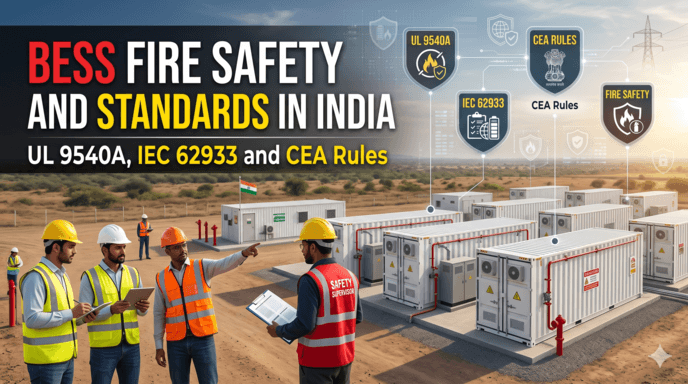
Battery Energy Storage Systems (BESS) are becoming an important part of India’s renewable energy infrastructure. They help stabilize the grid, store surplus solar and wind power, and improve energy availability. But as battery installations grow, so does the need for reliable fire protection, thermal runaway prevention, and clear safety standards.
For developers, EPC contractors, battery manufacturers, industrial facility owners, and project consultants, understanding the relationship between UL 9540A, IEC 62933, and Central Electricity Authority (CEA) regulations is essential to designing and operating safer BESS installations.
These frameworks serve different purposes. UL 9540A evaluates how battery systems behave during thermal runaway and how fire can spread. IEC 62933 provides a broader framework for electrical energy storage system safety. CEA regulations establish applicable requirements for electrical safety in India.
The key is to understand where these frameworks overlap, where they differ, and how to apply them together in an Indian BESS project.
What Is BESS Fire Safety, and Why Does It Matter?
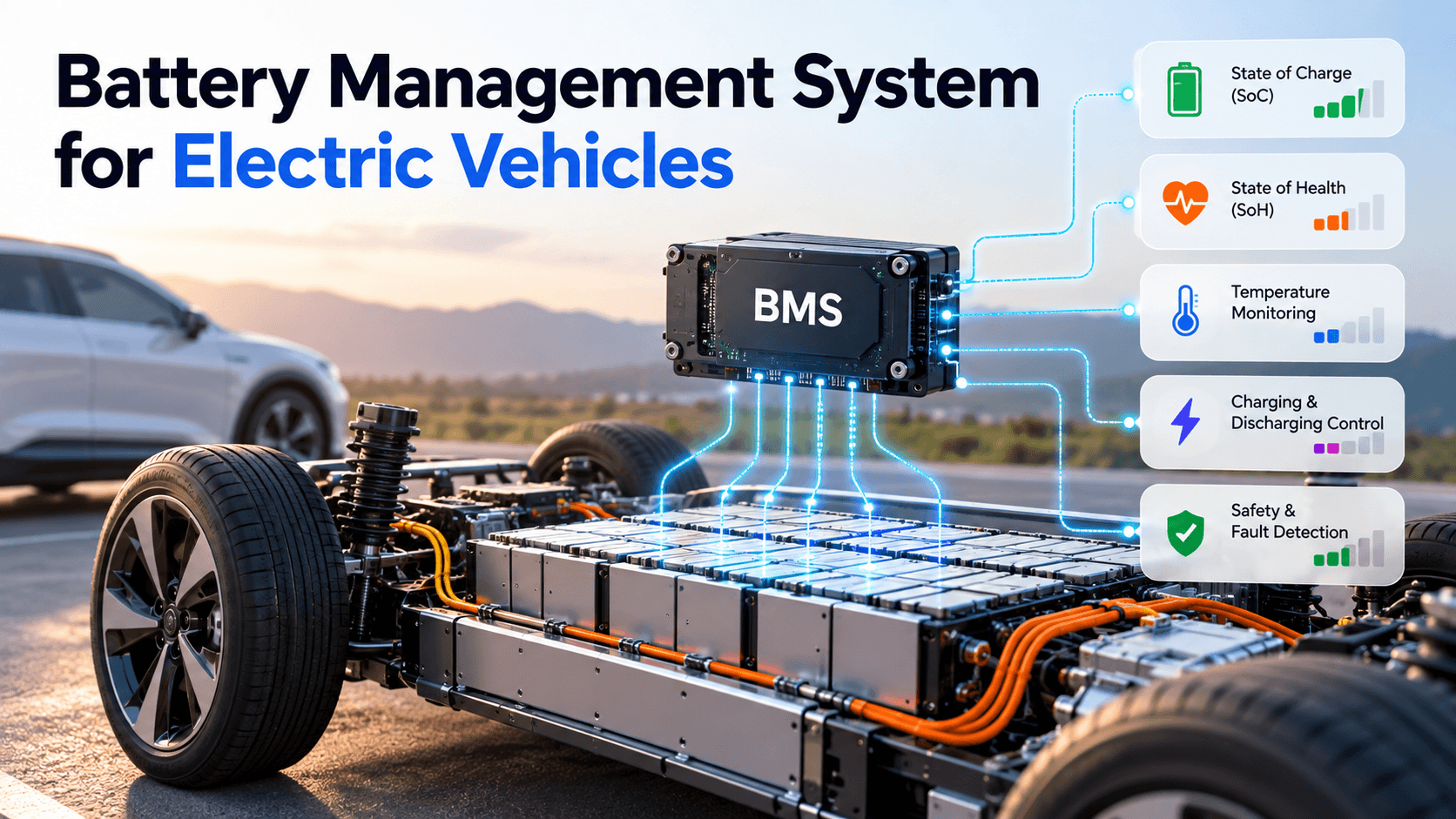
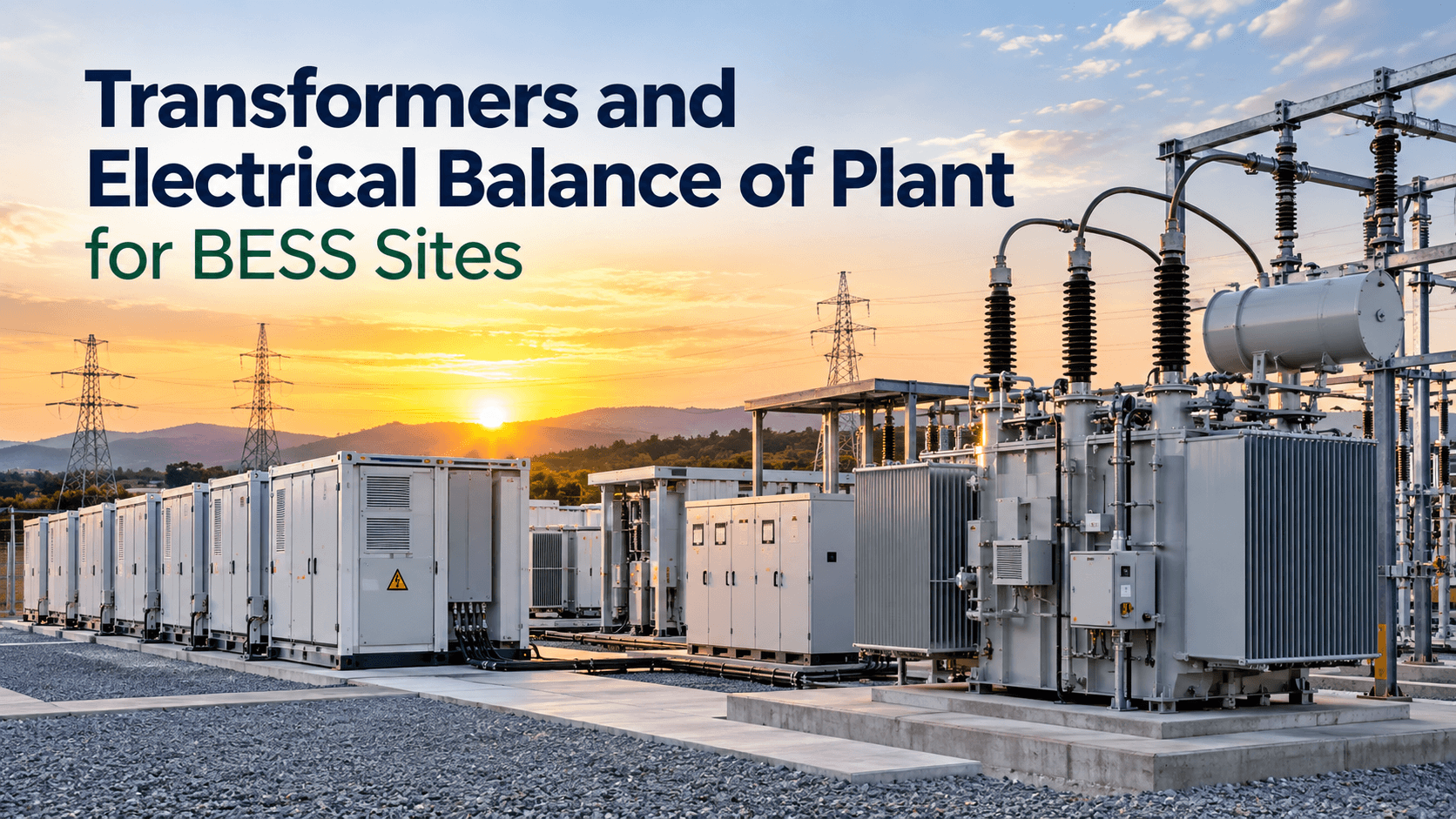
A Battery Energy Storage System stores electrical energy in batteries and releases it when needed. A typical grid-scale BESS includes battery cells and modules, racks or containers, a battery management system (BMS), a power conversion system (PCS), thermal management equipment, and fire detection and suppression systems.
The main fire safety challenge is thermal runaway, a chain reaction in which a battery cell overheats and releases heat and gases. The resulting heat can trigger nearby cells, potentially causing a fire that spreads through a module, rack, or container.
Several hazards need to be considered:
- Thermal runaway propagation: Heat from a failing cell triggers adjacent cells.
- Flammable gas accumulation: Gases released during battery failure can create fire or explosion risks.
- Electrical hazards: High DC voltages, short circuits, and arc faults can complicate emergency response.
- Re-ignition: Damaged cells may continue to generate heat after the initial fire has been controlled.
- Fire spread: Flames, hot gases, and radiant heat can affect nearby battery containers, buildings, and electrical equipment.
A robust BESS fire safety strategy must address prevention, detection, containment, emergency response, and safe shutdown. No single certificate or fire suppression system can address all these risks.
Understanding UL 9540A for BESS Fire Safety
Related standard: UL 9540A.
UL 9540A is a test method used to evaluate thermal runaway and the fire and explosion hazards associated with battery energy storage systems. Its results help engineers and authorities assess the potential for fire propagation and determine appropriate installation-level protection measures.
What Does UL 9540A Test?
UL 9540A uses a staged testing approach. Depending on the battery technology, test objectives, and applicable edition, testing can cover several levels:
1. Cell-level testing
Evaluates how an individual cell responds to abuse conditions, including its potential for thermal runaway, heat release, and gas generation.
2. Module-level testing
Examines whether thermal runaway in one cell can trigger neighboring cells and how heat and fire propagate within a module.
3. Unit-level testing
Evaluates fire behavior at the battery unit or enclosure level, including heat release and hazards associated with released gases.
4. Installation-level testing
Where applicable, evaluates fire behavior at a larger installation scale, including the potential for fire to spread to adjacent equipment or nearby structures.
Not every project requires every test level. The required testing depends on the applicable edition, battery chemistry, test history, and intended installation. The test plan should be agreed with the testing laboratory and relevant approval authorities.
Why UL 9540A Reports Matter for BESS Projects
A UL 9540A report can provide engineering evidence to support decisions about:
- Separation distances between battery units and containers.
- Thermal runaway propagation and the potential for fire spread.
- Heat release and flammable gas hazards under the tested conditions.
- Fire protection and ventilation design.
- Emergency response planning and site layout.
The report must match the actual battery configuration as closely as possible. A report for a different cell, module, rack, enclosure, or operating configuration should not automatically be treated as proof of equivalent performance.
Important: UL 9540A is a test method, not a blanket certification that a BESS installation is safe or compliant with Indian regulations. As of October 2026, UL 9540A Edition 6 was published on March 13, 2026, with updated installation-level large-scale fire testing provisions. Confirm which edition and test scope apply to the project.
IEC 62933: Safety Requirements for Energy Storage Systems
The IEC 62933 series covers electrical energy storage systems, including their terminology, performance, environmental considerations, and safety. For grid-connected electrochemical BESS installations, the safety provisions in IEC 62933-5-1 and IEC 62933-5-2 are particularly relevant.
The key distinction is that IEC 62933 addresses the safety of the broader energy storage system, while UL 9540A focuses on evaluating thermal runaway and related fire propagation hazards.
IEC 62933-5-1: General Safety Considerations
IEC 62933-5-1 provides general safety considerations for grid-integrated electrical energy storage systems. It establishes a broader framework for identifying hazards and managing risks associated with the system.
For BESS developers, this supports a systematic approach to safety throughout design and operation rather than focusing only on individual battery components.
IEC 62933-5-2: Electrochemical BESS Safety
The more specific standard is IEC 62933-5-2:2025, the second edition published on December 9, 2025. It covers safety requirements for grid-connected energy storage systems that use electrochemical storage and applies across the system lifecycle, from design through end-of-service-life management.
Relevant engineering considerations include:
- Identifying battery-related hazards and assessing system-level risks.
- Coordinating the battery management system with other BESS subsystems.
- Managing electrical, thermal, and environmental hazards.
- Defining safety measures for installation, operation, maintenance, and decommissioning.
- Evaluating how failures in one subsystem may affect the rest of the installation.
IEC 62933-5-2 does not replace detailed fire propagation testing. It provides a broader safety framework within which evidence from thermal runaway tests and other technical assessments can be applied.
UL 9540A vs. IEC 62933
| Area | UL 9540A | IEC 62933-5-2 |
|---|---|---|
| Primary purpose | Evaluate thermal runaway and fire propagation hazards | Address safety of grid-integrated electrochemical storage systems |
| Main focus | Battery failure behavior and fire or explosion characteristics | System-level hazards and lifecycle safety |
| Typical use | Inform fire protection, spacing, and installation design | Guide safety assessment, system design, and operational controls |
| Lifecycle coverage | Test method supporting installation decisions | Design through end-of-service-life management |
| Relationship | Supplies specific test evidence | Provides a wider safety framework |
The two approaches are complementary. A project can use IEC-based system safety assessments and UL 9540A test data to develop a more complete fire risk management strategy.
CEA Rules for BESS Fire Safety in India
The Central Electricity Authority (CEA), under the Ministry of Power, establishes electrical safety requirements for electricity installations in India. For BESS developers, the relevant framework includes the CEA (Measures relating to Safety and Electric Supply) Regulations, 2023, and the subsequent 2026 amendment.
A significant development is that the CEA notified dedicated BESS safety provisions in March 2026, which are scheduled to come into force on April 1, 2027. This creates a clear need for project teams to prepare for the upcoming requirements rather than relying only on existing electrical safety practices.
What Do the CEA BESS Amendments Cover?
The 2026 amendment introduces Chapter X-A, titled Additional Safety Requirements for Battery Energy Storage System (BESS). The chapter addresses the following areas:
| Regulation | Subject | Practical implication |
|---|---|---|
| 122(A) | Additional BESS safety requirements | Establishes dedicated safety provisions for BESS |
| 122(B) | General safety considerations | Addresses battery charging, fault tolerance, testing, and fire and explosion protection |
| 122(C) | Battery container | Addresses safety considerations for battery enclosures |
| 122(D) | Equipment location | Addresses equipment placement within the installation |
| 122(E) | Ventilation | Addresses ventilation requirements for BESS installations |
| 122(F) | Hazard detection and suppression | Addresses systems for detecting hazards and controlling fire-related risks |
These provisions are part of the notified amendment, with commencement scheduled for April 1, 2027. Project teams should review the complete Gazette notification for the detailed requirements applicable to their installation.
General Safety Requirements Under the CEA Framework
The notified amendment covers several important technical considerations.
1. Battery charging compatibility
Charging equipment must be suitable for the battery chemistry being used. Incorrect charging parameters can increase the risk of overheating, cell damage, and thermal runaway.
2. Fault tolerance
The amendment addresses two-fault tolerance to prevent catastrophic battery failures, including failures associated with overcharging, over-discharging, short circuits, and operation outside specified temperature limits.
3. Testing and protection
BESS testing must follow the relevant standards. Fire and explosion protection must address the cell, module, container, and site-specific installation levels, as applicable.
4. Container design, ventilation, and detection
The dedicated provisions address battery container safety, equipment location, ventilation, and hazard detection and suppression systems. These elements should be integrated into the design rather than added after the layout is finalized.
What Should BESS Developers Do Before April 2027?
The amendment’s commencement date is important for project scheduling, procurement, and compliance planning.
Developers should:
- Review the notified 2026 amendment and identify requirements that affect the proposed installation.
- Confirm the relevant standards applicable to their project and monitor CEA notifications for the detailed standards list.
- Obtain battery safety and thermal runaway test reports for the actual equipment configuration.
- Review container ventilation, fire detection, suppression, and emergency shutdown arrangements.
- Coordinate with the relevant electrical inspectorate, fire authorities, and other approval bodies.
- Document the design basis and compliance evidence before commissioning.
The notified amendment should not be confused with the separate 2025 draft amendment, which preceded the final 2026 notification. For regulatory decisions, use the final Gazette notification and subsequent applicable directions.
Official reference: CEA regulations and notifications.
Indian Standards for Battery Energy Storage Systems
International standards are only part of the compliance picture. India also has relevant standards published by the Bureau of Indian Standards (BIS).
The BIS catalogue identifies the IS 17067 series, which adopts several IEC 62933 publications, including standards for energy storage system parameters, testing, terminology, and environmental considerations. It also lists IS 17092:2019 as an indigenous electrical energy storage safety standard.
When preparing a BESS compliance plan, verify:
- The exact Indian Standard number and edition.
- Whether the corresponding standard is referenced by an applicable regulation, order, tender, or approval condition.
- Whether the standard applies to the battery, complete system, or installation.
- Whether the required conformity assessment or certification is available for the proposed equipment.
An IEC publication, an Indian Standard, and a mandatory regulatory requirement are not interchangeable. Their legal status depends on how each is adopted or referenced in the applicable framework.
How to Design a Fire-Safe BESS Installation
Compliance documents matter, but the physical design determines how well a BESS installation can prevent and contain a battery incident.
1. Start With a Battery Hazard Assessment
Identify the battery chemistry, energy capacity, operating limits, potential failure modes, and credible thermal runaway scenarios.
Review manufacturer data and independent test reports. The assessment should consider how heat and gases may spread within a battery enclosure and affect neighboring equipment.
2. Design for Thermal Runaway Detection
The BMS should monitor relevant battery parameters and initiate protective actions when operating limits are exceeded.
Depending on the system design, the safety architecture may include temperature sensors, smoke detection, gas detection, off-gas detection, and other appropriate monitoring technologies.
Detection systems should be selected based on the hazards they are intended to identify. Smoke detection alone may not provide sufficient warning of every battery failure scenario.
3. Provide Appropriate Ventilation and Gas Management
Battery failure can release gases that may accumulate inside an enclosure. If the mixture becomes flammable and encounters an ignition source, a deflagration or explosion may occur.
Ventilation and gas management should therefore be designed around the tested battery configuration, enclosure characteristics, potential gas release, and credible failure scenarios.
Where required by the hazard assessment, explosion prevention or pressure-relief measures should be incorporated into the design.
4. Select Fire Protection Based on the Risk Assessment
Fire detection, suppression, and firefighting provisions must reflect the battery chemistry, enclosure design, installation environment, and credible fire scenarios.
A suppression system should not be treated as a substitute for thermal runaway prevention, electrical isolation, gas management, or protection against propagation to adjacent units.
The design should also account for emergency responder access, safe isolation procedures, and the possibility of re-ignition.
5. Establish Separation and Emergency Access
Spacing between battery containers should be supported by relevant test data, engineering analysis, applicable standards, and approval requirements.
The site layout should account for radiant heat, access for emergency services, evacuation routes, nearby buildings, electrical infrastructure, and the potential consequences of a fire spreading beyond the initiating enclosure.
6. Prepare an Emergency Response Plan
A practical emergency response plan should define:
- Alarm thresholds and notification procedures.
- Battery and electrical isolation methods.
- Safe shutdown procedures.
- Emergency responder access and site hazards.
- Procedures for handling damaged batteries.
- Post-incident monitoring and re-entry conditions.
The plan should be developed with the relevant emergency response stakeholders and tested through appropriate drills.
Frequently Asked Questions
Is UL 9540A mandatory for BESS projects in India?
UL 9540A is a test method, not an Indian regulation by itself. Whether it is required depends on the applicable Indian regulations, referenced standards, tender specifications, project approval conditions, and purchaser requirements. Confirm the applicable requirements with the relevant authorities and project stakeholders.
Is IEC 62933 equivalent to UL 9540A?
No. IEC 62933-5-2 addresses system-level safety for grid-connected electrochemical energy storage systems, while UL 9540A evaluates thermal runaway and associated fire propagation hazards. They serve different but complementary purposes.
Does a UL 9540A report guarantee that a BESS cannot catch fire?
No. The report documents the behavior of the tested battery configuration under specified conditions. It supports hazard assessment and fire protection design, but it does not eliminate the possibility of battery failure or fire.
When do the new CEA BESS safety requirements take effect?
The CEA (Measures relating to Safety and Electric Supply) Amendment Regulations, 2026, were notified on March 27, 2026, and are scheduled to come into force on April 1, 2027. Developers should prepare for the new requirements and check for subsequent notifications before finalizing compliance decisions.
Which standards should an Indian BESS developer prioritize?
Start with the applicable CEA regulations and relevant Indian Standards. Then identify the system-level safety requirements, battery test evidence, installation-level fire protection needs, and project-specific contractual requirements. UL 9540A and IEC 62933 can provide important technical evidence, but the exact compliance pathway must be confirmed for each installation.
Conclusion
BESS fire safety in India requires more than selecting a battery with a suitable safety certificate. Developers must connect battery-level test evidence with system-level risk assessment, container design, ventilation, fire protection, electrical safety, and emergency response planning.
UL 9540A helps assess thermal runaway and fire propagation. IEC 62933 provides a wider framework for the safety of grid-integrated energy storage systems. CEA regulations establish the Indian electrical safety framework, with dedicated BESS provisions scheduled to take effect in April 2027.
For project teams, the practical priority is to establish a clear compliance plan early, validate test reports against the actual equipment configuration, and integrate fire safety into the BESS design from the outset.