




Introduction
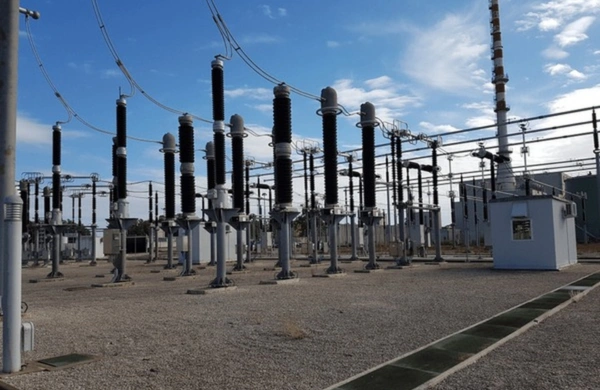
Modern transmission networks depend on the reliability of their switchyards — high-voltage nodes that manage power flow, fault protection, metering, and safe operational control. As utilities modernize aging infrastructure and integrate renewables, the performance of switchyard components directly impacts system stability, maintenance intervals, and long-term grid resilience.
Know About Understanding Key Switchyard Components in Transmission Networks
Zetwerk provides high-quality Precision Components and all secondary operations.
Submit the relevant part drawings, 3D files, and other information by clicking on the button below.

Switchyards operate under extreme electrical, mechanical, and environmental stress. Equipment must withstand lightning surges, short-circuit forces, high mechanical loads, and thermal cycling while maintaining precision insulation and operational safety.
Zetwerk manufactures a comprehensive range of high-reliability switchyard components engineered for transmission voltages up to 765 kV. These include disconnectors, surge arresters, RIP bushings, porcelain bushings, instrument transformers, measurement components, and heavy-duty insulators, all designed to meet IEC, IEEE, and ANSI standards. This blog outlines the key components that keep transmission switchyards operating safely and efficiently.
1. Disconnectors / Isolators (34.5 kV–765 kV)
Disconnectors (also called isolators) provide visible, mechanical isolation for equipment maintenance. Although they do not interrupt load current, they create a safe environment for personnel and facilitate system reconfiguration.
Zetwerk’s disconnector capabilities include:
- Voltage range: 34.5 kV to 765 kV
- High mechanical endurance
- Rigid, corrosion-resistant structures for outdoor use
- Optimized current transfer path
- Customizable configurations (center-break, double-break, vertical-break, pantograph)
Role in switchyards
- Isolates transformers, breakers, and lines for safe maintenance
- Enables bay sectionalizing and redundancy
- Helps utilities reconfigure network topology during outages
Disconnectors must withstand environmental extremes while maintaining stable electrical clearance — an area where Zetwerk’s engineered structures deliver proven long-term performance.
2. Surge / Lightning Arresters (11 kV–850 kV)
Surge arresters are critical for protecting switchyard assets from lightning strikes and switching surges. They divert high-energy transients safely to ground, preventing insulation breakdown and catastrophic failures.
Zetwerk surge arrester capabilities:
- Voltage classes from 11 kV to 850 kV
- Metal-oxide varistor (MOV) technology
- High energy absorption
- UV-resistant polymer housings
- Long-term hydrophobic surfaces
Functions in transmission networks:
- Protect transformers bushings, breakers, and CT/PT units
- Reduce flashover events
- Maintain insulation reliability under surge events
With high dielectric integrity and robust environmental protection, Zetwerk’s arresters are built for decades of outdoor operation.
3. RIP and Porcelain Bushings (Up to 420 kV / Up to 765 kV)
Zetwerk Transformer and switchyard bushings enable safe current flow through grounded metal enclosures while maintaining insulation integrity. They are among the most critical components for high-voltage reliability.
Zetwerk provides two major bushing types:
a) RIP (Resin Impregnated Paper) Bushings – Up to 420 kV
- Dry insulation, moisture-resistant
- Partial discharge-free performance
- Excellent seismic and mechanical stability
b) Porcelain Bushings – 34.5 kV to 765 kV
- Long creepage distance for polluted environments
- Ideal for EHV transmission applications
- Withstands harsh weather, vibration, and thermal stress
Role in switchyards:
- Provide HV interface for CTs, transformers, and breakers
- Maintain dielectric strength under high voltage stress
- Protect against moisture, contamination, and flashover
Zetwerk’s bushings are engineered for consistent insulation performance across extreme ambient and electrical conditions.
4. Measurement Components & Instrument Transformers (Up to 500 kV)
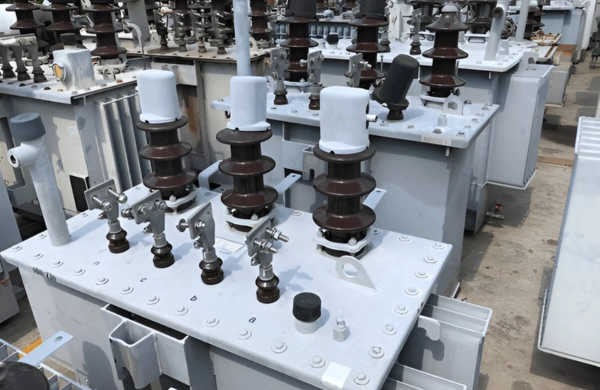
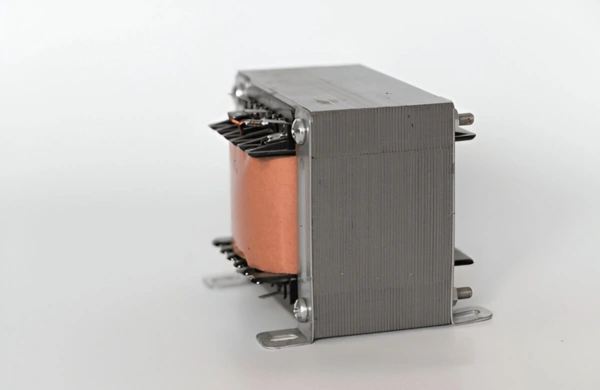
Accurate measurement is essential for protection, metering, and stable grid operation. Instrument transformers step down voltage and current to safe levels for relays and meters.
Zetwerk’s instrument transformer portfolio includes:
- Outdoor oil-cooled CTs/PTs (Up to 500 kV)
- Combined CT/PT units (36 kV)
- Indoor resin-cast CT/PT units
- Precision measurement assemblies supporting protection schemes
Functions:
- Current measurement for protection relays
- Voltage measurement for SCADA and automation
- Fault detection and system analysis
- Energy metering and billing accuracy
Each component is tested for dielectric strength, thermal stability, and measurement accuracy across dynamic load cycles.
5. Distribution & Support Components
Switchyards require secondary components that ensure structural support, insulation stability, and safe current handling.
Zetwerk’s distribution component range includes:
- Pin & post insulators (11 kV)
- Polymer insulators (34.5 kV+)
- Load-rated insulators (5 kN–120 kN)
- Weather-resistant insulators for coastal and polluted zones
- Hardware fittings and steel support components
These components withstand environmental degradation, vibration, mechanical load, and variable electrical stress — all essential for long-term switchyard reliability.
6. How These Components Work Together
A switchyard is a coordinated system. Each component supports a specific function:
| Component | Primary Function | Voltage Range |
| Disconnectors | Safe isolation | 34.5–765 kV |
| Surge Arresters | Surge protection | 11–850 kV |
| RIP Bushings | Transformer-equipment interface | Up to 420 kV |
| Porcelain Bushings | HV interface with long creepage | Up to 765 kV |
| CTs/PTs | Protection & metering | Up to 500 kV |
| Insulators | Mechanical & dielectric support | 11–120 kN |
The reliability of a switchyard is the sum of the reliability of its components. This is why utilities prioritize materials, testing, and manufacturing precision — areas where Zetwerk maintains strict quality control.
7. Testing and Standards Compliance
All Zetwerk switchyard components are tested and validated per global utility requirements:
Testing includes:
- Lightning impulse and power frequency withstand
- Partial discharge validation
- Temperature rise and thermal cycling
- Pollution and salt-mist testing
- Mechanical load testing (5 kN–120 kN)
- Oil-dielectric testing (for CT/PT applications)
- UV and environmental aging
Applicable standards:
- IEC 60099 (surge arresters)
- IEC 60137 (bushings)
- IEC 61869 (instrument transformers)
- IEEE C57 (HV equipment)
- ANSI & CSA regional compliance
Zetwerk provides full FAT documentation with complete traceability for utility acceptance.
Conclusion
Switchyard components are the foundation of high-voltage transmission reliability. Each element — from disconnectors and surge arresters to bushings, CT/PT units, and high-strength insulators — plays a critical role in maintaining safe, resilient, and stable grid operations.
Zetwerk manufactures a comprehensive portfolio of switchyard components engineered for long-term durability, precision insulation performance, and compliance with global standards. With capabilities spanning 34.5 kV to 765 kV, Zetwerk enables utilities and EPCs to build transmission networks that operate reliably under extreme electrical and environmental stresses.
As North America modernizes its grid and expands renewable integration, Zetwerk continues high-quality transformer parts manufacturing supporting a safer, more resilient transmission infrastructure.
FAQs
a. Disconnectors, surge arresters, RIP & porcelain bushings, CT/PT units, insulators, and structural/hardware components.
a. From 11 kV to 765 kV depending on the component category.
a. Yes — all components follow IEC, IEEE, ANSI, and CSA standards.
a. Transmission switchyards, substations, renewable integration, and industrial high-voltage systems.
a. Yes — custom voltage classes, creepage distances, mechanical ratings, and mounting configurations are available.
