



Introduction
In every high-efficiency transformer, the core laminations play a crucial role in determining magnetic performance, losses, and overall reliability. Among all materials, Cold Rolled Grain Oriented (CRGO) silicon steel has become the industry benchmark for manufacturing transformer cores due to its superior magnetic permeability and minimal hysteresis losses.
For EPCs (Engineering, Procurement, and Construction firms) executing power transmission, substation, and renewable energy projects, sourcing CRGO laminations from trusted manufacturers ensures compliance with global efficiency standards and long-term transformer stability. Poor-quality laminations can increase energy losses, noise, and temperature rise—impacting project performance and total lifecycle cost.
Know About Best CRGO Transformer Lamination Manufacturer for EPCs
Zetwerk provides high-quality Precision Components and all secondary operations.
Submit the relevant part drawings, 3D files, and other information by clicking on the button below.

This article explores the importance of CRGO laminations in transformer performance, manufacturing standards, and profiles of the best CRGO transformer lamination manufacturers supporting EPCs in 2025. Zetwerk, a precision manufacturing partner delivering high-grade laminations for global transformer OEMs and EPC contractors.
1. What is CRGO Steel?
Cold Rolled Grain Oriented (CRGO) steel is a specialized magnetic material engineered to reduce core losses and improve magnetic flux density in electrical transformers.
Key Features of CRGO Steel:
- Grain Orientation: The rolling process aligns the silicon steel grains along the magnetic flux direction, minimizing energy loss during magnetization.
- High Magnetic Permeability: Allows efficient magnetic flux passage with minimal excitation current.
- Low Core Loss: Reduces no-load (iron) losses in transformers, improving energy efficiency.
- Mechanical Strength: Provides dimensional stability and resistance to vibration under electrical stress.
CRGO grades like M3, M4, M5, and M6 or international equivalents (e.g., 23ZDMH85, 27QG120) are used based on transformer design and efficiency class.
2. Role of CRGO Laminations in Transformers
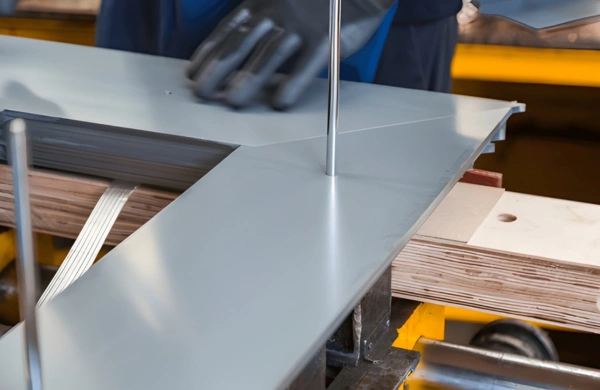
The core of a transformer is built by stacking thin CRGO steel sheets—called laminations—which are insulated from each other to reduce eddy current losses.
Key Functions:
- Magnetic Core Construction: Provides a low-reluctance path for magnetic flux.
- Loss Reduction: Laminated structure minimizes eddy current heating.
- Mechanical Stability: Ensures dimensional integrity under high magnetic and mechanical stresses.
- Noise Reduction: Step-lap construction minimizes magnetostriction-induced vibration.
Typical Applications:
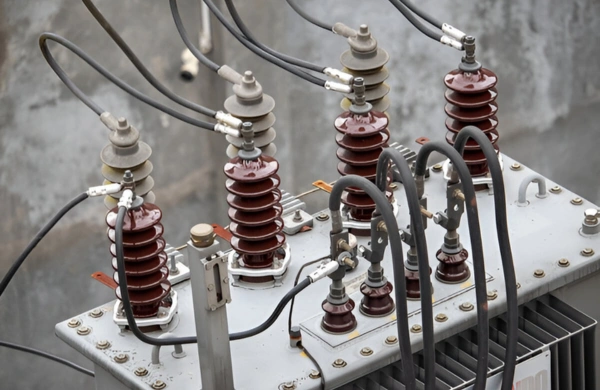
- Power and distribution transformers
- Instrument transformers
- Furnace and rectifier transformers
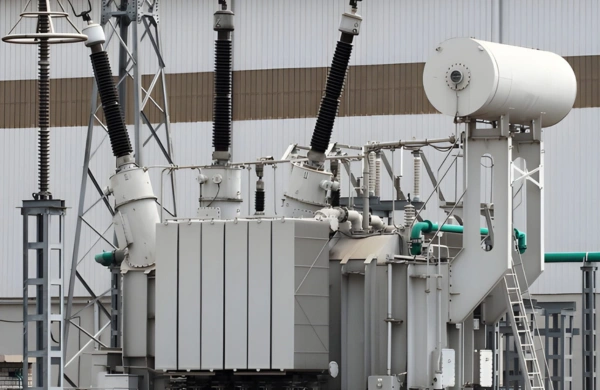
- Substation and grid transformers
Zetwerk produces high-precision CRGO laminations for each of these applications—engineered to deliver consistent flux density, low loss, and perfect geometric alignment.
3. Manufacturing Process of CRGO Laminations
Precision in CRGO lamination manufacturing directly affects transformer performance.
a. Raw Material Selection
Zetwerk sources high-grade CRGO coils from approved global steel mills in Japan, Korea, and Europe. Each batch is tested for flux density (1.7 Tesla), core loss, and coating adhesion.
b. Slitting and Cutting
- Precision CNC slitting lines cut CRGO coils into lamination strips with tight width tolerances.
- Step-lap and mitred cutting machines shape laminations to exact transformer design geometry, minimizing air gaps.
c. Stress Relief Annealing
Heat treatment at controlled temperatures restores magnetic orientation disturbed during cutting, reducing core loss.
d. Insulation Coating
Each lamination receives an inorganic coating (Type C5 or C2) to prevent eddy currents and ensure interlaminar insulation.
e. Stacking and Core Assembly
Automated stacking ensures alignment accuracy and uniform magnetic path continuity for reduced noise and improved performance.
Zetwerk’s manufacturing lines integrate CNC laser cutting, robotic stacking, and eddy current testing to maintain global-grade precision for transformer core fabrication.
4. Electrical and Mechanical Performance Parameters
| Parameter | Typical Range / Specification | Function |
| Flux Density (Bmax) | 1.7 – 1.9 Tesla | Determines core efficiency |
| Core Loss at 1.5 T / 50 Hz | 0.8 – 1.2 W/kg | Defines magnetic loss level |
| Thickness of Lamination | 0.23 – 0.30 mm | Affects eddy current loss |
| Coating Type | C2 / C5 | Interlaminar insulation type |
| Permeability (μ) | >30,000 | Magnetic efficiency indicator |
| Surface Insulation Resistance | >20 Ω | Prevents shorting between laminations |
Zetwerk’s lamination quality control includes 100% inspection for burr height, coating uniformity, and interlaminar resistance to ensure transformer efficiency and consistency.
5. Importance of CRGO Laminations for EPC Projects
a. Energy Efficiency Compliance
High-grade CRGO laminations enable transformers to meet DOE, IEC, and BIS energy efficiency norms, essential for EPCs executing large-scale grid and industrial projects.
b. Long-Term Reliability
Superior insulation and magnetic performance ensure 25+ years of consistent transformer operation without core degradation.
c. Reduced Core Loss and Noise
Precision-cut laminations minimize magnetostrictive noise, critical for transformers near urban or residential installations.
d. Design Flexibility
Available in step-lap, rectangular, or circular core configurations for diverse transformer designs.
e. Global Supply Chain Advantage
EPCs partnering with trusted CRGO suppliers like Zetwerk gain reliable sourcing, technical support, and quality traceability across project phases.
6. Standards and Quality Testing
Applicable Standards:
- IEC 60404-8-7: Magnetic properties of grain-oriented steels.
- ASTM A876: Specification for electrical steel lamination.
- IS 3024 / IS 649: Indian standards for electrical steels.
- IEEE C57.12: Transformer efficiency compliance.
Testing Includes:
- Epstein frame testing for specific core loss.
- Magnetic flux density and permeability verification.
- Coating adhesion and thickness testing.
- Dimensional tolerance measurement via laser scanners.
Zetwerk’s CRGO laminations are tested at NABL-accredited facilities to ensure compliance with IEC and ASTM requirements.
7. Choosing the Right CRGO Grade for Your Transformer Design
1. M6 Grade — Standard Distribution Applications
The most commonly specified grade for distribution transformers, offering a practical balance of core loss and material cost. Suitable where efficiency requirements are moderate and budget considerations weigh heavily on material selection.
2. M5 Grade — Mid-Efficiency Power Transformers
A step up in magnetic permeability and lower core loss than M6, typically specified for medium-capacity power transformers where efficiency gains justify a moderate cost increase over standard grades.
3. M4 Grade — High-Efficiency Utility and Industrial Use
Offers meaningfully lower core loss at 1.5T/50Hz, making it the common choice for utility-scale and industrial transformers where lifetime energy losses matter more than upfront material cost.
4. M3 Grade — Premium, Low-Loss Applications
The highest-performance conventional CRGO grade, used where minimizing no-load losses is the primary design driver — large power transformers and long-service-life installations where even small efficiency gains compound significantly over decades of operation.
5. Hi-B (High Permeability) Grades — Extra-High-Voltage and Export Projects
Laser-scribed or specially processed for even lower core loss and higher permeability than standard M-series grades, typically specified for EHV transformers and projects with the strictest international efficiency mandates.
6. Amorphous Metal Laminations — The Emerging Alternative
Not a CRGO grade at all, but worth knowing as a comparison point — amorphous metal can cut no-load losses by up to 70% versus conventional CRGO, at the cost of more complex handling during manufacturing.
8. Technological Advancements and Market Trends (2025)
- Amorphous Metal Lamination Adoption: Lower core loss by up to 70% compared to CRGO steel.
- Laser-Scribed Grain Orientation: Reduces magnetizing current and harmonics.
- Automated Core Stacking: Enhances uniformity and magnetic flux distribution.
- Digital Design Integration: CAD-to-manufacturing optimization for EPC-specific specifications.
- Eco-Friendly Coatings: Chromium-free insulation layers improve environmental safety.
Zetwerk integrates these next-generation advancements in its manufacturing lines, providing EPCs and transformer OEMs with precision components that meet energy efficiency and sustainability goals.
Conclusion
CRGO laminations form the magnetic backbone of every reliable transformer. For EPCs executing large-scale power, industrial, or renewable projects, sourcing from a trusted manufacturer ensures superior performance, regulatory compliance, and long service life.
Zetwerk leads the global supply chain with its advanced CRGO lamination manufacturing capabilities, including CNC precision cutting, stress-relief annealing, and rigorous quality inspection. Designed for minimal loss, high magnetic stability, and dimensional accuracy, Zetwerk’s laminations power the next generation of efficient, low-loss transformers for utilities and industries worldwide.
FAQs
a. They form the magnetic core of transformers, minimizing energy losses and improving efficiency.
a. CRGO has oriented grain structure offering higher magnetic efficiency and lower core loss compared to hot rolled steel.
a. Typically 0.23 mm, 0.27 mm, and 0.30 mm depending on voltage and efficiency class.
a. Zetwerk offers tight tolerances, CNC precision, certified materials, and on-time delivery for large-scale transformer projects.
a. Yes, Zetwerk supplies globally, compliant with IEC, ASTM, and DOE standards for industrial and utility projects.