

Rail and Locomotive Component Manufacturing: An Overview
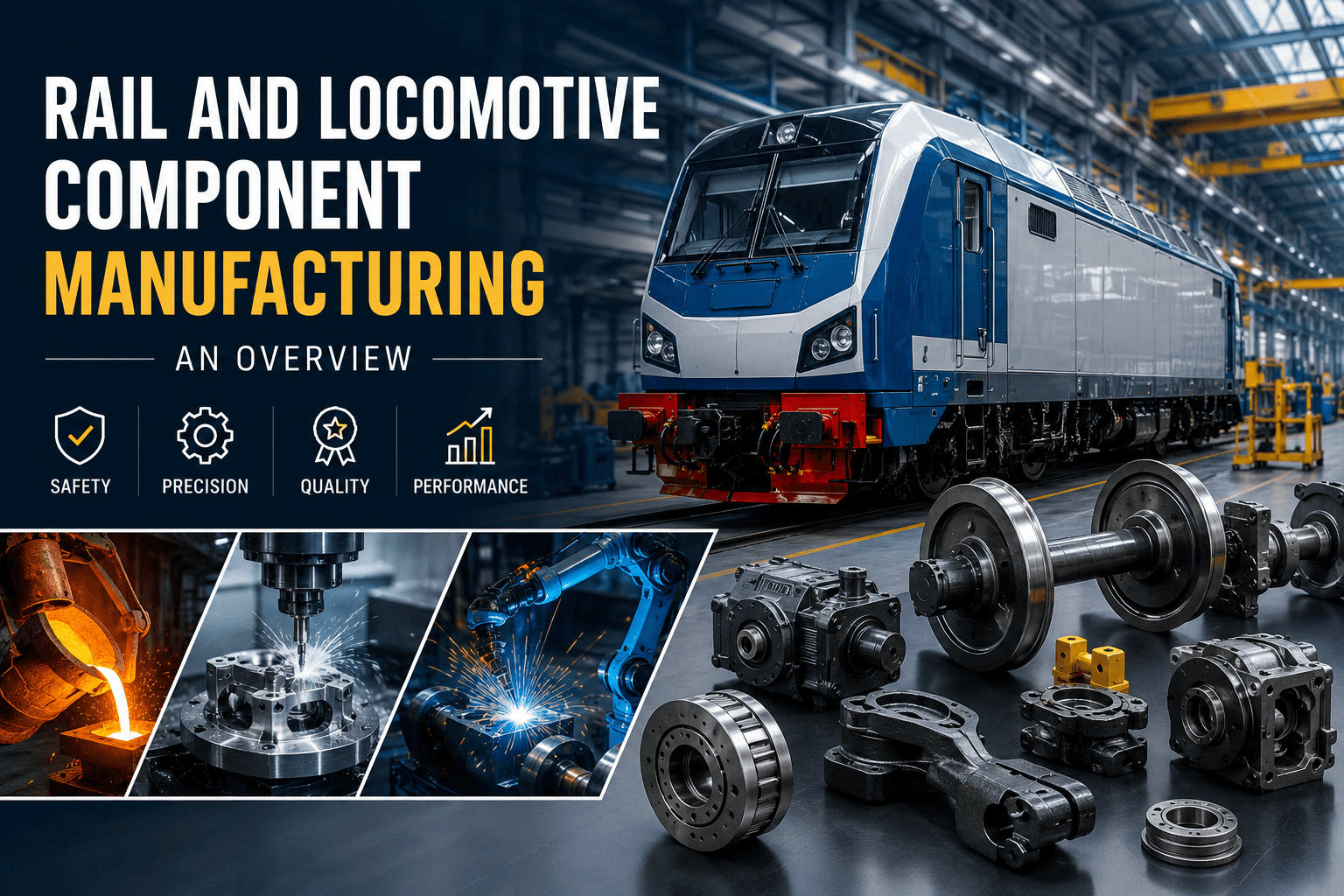
Rail transportation remains one of the most efficient ways to move passengers and freight across long distances. Behind every locomotive and railcar is a complex manufacturing ecosystem that produces thousands of precision-engineered components designed to withstand heavy loads, harsh environments, and decades of continuous operation.
Rail and locomotive component manufacturing combines advanced engineering, high-strength materials, strict quality control, and regulatory compliance to deliver reliable products that meet demanding performance and safety standards.
What Is Rail and Locomotive Component Manufacturing?
Rail and locomotive component manufacturing involves designing, producing, assembling, and testing the individual parts used in railway vehicles and supporting infrastructure. Manufacturers supply components to original equipment manufacturers (OEMs), railway operators, maintenance providers, and infrastructure companies.
These components must perform consistently under extreme operating conditions, including heavy mechanical stress, vibration, temperature changes, moisture, and continuous use.
The industry serves multiple rail segments, including:
- Freight rail
- Passenger rail
- High-speed rail
- Metro and light rail systems
- Industrial railways
- Mining and heavy-haul rail networks
Major Categories of Rail Components
Rail vehicles consist of thousands of interconnected parts. Manufacturers typically specialize in one or more component categories.
Locomotive Engine Components
Engine-related components form the heart of diesel and hybrid locomotives. These include:
- Engine blocks
- Cylinder heads
- Fuel injection systems
- Turbochargers
- Cooling systems
- Air intake components
- Exhaust systems
- Lubrication assemblies
These parts require high-temperature resistance, tight machining tolerances, and long service life.
Bogies and Wheelsets
Bogies support the rail vehicle while providing stability and smooth movement.
Common bogie components include:
- Axles
- Wheels
- Bearings
- Suspension systems
- Brake discs
- Gearboxes
- Traction motors
- Frame assemblies
Manufacturing these components requires precision forging, machining, heat treatment, and extensive fatigue testing.
Braking Systems
Rail braking systems must operate reliably in all weather conditions.
Manufactured components include:
- Brake cylinders
- Disc brakes
- Brake pads
- Air compressors
- Pneumatic valves
- Control units
- Emergency braking mechanisms
Manufacturers conduct rigorous testing to verify stopping performance, wear resistance, and operational safety.
Couplers and Draft Systems
Couplers connect locomotives and railcars while absorbing impact forces during operation.
Key products include:
- Automatic couplers
- Draft gears
- Buffers
- Yokes
- Knuckles
- Drawbars
These components are typically manufactured using high-strength cast steel or forged steel.
Electrical and Electronic Components
Modern locomotives rely heavily on electronic systems for control, monitoring, and diagnostics.
Examples include:
- Control modules
- Power converters
- Wiring harnesses
- Sensors
- Communication systems
- Driver display units
- Battery management systems
As rail systems become more digital, demand for intelligent electronic components continues to grow.
Manufacturing Processes
Rail component manufacturing combines several advanced production methods depending on the application and material requirements.
Casting
Large structural components are often produced using steel or iron casting. This process is commonly used for:
- Brake housings
- Bogie frames
- Couplers
- Gear cases
Forging
Forging improves strength by refining the metal’s grain structure.
Typical forged products include:
- Axles
- Connecting rods
- Wheel hubs
- Coupler components
CNC Machining
Computer numerical control (CNC) machining delivers the tight tolerances required for critical rail components.
Precision machining is used for:
- Shafts
- Bearings
- Gear components
- Engine parts
- Hydraulic assemblies
Welding and Fabrication
Large fabricated assemblies require certified welding processes.
Common applications include:
- Locomotive frames
- Fuel tanks
- Structural supports
- Equipment enclosures
Manufacturers often use robotic welding to improve consistency and production efficiency.
Heat Treatment
Heat treatment enhances material strength, hardness, and wear resistance.
Common processes include:
- Hardening
- Tempering
- Annealing
- Case hardening
- Induction hardening
Materials Used
Material selection plays a critical role in railway safety and durability.
Frequently used materials include:
- Carbon steel
- Alloy steel
- Stainless steel
- Cast iron
- Aluminum alloys
- Copper alloys
- Engineering plastics
- Composite materials
- High-performance elastomers
Each material is selected based on load capacity, corrosion resistance, weight, thermal performance, and maintenance requirements.
Quality Standards and Compliance
Railway manufacturing is governed by rigorous quality and safety requirements. Manufacturers must maintain traceability, process control, and consistent product performance.
Common standards include:
- ISO 9001 Quality Management
- ISO/TS 22163 (formerly IRIS) for the railway industry
- EN railway standards
- AAR standards for North American railways
- Customer-specific OEM requirements
Testing may include:
- Dimensional inspection
- Non-destructive testing (NDT)
- Ultrasonic testing
- Magnetic particle inspection
- Fatigue testing
- Load testing
- Environmental testing
- Functional performance validation
Industry Trends
Several trends are reshaping rail and locomotive component manufacturing.
Lightweight Components
Manufacturers are adopting aluminum alloys and advanced composites to reduce vehicle weight, improve fuel efficiency, and lower operating costs.
Smart Monitoring Systems
Sensors and Internet of Things (IoT) technologies enable predictive maintenance by continuously monitoring component health. This helps operators reduce unplanned downtime and extend equipment life.
Sustainable Manufacturing
Companies are reducing waste, improving energy efficiency, increasing recycled material use, and adopting cleaner production methods to meet environmental goals.
Automation and Digital Manufacturing
Robotics, digital twins, artificial intelligence, and automated inspection systems are improving production accuracy, reducing defects, and increasing manufacturing efficiency.
Electrification
As electric and hybrid locomotives become more common, manufacturers are expanding production of traction systems, battery technologies, power electronics, and energy management components.
Challenges Facing Manufacturers
Rail component manufacturers operate in a demanding environment that requires balancing quality, cost, and delivery.
Common challenges include:
- Meeting stringent safety regulations
- Managing complex global supply chains
- Controlling raw material costs
- Maintaining consistent product quality
- Supporting long product life cycles
- Integrating new digital technologies
- Addressing skilled labor shortages
Manufacturers that invest in automation, advanced quality systems, and continuous process improvement are better positioned to meet these challenges.
The Future of Rail Component Manufacturing
Global investment in rail infrastructure, urban transit, and sustainable transportation continues to drive demand for high-quality rail components. Advances in materials science, digital manufacturing, predictive maintenance, and electrification will shape the next generation of railway systems.
Manufacturers that embrace innovation while maintaining rigorous quality standards will play a central role in delivering safer, more efficient, and more reliable rail transportation worldwide.
Key Takeaways
Rail and locomotive component manufacturing is a specialized industry built on precision engineering, strict quality control, and long-term reliability. From engine components and braking systems to electronic controls and wheelsets, every part contributes to the safety and performance of railway operations. As the industry evolves, manufacturers are adopting automation, digital technologies, lightweight materials, and sustainable production methods to meet growing demand and prepare for the future of rail transportation.
Frequently Asked Questions
Q. What are the most critical locomotive components?
Some of the most critical components include engines or traction motors, bogies, wheelsets, braking systems, couplers, control electronics, and suspension assemblies. These systems directly affect safety, reliability, and operational performance.
Q. Why is quality control so important in rail manufacturing?
Rail components operate under heavy loads and continuous use. Comprehensive testing and inspection help ensure safety, minimize failures, extend service life, and comply with industry regulations.
Q. What manufacturing processes are commonly used?
Manufacturers typically use casting, forging, CNC machining, welding, fabrication, heat treatment, and advanced inspection techniques to produce rail components that meet demanding performance requirements.
Q. How is digital technology changing the industry?
Digital manufacturing, IoT sensors, predictive maintenance, robotics, and artificial intelligence are improving production efficiency, enhancing quality control, reducing maintenance costs, and supporting more reliable railway operations.