Defense Manufacturing in India: The Make-in-India Opportunity for Component Suppliers
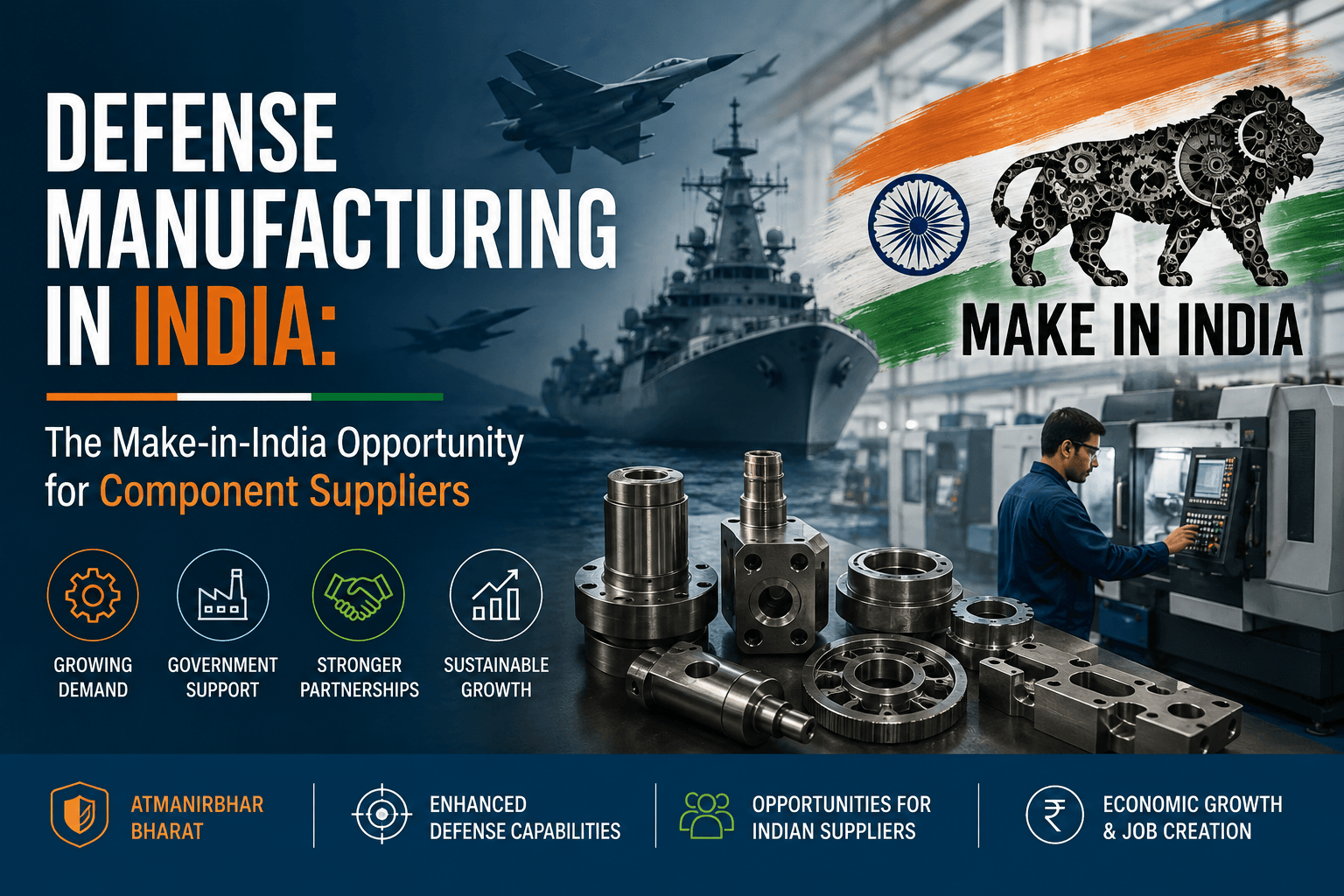
India’s defense manufacturing sector is moving from import dependence toward a broader domestic supply chain. For component suppliers, that shift creates an opportunity that goes well beyond supplying finished weapons or large platforms.
The real opportunity is often deeper in the value chain: precision-machined parts, castings, forgings, electronics, cables, fasteners, hydraulics, sensors, composites, software, assemblies, maintenance parts, and other specialized components.
Government procurement policies are increasingly directing demand toward Indian industry. For FY 2026-27, around 75% of the capital acquisition budget, approximately ₹1.39 lakh crore, has been earmarked for domestic defense industries.
At the same time, India’s defense production and exports continue to grow. Defense exports reached a record ₹23,622 crore in FY 2024-25, with the private sector contributing ₹15,233 crore.
For Indian component manufacturers, the message is straightforward: the market is expanding, but suppliers need to be ready for the quality, certification, traceability, delivery, and technical requirements that defense programs demand.
Why defense manufacturing in India is gaining momentum
The government’s Make in India and Atmanirbhar Bharat initiatives have changed the structure of India’s defense procurement ecosystem.
Domestic manufacturing is no longer limited to traditional public-sector defense companies. Private manufacturers, MSMEs, startups, engineering companies, and specialist suppliers are becoming increasingly important to the broader ecosystem.
India recorded its highest-ever defense production of about ₹1.50 lakh crore in FY 2024-25, according to the Ministry of Defence. The sector’s export base has also expanded significantly, reaching ₹23,622 crore in the same financial year.
This growth creates a multiplier effect.
A new aircraft, missile system, naval platform, radar, vehicle, or electronic warfare system does not depend on one manufacturer alone. Each platform requires hundreds or thousands of individual parts and subassemblies.
That creates potential opportunities for companies that may never manufacture an entire defense platform themselves.
The component supplier opportunity
For many engineering companies, entering defense manufacturing does not mean immediately developing a complex weapon system.
A more realistic starting point is to become a reliable supplier for an established OEM, system integrator, DPSU, or Tier-1 defense manufacturer.
Potential areas include:
- Precision CNC machining
- Sheet-metal fabrication
- Forgings and castings
- Special alloys and engineered materials
- Electrical and electronic assemblies
- Connectors, cables, and harnesses
- Hydraulic and pneumatic components
- Bearings and mechanical assemblies
- Fasteners and hardware
- Thermal management components
- Composites and lightweight structures
- Sensors and instrumentation
- Printed circuit board assemblies
- Ground-support equipment
- Packaging and specialized enclosures
- MRO and replacement components
The opportunity is especially interesting for companies that already serve demanding industries such as aerospace, automotive, industrial machinery, medical devices, electronics, or energy.
Their existing manufacturing discipline can provide a useful foundation for defense qualification.
Government procurement is creating a stronger domestic market
One of the biggest reasons component suppliers should pay attention to defense is the growing preference for domestic procurement.
For FY 2026-27, the government has earmarked ₹1.39 lakh crore, or 75% of the capital acquisition budget, for procurement through domestic defense industries. The policy is intended to strengthen domestic capabilities and encourage investment across the supply chain.
The same direction was visible in FY 2025-26, when 75% of the modernization budget was earmarked for domestic sources.
This matters to component manufacturers because procurement does not stop with the prime contractor.
When a defense company wins a large program, it needs a network of qualified suppliers capable of meeting production schedules and technical specifications.
As more equipment is designed and manufactured in India, the demand for dependable local suppliers can increase with it.
Positive indigenisation lists are opening additional opportunities
India has also used Positive Indigenisation Lists to encourage domestic production of defense equipment and components.
These lists restrict the import of specified items after defined timelines, creating a stronger incentive for Indian companies to develop local manufacturing capabilities.
As of February 2025, more than 5,500 items had been covered across five Positive Indigenisation Lists, with around 3,000 already indigenised, according to government information. The coverage includes components as well as larger defense systems.
For suppliers, this creates an important strategic question:
Which imported components could your company manufacture competitively in India?
A company that can identify a high-demand component, develop the required process, qualify the product, and demonstrate reliable production can potentially position itself as a long-term domestic supplier.
Defense Industrial Corridors can strengthen the supplier ecosystem
India has established two dedicated Defence Industrial Corridors, one in Uttar Pradesh and another in Tamil Nadu.
The Uttar Pradesh corridor includes nodes such as Aligarh, Agra, Chitrakoot, Jhansi, Kanpur, and Lucknow. The Tamil Nadu corridor includes Chennai, Coimbatore, Hosur, Salem, and Tiruchirappalli.
These corridors are intended to support a wider defense and aerospace ecosystem, including manufacturing, engineering, testing, and supply-chain development.
For component suppliers, clustering can provide practical advantages.
Being closer to major manufacturers can reduce logistics complexity, improve collaboration, make supplier development easier, and increase exposure to new procurement opportunities.
However, companies outside these corridors should not assume they are excluded. Defense supply chains can extend across states and regions, particularly when a supplier offers a specialized capability that is difficult to source elsewhere.
What defense OEMs expect from component suppliers
Winning a defense customer requires more than competitive pricing.
Defense manufacturers typically need suppliers that can demonstrate consistent quality, process control, documentation, traceability, and delivery performance.
For a component manufacturer considering this market, several capabilities deserve attention.
1. Consistent quality
Defense components may operate in extreme environments and can have direct implications for platform reliability.
A supplier therefore needs repeatable manufacturing processes rather than simply producing good samples.
Quality systems, inspection procedures, calibration, process validation, and documented corrective actions become important parts of the supplier relationship.
2. Traceability
Defense customers often need to know where a component came from, what material was used, which process produced it, and how it was inspected.
A strong traceability system can cover raw materials, batches, operators, machines, inspection results, and finished products.
Digital manufacturing systems can make this significantly easier.
3. Certification and compliance
Depending on the product and customer, suppliers may need relevant quality certifications, customer-specific approvals, material certifications, special-process qualifications, and other documentation.
The exact requirements vary by program.
Companies should therefore avoid treating certification as a box-ticking exercise. The goal is to build a production system that can consistently satisfy customer and regulatory requirements.
4. Engineering capability
Defense customers increasingly need suppliers that can do more than manufacture drawings.
A supplier that can support design-for-manufacturing reviews, tolerance analysis, material selection, prototyping, testing, and production optimization can become more valuable to an OEM.
Engineering capability can also help suppliers move from being interchangeable vendors to strategic manufacturing partners.
5. Delivery reliability
Defense programs can involve long development cycles, but production schedules can still be demanding.
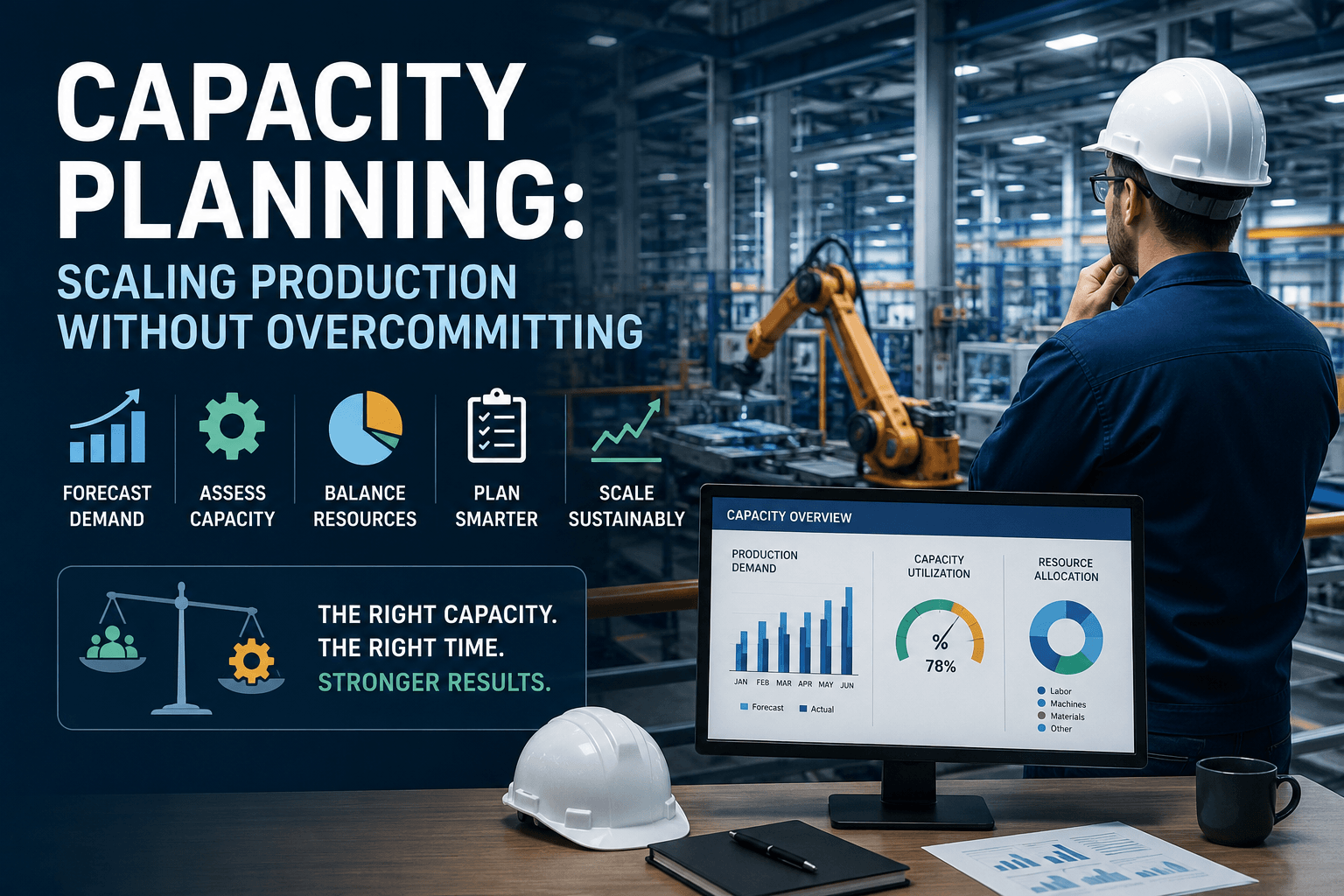
A supplier needs realistic capacity planning, dependable sourcing, inventory controls, and contingency plans for critical materials and processes.
Being able to deliver consistently can be just as important as winning the initial order.
The biggest opportunity may be in partnerships
Component suppliers do not necessarily have to build a complete defense business alone.
Partnerships can provide a faster route into the ecosystem.
An Indian manufacturer might work with:
- A domestic defense OEM
- A DPSU
- A Tier-1 system integrator
- A global aerospace or defense company
- Another specialized Indian supplier
- A research institution or technology developer
Government policy has also encouraged partnerships between Indian companies and global OEMs, including arrangements intended to support technology transfer and domestic supply-chain development.
For a small or mid-sized manufacturer, the right partnership can provide access to technical specifications, qualification processes, customer relationships, and larger production programs.
From automotive or industrial manufacturing to defense
Many Indian engineering companies already have capabilities that can be adapted for defense.
For example, an automotive supplier may have CNC machining, metrology, automation, lean manufacturing, and high-volume production expertise.
An industrial equipment manufacturer may already understand hydraulics, pressure systems, welding, fabrication, or heavy machining.
An electronics company may have PCB assembly, embedded systems, testing, and environmental validation capabilities.
The challenge is translating these capabilities into defense-grade requirements.
That may involve upgrading documentation, inspection systems, material traceability, process controls, cybersecurity practices, or specialized testing.
The transition is not always simple, but suppliers do not necessarily need to reinvent their manufacturing operations.
Defense exports create a second growth path
Domestic procurement is only one part of the opportunity.
India’s defense exports reached ₹23,622 crore in FY 2024-25, up 12.04% from ₹21,083 crore the previous year. Private-sector companies accounted for ₹15,233 crore of those exports.
Government data also indicates that Indian defense products, including components and sub-systems, are reaching international customers.
For component suppliers, this creates an important long-term possibility.
A company that qualifies as a supplier to an Indian defense manufacturer may eventually become part of that manufacturer’s export supply chain.
That can create opportunities beyond India’s domestic defense spending.
What should component suppliers do next?
Companies interested in defense manufacturing should avoid making large investments before understanding where they can realistically compete.
A practical approach is to start with capability mapping.
Step 1: Identify your strongest manufacturing capability
Look at your current machines, materials, processes, engineering expertise, quality systems, and production capacity.
Do not start with the question, “What defense product should we manufacture?”
Start with:
“What defense component can we manufacture better than most alternatives?”
Step 2: Identify target customers
Research OEMs, system integrators, DPSUs, and Tier-1 suppliers that purchase products matching your capabilities.
Understand their supplier qualification processes before approaching them.
Step 3: Map the qualification gap
Compare your current capabilities with the requirements of your target customers.
The gaps may involve certification, testing, documentation, inspection equipment, material sourcing, cybersecurity, or production capacity.
Step 4: Build a defense-ready quality system
Strengthen traceability, inspection, documentation, calibration, non-conformance management, and process control.
These systems are valuable beyond defense as well.
Step 5: Start with smaller programs
A supplier does not need to win a massive contract immediately.
Prototype parts, replacement components, subassemblies, development programs, and lower-volume specialized products can provide a practical entry point.
Step 6: Invest where demand is visible
Once a customer relationship or qualification path is established, invest in additional machines, testing equipment, tooling, automation, or engineering resources based on actual demand.
This reduces the risk of building capacity without a clear market.
The opportunity is real, but it is not easy
The Make-in-India opportunity in defense manufacturing should not be viewed as a shortcut to rapid revenue.
Defense programs often involve long qualification cycles, demanding documentation, rigorous testing, procurement complexity, and strict delivery requirements.
Margins can also be affected by tooling, certification, testing, inventory, and engineering costs.
The companies most likely to benefit are those prepared to build capabilities for the long term.
That means investing in manufacturing discipline, engineering talent, quality systems, supplier relationships, and process visibility.
What Make in India means for the next generation of suppliers
India’s defense industry is becoming more deeply connected to domestic manufacturing.
Record production, rising exports, domestic procurement targets, Positive Indigenisation Lists, industrial corridors, and increasing private-sector participation are all pushing the ecosystem toward a broader supplier base.
For component manufacturers, the opportunity is not necessarily to become the next major defense OEM.
It may be to become the company that reliably produces one critical part, one specialized assembly, or one difficult-to-source component.
That is often how strong industrial ecosystems are built: one capable supplier at a time.
The next phase of defense manufacturing in India will depend not only on large platforms, but also on the depth and reliability of the companies behind them.
For Indian component manufacturers with the right capabilities, quality mindset, and willingness to meet demanding customer requirements, Make in India can provide a meaningful path into one of the country’s most strategically important manufacturing sectors.
Key Takeaways
- India’s defense procurement policy is creating stronger demand for domestic suppliers.
- Around 75% of the FY 2026-27 capital acquisition budget is earmarked for domestic defense industries.
- Component suppliers can target machining, electronics, assemblies, materials, hydraulics, composites, MRO, and other specialized areas.
- Positive Indigenisation Lists are encouraging domestic production of previously imported items.
- Uttar Pradesh and Tamil Nadu Defence Industrial Corridors are supporting the development of regional ecosystems.
- Defense exports provide an additional growth opportunity for Indian suppliers.
- Quality, traceability, engineering capability, certification, and delivery reliability are critical to becoming a trusted defense supplier.
Frequently Asked Questions
Is defense manufacturing in India a good opportunity for MSMEs?
Yes. MSMEs can participate as component manufacturers, specialized process suppliers, subcontractors, technology companies, and suppliers to larger defense OEMs and system integrators. Government data indicates that around 16,000 MSMEs are participating in the emerging defense ecosystem.
What components can Indian companies supply to the defense industry?
Opportunities can include precision-machined parts, castings, forgings, electronics, electrical assemblies, cables, fasteners, hydraulic components, composites, sensors, enclosures, ground-support equipment, and maintenance parts.
The right opportunity depends on the supplier’s existing capabilities and the requirements of specific defense programs.
Do component suppliers need to manufacture complete defense products?
No. A company can participate in the defense supply chain without manufacturing a complete platform or weapon system. Many programs depend on networks of specialized suppliers producing individual components and subassemblies.
Which regions are important for defense manufacturing in India?
Tamil Nadu and Uttar Pradesh are particularly important because of their Defence Industrial Corridors. However, defense supply chains extend across India, so companies outside these corridors can also participate.
How can a manufacturing company enter the defense supply chain?
Start by mapping existing capabilities, identifying suitable OEMs and Tier-1 suppliers, understanding their qualification requirements, closing quality and certification gaps, and pursuing smaller development or production opportunities before making major capacity investments.