
Overhead Electrification (OHE) Equipment Manufacturing for India’s Rail Network Expansion
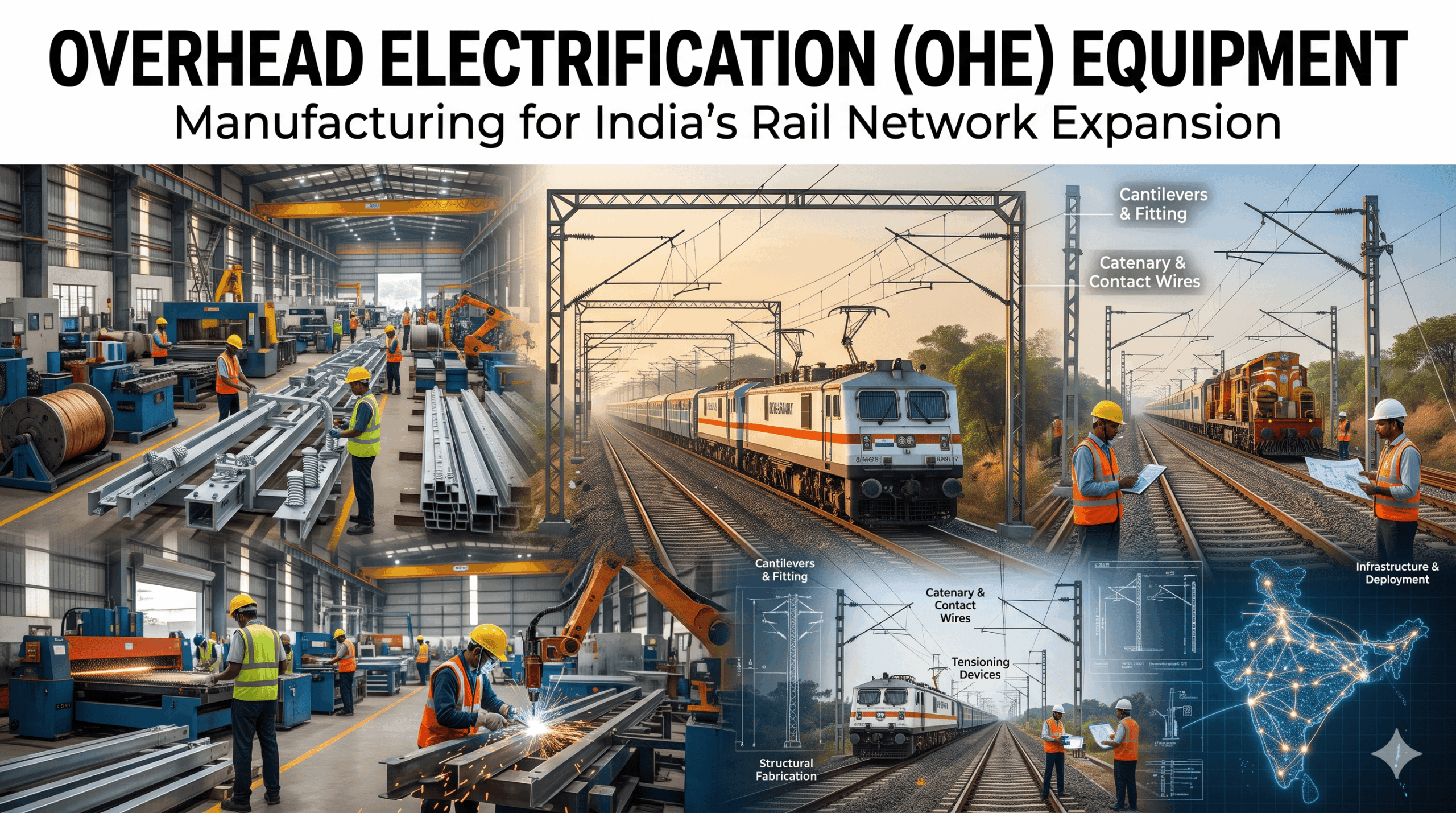
India’s railway expansion is creating opportunities for manufacturers of overhead electrification (OHE) equipment. As Indian Railways expands electrified routes, upgrades existing infrastructure, and develops higher-capacity rail corridors, demand continues to grow for reliable equipment that supports safe and efficient electric train operations.
For manufacturers, the opportunity extends beyond supplying individual components. It includes developing quality-compliant products, building dependable supply chains, meeting railway procurement requirements, and supporting the long-term maintenance of electrification infrastructure.
India’s Railway Electrification Creates New Manufacturing Opportunities
India’s railway electrification program has moved beyond the initial phase of converting diesel-operated routes to electric traction. The next stage involves completing remaining sections, expanding track capacity, upgrading existing infrastructure, and building advanced systems for metro and high-speed rail projects.
According to a Ministry of Railways update published in July 2026, approximately 99.6% of India’s broad-gauge railway network had been electrified. New railway lines and multitracking projects are also being developed with electrification.
For OHE equipment manufacturers, this shift creates opportunities across three areas:
- New infrastructure: Manufacturing equipment for new railway lines, additional tracks, and dedicated freight corridors.
- Infrastructure upgrades: Supplying replacement components, improved fittings, and equipment for existing electrified routes.
- Advanced rail systems: Developing precision-engineered components for metro networks and high-speed rail projects.
Key OHE Equipment Used in Railway Electrification
Overhead electrification systems rely on a combination of structural, mechanical, and electrical components. Each part must meet the applicable technical specifications to support reliable power delivery and safe railway operations.
1. OHE masts and steel structures
Steel masts, portals, brackets, and support structures hold the overhead wiring system in position. Manufacturing requires accurate fabrication, dimensional control, corrosion protection, and consistent structural quality.
2. Contact wires, catenary wires, and droppers
These components form the overhead conductor system that supplies electricity to trains through the pantograph. Material quality, conductivity, tensile properties, and dimensional accuracy are important.
3. Cantilever assemblies and OHE fittings
Cantilevers, clamps, brackets, fasteners, and related fittings position and secure overhead conductors. Consistent fabrication and interchangeability are important for installation and maintenance.
4. Electrical insulators
Porcelain and composite insulators provide electrical isolation between live conductors and supporting structures. Manufacturers must address insulation performance, mechanical strength, and environmental durability.
5. Isolators and regulating equipment
Isolators, tensioning devices, counterweights, and related accessories help manage electrical isolation and mechanical tension in the overhead system.
These product categories are consistent with the equipment covered in the Central Organisation for Railway Electrification’s manufacturer-enlistment guidelines.
Manufacturing Requirements and Quality Standards
Entering the railway supply chain requires more than production capacity. Manufacturers must demonstrate that their products meet the relevant technical, testing, and procurement requirements.
Technical compliance
Product specifications vary by equipment category and project. Manufacturers should identify the applicable Research Designs and Standards Organisation (RDSO), Indian Standards, and railway-specific requirements before finalising product designs or investing in tooling.
Manufacturing and testing capabilities
Depending on the product, relevant capabilities may include:
- Precision machining, metal fabrication, and welding.
- Hot-dip galvanisation and corrosion protection.
- Electrical and mechanical testing.
- Dimensional inspection and material traceability.
- Documented quality control and inspection records.
Railway vendor approval
The Central Organisation for Railway Electrification publishes procedures for enlistment of manufacturers supplying electrical items used in railway electrification. These procedures address technical capability, financial capacity, manufacturing facilities, testing, and quality control.
Manufacturers should review the latest applicable requirements for their intended products before bidding. Approval for one category should not be assumed to cover every OHE product.
Opportunities in High-Speed Rail and Metro Projects
Traditional railway electrification remains important, but specialised rail infrastructure is creating demand for more advanced manufacturing capabilities.
India’s Mumbai-Ahmedabad High-Speed Rail project is introducing a 2×25 kV overhead traction system designed for high-speed operations. The Ministry of Railways reported domestic manufacturing of components such as cross arms, transformers, ground wires, protection wires, and feeder wires in July 2026.
This creates potential opportunities for Indian manufacturers that can meet the tighter engineering, quality, and production requirements of advanced rail systems.
Metro rail projects also require traction equipment, cantilever assemblies, insulators, cables, and associated electrical infrastructure. However, metro and high-speed rail specifications may differ from conventional railway requirements, so manufacturers must assess each project’s technical and vendor-qualification conditions separately.
How Manufacturers Can Enter India’s OHE Supply Chain
A practical entry strategy starts with selecting the right product category rather than attempting to manufacture an entire electrification system.
- Assess product demand. Identify equipment categories that match existing fabrication, electrical engineering, or machining capabilities.
- Review technical specifications. Study the relevant drawings, material requirements, testing procedures, and railway standards.
- Build production and testing capacity. Establish the equipment, inspection processes, and documentation needed to produce compliant components consistently.
- Complete the relevant vendor-approval process. Check current enlistment or qualification requirements for the target railway organisation and product.
- Monitor procurement opportunities. Track tenders and supplier requirements through official railway procurement channels, including the Indian Railways website and the Government eProcurement System.
- Develop reliable delivery systems. Plan for raw material availability, production lead times, inspection, packaging, and on-time delivery.
The Outlook for OHE Equipment Manufacturing in India
India’s near-complete broad-gauge electrification does not eliminate opportunities for OHE manufacturers. Instead, the market is evolving toward infrastructure expansion, asset maintenance, system upgrades, and specialised rail technologies.
Manufacturers that combine technical compliance, reliable production, competitive costs, and strong quality control will be better positioned to compete for railway infrastructure contracts. The strongest opportunity will depend on the chosen product category, applicable approvals, project specifications, and procurement demand.