



Introduction
Toroidal transformers have earned a strong reputation for their compact design, low electromagnetic interference (EMI), and high efficiency, making them the preferred choice across precision electronics, medical devices, industrial automation, and renewable energy systems. Unlike conventional laminated-core transformers, toroidal designs use circular magnetic cores wound with continuous electrical steel, resulting in reduced losses and quiet operation.
As industries increasingly demand compact, energy-efficient solutions, the global market for toroidal transformers continues to expand rapidly. This article explores the technology behind toroidal transformers, their performance benefits, and profiles of leading toroidal transformer manufacturers worldwide delivering high-performance custom transformers for global OEMs and industrial projects.
Know About Global Toroidal Transformer Manufacturers You Can Trust
Zetwerk provides high-quality Precision Components and all secondary operations.
Submit the relevant part drawings, 3D files, and other information by clicking on the button below.

1. Understanding Toroidal Transformer Technology
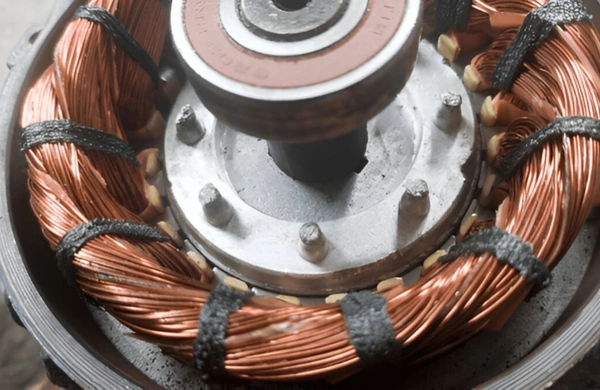
A toroidal transformer is built around a doughnut-shaped (toroidal) magnetic core, typically made of Cold Rolled Grain Oriented (CRGO) steel, amorphous metal, or ferrite. The windings are distributed evenly around the core, which minimizes magnetic leakage and enhances efficiency.
Working Principle:
- The primary winding receives alternating current (AC).
- The magnetic flux circulates uniformly within the circular core.
- The secondary winding outputs the induced voltage at the required level.
This design minimizes stray magnetic fields and allows the transformer to operate quietly and efficiently—ideal for sensitive or space-constrained applications.
Common Applications:
- Industrial control and instrumentation systems
- Audio and medical equipment
- Renewable energy converters
- Power supplies for electronics and automation
Zetwerk’s toroidal transformers are engineered using automated winding systems and optimized core materials to achieve precise performance, low noise, and exceptional thermal stability.
2. Construction and Design Features
a. Core Design
- Material: CRGO silicon steel, amorphous alloy, or ferrite.
- Shape: Ring-shaped, ensuring continuous magnetic flux without sharp corners or joints.
- Advantages: Lower magnetostriction, minimized core loss, and reduced hum.
b. Windings
- High-purity copper or aluminum conductors are wound uniformly around the core.
- The circular geometry reduces winding resistance and leakage inductance.
- Vacuum impregnation (VPI) enhances dielectric strength and moisture resistance.
c. Insulation System
- Layered polyester or epoxy coatings protect the windings and improve thermal endurance (Class F or H insulation).
- Optional shielding layers reduce EMI for sensitive electronic environments.
d. Mounting and Enclosures
- Encapsulated (potted) or open-frame configurations available.
- Mounting options include central bolt or disc-type assemblies for vibration-free operation.
Zetwerk applies precision coil winding and automated insulation layering to achieve uniform magnetic balance and low acoustic noise levels across all units.
3. Electrical and Performance Specifications
| Parameter | Typical Range / Specification | Purpose |
| Power Rating | 10 VA – 25 kVA | Suitable for electronics to light industrial use |
| Frequency | 50 / 60 Hz | Standard global operation |
| Efficiency | 95% – 98% | High magnetic utilization |
| Regulation | 3% – 7% | Stable voltage under varying loads |
| Insulation Class | F (155°C) / H (180°C) | Ensures thermal stability |
| Noise Level | <35 dB | Ideal for low-noise environments |
| Leakage Field | <1% | Prevents EMI interference |
Zetwerk’s toroidal transformers maintain tight tolerances on regulation, losses, and winding balance—delivering consistent performance in precision instrumentation and industrial automation systems.
4. Advantages of Toroidal Transformers
a. High Efficiency and Low Losses
The continuous magnetic core eliminates air gaps, significantly reducing hysteresis and eddy current losses.
b. Compact and Lightweight
The circular design offers up to 40% smaller size and weight compared to conventional laminated-core transformers.
c. Low Noise Operation
Magnetostriction effects are minimized, resulting in near-silent operation, crucial for hospitals, offices, and labs.
d. Low Electromagnetic Interference (EMI)
The symmetrical winding pattern confines the magnetic field within the core, reducing external interference.
e. Energy Savings and Long Service Life
Low idle losses and reduced thermal stress extend lifespan while improving system efficiency.
f. Flexible Mounting and Aesthetic Design
Compact, vibration-free operation makes toroidal transformers suitable for enclosed electronic assemblies.
Zetwerk’s toroidal transformers combine these advantages with scalable customization, meeting the unique mechanical and electrical requirements of industrial and OEM applications.
5. Industrial Applications
Industrial Automation and Robotics
Powering servo systems, PLC controls, and drives with high efficiency and low noise.
Medical Equipment
Used in imaging devices, lab analyzers, and patient monitoring systems for their silent operation and low EMI.
Audio and Broadcasting Equipment
Provide clean, noise-free power to amplifiers and broadcasting systems.
Renewable Energy Systems
Used in solar inverters and battery chargers for efficient DC-AC conversion.
Precision Electronics
Power sensitive instruments in metrology and laboratory systems.
Zetwerk provides toroidal transformers engineered for all these sectors, optimized for load performance, temperature control, and minimal distortion.
6. Standards and Testing Procedures
Applicable Standards:
- IEC 61558: Safety and performance of power transformers.
- UL 506 / UL 5085: U.S. certification for low-voltage power transformers.
- ISO 9001:2015: Quality management for manufacturing systems.
- RoHS and REACH: Compliance with environmental and material standards.
Testing Includes:
- Winding resistance and polarity tests.
- Voltage ratio and insulation resistance verification.
- No-load loss and load regulation measurement.
- Temperature rise and vibration testing.
- Dielectric and short-circuit withstand testing.
Every Zetwerk transformer undergoes rigorous inspection and full functional testing under simulated load conditions to guarantee reliability and global compliance.
7. What Separates a Well-Built Toroidal Transformer from a Mediocre One
1. Winding Uniformity Around the Core
Because the core is continuous rather than segmented, winding consistency matters more here than in laminated designs — uneven winding distribution creates hot spots and increases stray magnetic fields, undermining the low-EMI advantage toroidal transformers are chosen for in the first place.
2. Verified Noise Performance, Not Just a Spec Number
Sub-35 dB noise ratings depend heavily on core material quality and mechanical clamping, not just winding technique. Ask for actual acoustic test results rather than a catalog figure, especially for installations in hospitals, studios, or labs where noise directly affects usability.
3. Encapsulation and Mounting Fit for the Application
Open-frame, potted, or disc-mounted configurations each suit different environments — vibration-heavy industrial settings need different mechanical support than a compact electronic enclosure. A manufacturer should recommend the right mounting approach for your installation, not default to one option.
4. Core Material Matched to Frequency and Load
CRGO steel, amorphous alloy, and ferrite cores each perform differently depending on frequency and load profile. Manufacturers who only offer one material may be optimizing for their own production line rather than your application’s efficiency needs.
5. Regulation Stability Under Varying Load
A 3–7% regulation spec looks fine on paper, but performance under real fluctuating loads (not just steady-state bench testing) is what determines whether sensitive downstream electronics stay stable. Ask how regulation is tested — under dynamic load, not just nominal load.
8. Technological Advancements in 2025
- Amorphous Metal Cores: Reduce no-load losses by up to 70%, improving energy efficiency.
- Resin Encapsulation: Provides superior protection against moisture, vibration, and dust.
- AI-Based Winding Optimization: Ensures uniform core saturation and reduced magnetic leakage.
- Automated Thermal Monitoring: Embedded sensors enable condition-based maintenance.
- 3D Printed Core Housings: Emerging for lightweight custom industrial enclosures.
Zetwerk integrates these advancements to produce next-generation toroidal transformers combining mechanical precision with global compliance and cost efficiency.
Conclusion
Toroidal transformers exemplify the balance between compact design, high efficiency, and electrical precision. As industries move toward smaller, quieter, and more efficient power solutions, demand for high-quality toroidal transformers continues to accelerate globally.
Zetwerk stands among the most trusted names in transformer manufacturing, delivering precision-engineered toroidal transformers built to IEC, UL, and DOE standards. With advanced manufacturing automation, rigorous testing, and scalable production, Zetwerk supports OEMs and industrial clients across North America, Europe, and Asia with reliable, custom-built transformer solutions designed for long-term performance.
FAQs
a. They’re used in automation, audio, renewable, and medical systems for compact, low-noise, and efficient power delivery.
a. Toroidal transformers have circular cores, offering better efficiency and lower noise compared to laminated EI core designs.
a. Yes. They are ideal for equipment requiring high precision and reliability with minimal maintenance.
a. Typically CRGO steel, amorphous metal, or ferrite, depending on application voltage and frequency.
a. Yes. Zetwerk designs and manufactures fully customized toroidal transformers for global OEM
