



Introduction
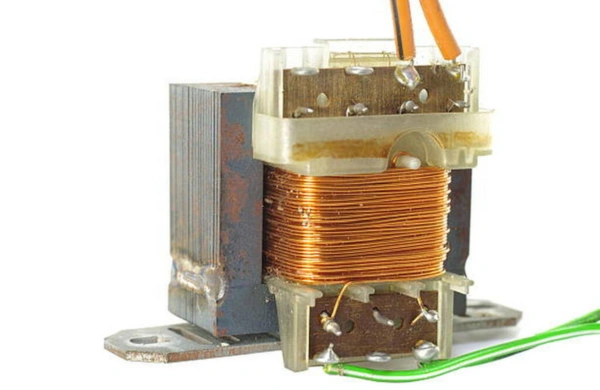
In high-voltage electronics, flyback transformers—often known as line output transformers (LOPTs)—are compact, efficient components designed to generate and regulate high voltages in small spaces. Traditionally used in cathode-ray tube (CRT) displays, these transformers remain essential in modern high-voltage applications such as oscilloscopes, plasma devices, medical imaging, x-ray equipment, and scientific instrumentation.
Unlike standard transformers that transfer power at a steady rate, flyback transformers store energy in their magnetic core during the “on” phase of operation and release it during the “off” phase. This enables high-voltage DC output from a compact design, making them ideal for precision equipment requiring stable voltage at low current levels.
As industries adopt compact, high-efficiency electronic systems, manufacturers must meet tighter tolerances for voltage stability, insulation, and thermal endurance. This article explores how flyback transformers work, their design characteristics, and where they’re used across modern industries.
Know About CRT Flyback Transformers – Compact
Solution for High Voltage
Zetwerk provides high-quality Precision Components and all secondary operations.
Submit the relevant part drawings, 3D files, and other information by clicking on the button below.

Understanding CRT Flyback Transformers
Overview:
Flyback transformers are designed to generate high-voltage DC from a relatively low-voltage AC or pulsed input. The core principle is magnetic energy storage — energy is stored in the core during the “on” period and released in the “off” period, creating the high-voltage pulse needed for CRT electron beam acceleration or similar functions.
Operating Principles:
- The primary winding receives pulsed input.
- Magnetic energy is stored in the ferrite core.
- When the input is interrupted, stored energy transfers to the secondary winding.
- The output is a high-voltage pulse that is rectified and filtered for DC use.
This design allows flyback transformers to deliver 20–40 kV output from a compact, lightweight assembly — ideal for CRT and pulse applications.
Key Design Characteristics
Flyback transformers are designed to generate high-voltage DC from a relatively low-voltage AC or pulsed input. The core principle is magnetic energy storage — energy is stored in the core during the “on” period and released in the “off” period, creating the high-voltage pulse needed for CRT electron beam acceleration or similar functions.
1. High-Frequency Operation
Flyback transformers typically operate between 15 kHz and 100 kHz, which enables small magnetic cores and reduced winding size.
2. Ferrite Core Material
Ferrite cores with high permeability and low eddy current losses are used, often in E, EE, or pot core geometries, to maximize energy storage and minimize size.
3. Insulation and Potting
Because flyback transformers handle thousands of volts, multi-layer winding insulation and epoxy resin encapsulation are used to prevent corona discharge and arcing.
4. Rectification and Filtering
Flyback transformers are often integrated with built-in diodes or multipliers to convert high-voltage AC output into DC.
5. Compact & Lightweight Design
Optimized coil geometry and core design allow these transformers to deliver high output voltages while maintaining minimal form factors for compact electronics.
Industrial and Utility Applications Beyond CRT
While originally developed for CRT displays, flyback transformers are now integral to many modern applications requiring compact, high-voltage output with stable regulation.
A. Medical and Diagnostic Equipment
Used in x-ray machines, defibrillators, and medical analyzers, where controlled high-voltage pulses are critical for imaging and precision diagnostics.
B. Laboratory and Scientific Instruments
Deployed in particle analyzers, oscilloscopes, and plasma research setups, flyback transformers provide compact high-voltage generation for controlled experiments.
C. Industrial and Plasma Systems
In ozone generation, electrostatic filters, and UV curing, flyback transformers generate steady, isolated high voltage for process control.
D. Energy and Power Conversion
Used in DC-DC converters, ignition systems, and isolated power modules, where they provide galvanic isolation and efficient voltage step-up capabilities.
E. CRT and Legacy Electronics
Although CRT display use has declined, many industrial monitors, radar systems, and defense consoles still use flyback transformers for high-voltage acceleration.
Technical Advantages of Flyback Transformers
1. Compact and Efficient Design
Flyback transformers offer size-to-output efficiency unmatched by other transformer types, enabling high-voltage generation in tight enclosures.
2. Electrical Isolation
They provide excellent galvanic isolation between primary and secondary circuits, enhancing safety in high-voltage systems.
3. Cost-Effective High Voltage
Because of their simple design and reduced copper requirement, they deliver high-voltage output economically compared to cascaded systems.
4. Flexible Design for Customization
Winding ratios, insulation thickness, and core types can be precisely adjusted to suit each application’s voltage and frequency requirements.
5. Durability and Longevity
Epoxy encapsulation, ferrite material optimization, and controlled thermal expansion ensure a long service life under demanding conditions.
Types of Flyback Transformers by Application
The High-Frequency Ferrite-Core Type
Designed for high-volume power electronics and medical systems, these use ferrite-core construction optimized for high-frequency switching and efficient energy transfer.
The Compact Instrumentation Type
Built for CRT displays, oscilloscopes, and precision voltage-conversion systems, this type prioritizes compact size and stable high-voltage output in space-constrained enclosures.
The Small-Format Power Supply Type
Used in embedded power supplies and general industrial electronics, this type balances small footprint with moderate voltage and current output.
The Custom-Wound Defense & Instrumentation Type
Built to precise specifications for defense and scientific instrumentation applications, this type is custom-wound for exact voltage, frequency, and insulation requirements where standard designs won’t fit.
Future Trends in Flyback Transformer Manufacturing
- Eco-Friendly Potting Materials: Replacing epoxy compounds with low-VOC, recyclable encapsulants.
- Nanocrystalline Ferrites: Offering higher magnetic saturation and lower core losses.
- Miniaturization for Power Electronics: Compact flyback transformers for IoT and autonomous systems.
- Digital Quality Control: AI-assisted monitoring for winding accuracy and insulation uniformity.
- Integration with Smart Grids: High-voltage transformers used in grid-level measurement and pulse conversion applications.
Zetwerk is actively investing in these technologies, expanding its R&D for next-generation high-voltage and isolation transformers.
Conclusion
Flyback transformers remain indispensable for compact, high-voltage power conversion across industrial, medical, and electronic systems. Their efficiency, small footprint, and electrical isolation make them ideal for critical control applications where safety and voltage stability are paramount.
As compact electronic systems continue to demand tighter tolerances for voltage stability and thermal endurance, flyback transformer design continues to evolve—balancing miniaturization, efficiency, and durability for the next generation of high-voltage electronics.
Explore Zetwerk’s manufacturing capabilities →
FAQs
a. It’s a compact, high-voltage transformer that stores magnetic energy and releases it as a controlled high-voltage pulse.
a. They’re used in CRT displays, x-ray devices, oscilloscopes, plasma systems, and scientific instruments.
a. It stores and releases magnetic energy instead of continuous power transfer, enabling compact, high-voltage DC output.
a. Ferrite cores, copper windings, epoxy encapsulation, and multilayer insulation.
a. Most flyback transformers deliver 20–40 kV output from a compact, lightweight assembly.
