



Introduction
Oil filled transformers remain one of the most trusted solutions for medium and high-voltage power distribution worldwide. Known for their thermal stability, high dielectric strength, and long service life, these transformers continue to dominate critical applications in power utilities, heavy industries, and renewable energy systems.
As industries move toward higher energy demands and smart grid expansion, the importance of selecting the right oil filled transformer manufacturer has never been greater. Quality design, advanced materials, and manufacturing precision directly influence transformer performance, efficiency, and lifecycle cost.
This article highlights the key features of oil filled transformers, their technical benefits, and a list of leading global manufacturers in 2025—with Zetwerk positioned as a trusted engineering and manufacturing partner delivering custom-built, precision oil-filled transformers for North American utilities and industrial clients.
Zetwerk provides high-quality Precision Components and all secondary operations.
Submit the relevant part drawings, 3D files, and other information by clicking on the button below.

1. Understanding Oil Filled Transformers
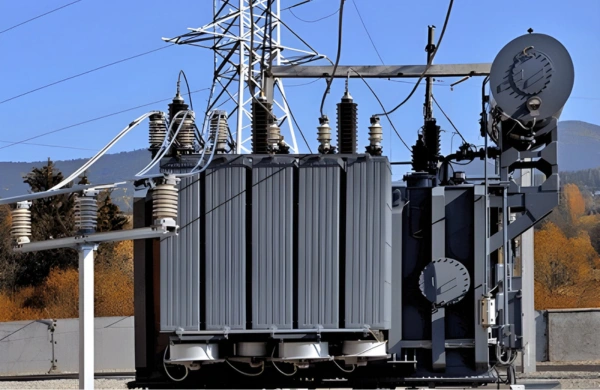
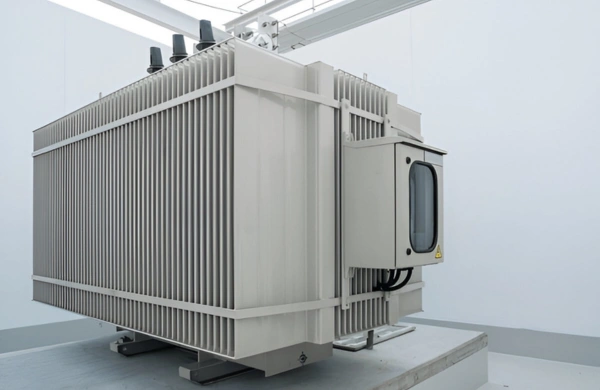
An oil filled transformer uses mineral oil or ester fluid as both an insulating and cooling medium. The oil circulates around the windings and core, dissipating heat and providing electrical insulation between active components and the transformer tank.
Core Functions:
- Insulation: Prevents dielectric breakdown by maintaining high electrical strength.
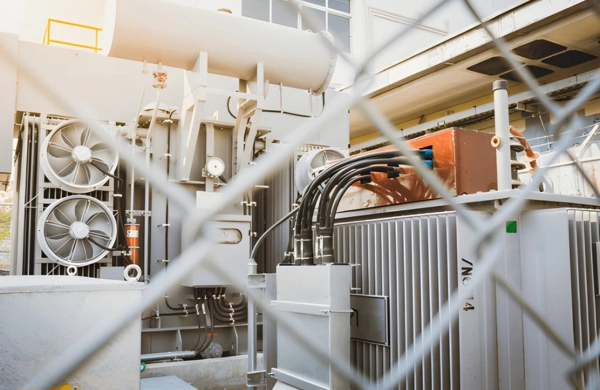
- Cooling: Transfers heat from windings to radiator fins or external coolers.
- Protection: Immersed components remain shielded from oxidation and moisture.
Types of Oil Used:
- Mineral Oil: The most common, cost-effective, and efficient medium.
- Natural Ester Oil: Biodegradable and fire-resistant, used in eco-friendly applications.
- Synthetic Ester Oil: Offers superior oxidation stability and longevity.
Zetwerk’s oil filled transformers are engineered with precision cooling, moisture-resistant sealing, and thermal simulation-validated oil circulation design to ensure long-term reliability.
2. Design and Construction
Oil filled transformers are designed to balance efficiency, safety, and maintainability.
Core Design:
- Built using Cold Rolled Grain Oriented (CRGO) steel or amorphous metal laminations for reduced no-load losses.
- Step-lap joints minimize magnetostriction and noise.
Windings:
- Copper or Aluminum conductors, insulated with high-grade kraft or NOMEX paper.
- Designed to withstand short-circuit forces and thermal expansion.
Tank and Cooling System:
- Constructed from mild or stainless steel, hermetically sealed to prevent oil oxidation.
- Cooling configurations include ONAN, ONAF, OFAF, or ODAF, depending on power rating and duty cycle.
Bushings and Conservators:
- Porcelain or polymer bushings ensure reliable high-voltage insulation.
- Conservator tanks with breathers maintain oil pressure and prevent moisture ingress.
Each unit manufactured by Zetwerk undergoes CFD-based thermal analysis and mechanical simulation to optimize oil flow, minimize hot spots, and ensure structural integrity.
3. Electrical and Mechanical Performance Parameters
| Parameter | Typical Range / Value | Purpose |
| Voltage Rating | Up to 765 kV | Transmission and substation applications |
| Power Rating | 25 kVA – 500 MVA | Suitable for all industrial and utility loads |
| Efficiency | 98.5% – 99.3% | Minimizes operational losses |
| Temperature Rise | ≤60°C (oil), ≤65°C (winding) | Ensures long service life |
| Impedance | 4% – 12% | Controls fault current and voltage regulation |
| Insulation Class | Class A / F | Defines thermal endurance |
| Cooling Method | ONAN / ONAF / OFWF | Depends on load duty cycle |
Zetwerk’s transformers are tested to maintain stable performance under variable load, high ambient temperatures, and fluctuating grid conditions—meeting DOE 2016 and IEC 60076 efficiency standards.
4. Applications Across Industries
a. Power Utilities
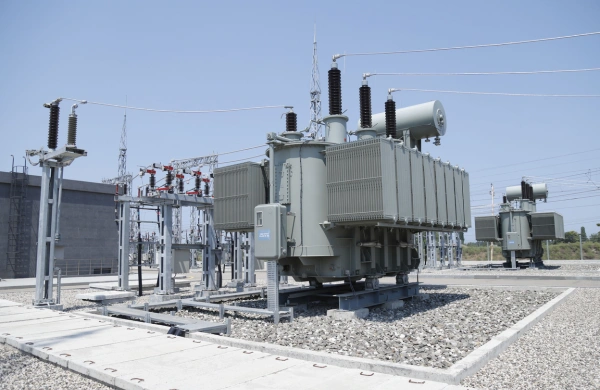
Used in substations and distribution networks for voltage step-up and step-down applications.
b. Industrial Plants
Power process machinery, induction motors, and heavy furnaces with stable voltage.
c. Renewable Energy
Step-up transformers in solar and wind farms ensure grid integration with high efficiency.
d. Oil & Gas and Petrochemical
Withstand extreme temperature and humidity while maintaining dielectric reliability.
e. Data Centers and Infrastructure
Provide reliable voltage regulation for mission-critical operations.
Zetwerk’s oil filled transformers are custom-engineered to perform in these sectors with optimal cooling and low partial discharge levels.
5. Quality, Testing, and Standards
Manufacturers of oil filled transformers must adhere to rigorous standards for safety, efficiency, and performance.
Testing Procedures:
- Routine Tests: Ratio, polarity, winding resistance, insulation, and no-load loss.
- Type Tests: Temperature rise, short-circuit withstand, impulse voltage test.
- Special Tests: Noise level, zero-sequence impedance, dissolved gas analysis (DGA).
Compliance Standards:
- IEC 60076 Series – Power transformer design and testing.
- IEEE C57.12 – Distribution and power transformer specifications.
- DOE 10 CFR Part 431 – U.S. energy efficiency compliance.
- ANSI C57.91 – Loading guides for liquid-immersed transformers.
Zetwerk integrates fully automated testing and digital performance logging to ensure every transformer meets these international benchmarks.
Zetwerk As Leading Oil Filled Transformer Manufacturers
Zetwerk Manufacturing USA delivers precision-engineered oil filled transformers for industrial and utility-scale projects across North America. With vertically integrated manufacturing—including core lamination, winding, assembly, and testing—Zetwerk ensures high efficiency, UL/IEC certification, and short delivery timelines.
Oil Filled Transformer Types by Cooling Configuration
1. ONAN (Oil Natural, Air Natural)
The simplest and most common configuration — oil circulates by natural convection, and heat dissipates to ambient air without fans or pumps. Suited for smaller distribution transformers and lower duty-cycle applications where load doesn’t fluctuate dramatically.
2. ONAF (Oil Natural, Air Forced)
Adds fans to force air across the radiators while oil still circulates naturally. This bridges the gap between ONAN’s simplicity and higher cooling capacity, commonly used in medium-to-large power transformers that need extra headroom during peak load without full forced-oil circulation.
3. OFAF (Oil Forced, Air Forced)
Both oil and air are mechanically circulated — oil pumps push fluid through the windings while fans force air across external radiators. This configuration handles substantially higher loads in a smaller footprint, common in substation and large industrial power transformers.
4. ODAF (Oil Directed, Air Forced)
The most advanced configuration, where oil flow is directed specifically through the winding ducts rather than circulating generally through the tank. This targets cooling precisely where heat generation is highest, used in the largest, highest-duty-cycle power transformers where hot-spot control is critical.
5. Ester-Fluid Variants (Natural or Synthetic)
Any of the above configurations can also run on natural or synthetic ester fluid instead of mineral oil — trading a small amount of cooling efficiency for biodegradability and significantly higher fire resistance, increasingly specified for indoor, urban, or environmentally sensitive installations.
7. Innovations and Emerging Trends in 2025
Transformer manufacturers are adopting advanced materials, cooling systems, and digital technologies to meet efficiency and sustainability goals:
- Ester Oil Technology: Environmentally safe and fire-resistant insulation fluids.
- Amorphous Core Design: Reduces no-load losses by up to 70%.
- Digital Twin Integration: Enables performance monitoring and predictive maintenance.
- Smart Sensors and IoT: Real-time data for load, temperature, and oil quality.
- Eco-Friendly Manufacturing: Reduced carbon footprint through recyclable materials and optimized oil management.
Zetwerk combines these advancements with its precision manufacturing framework to supply next-generation oil filled transformers built for longevity and energy savings.
Conclusion
Oil filled transformers remain the cornerstone of reliable power distribution for industries and utilities worldwide. Their ability to handle high loads, operate continuously, and provide efficient cooling makes them indispensable in both legacy grids and modern renewable systems.
As industries demand higher reliability, lower losses, and sustainable solutions, Zetwerk stands out as a manufacturing partner delivering precision-built oil filled transformers engineered for performance, compliance, and cost efficiency. With advanced testing, robust insulation design, and rapid delivery capabilities, Zetwerk ensures long-term reliability for power systems across North America and global markets.
FAQs
a. It’s a transformer that uses insulating oil for cooling and dielectric protection of its windings and core.
a. Oil filled transformers use liquid cooling, offering higher efficiency and capacity, while dry type units are used indoors for fire safety.
a. Used in power grids, industrial plants, and renewable energy systems for voltage conversion.
a. Mineral oil, natural ester, or synthetic ester, depending on environmental and performance needs.
a. Yes. Zetwerk designs custom-rated, certified oil filled transformers tailored for industrial and utility operations.